
A pump suddenly stops during work.
Machines suddenly go silent, and production stops.
Workers start looking at each other.
The problem looks small, but the loss can be massive in production.
After checking the system, they find the reason. The mechanical seal has failed.
Now one simple question comes up.
Was it the right type of seal?
Should it have been a pusher seal or a non-pusher seal?
Many industries face this same situation. A mechanical seal may look like a small part, but it controls leakage, pressure, and smooth running. The design of the seal plays a big role in how long the pump works without trouble, especially when you understand different seal designs and materials used in industrial applications.
That is why people search for the difference between a pusher and non-pusher mechanical seal. They want to know which one fits their pump. They want to compare pusher and non-pusher-type mechanical seals. They want a clear answer for pusher vs. non-pusher seals.
In this article, we will talk about both types in a simple way so you can choose the right seal for your needs.
What is a pusher mechanical seal?
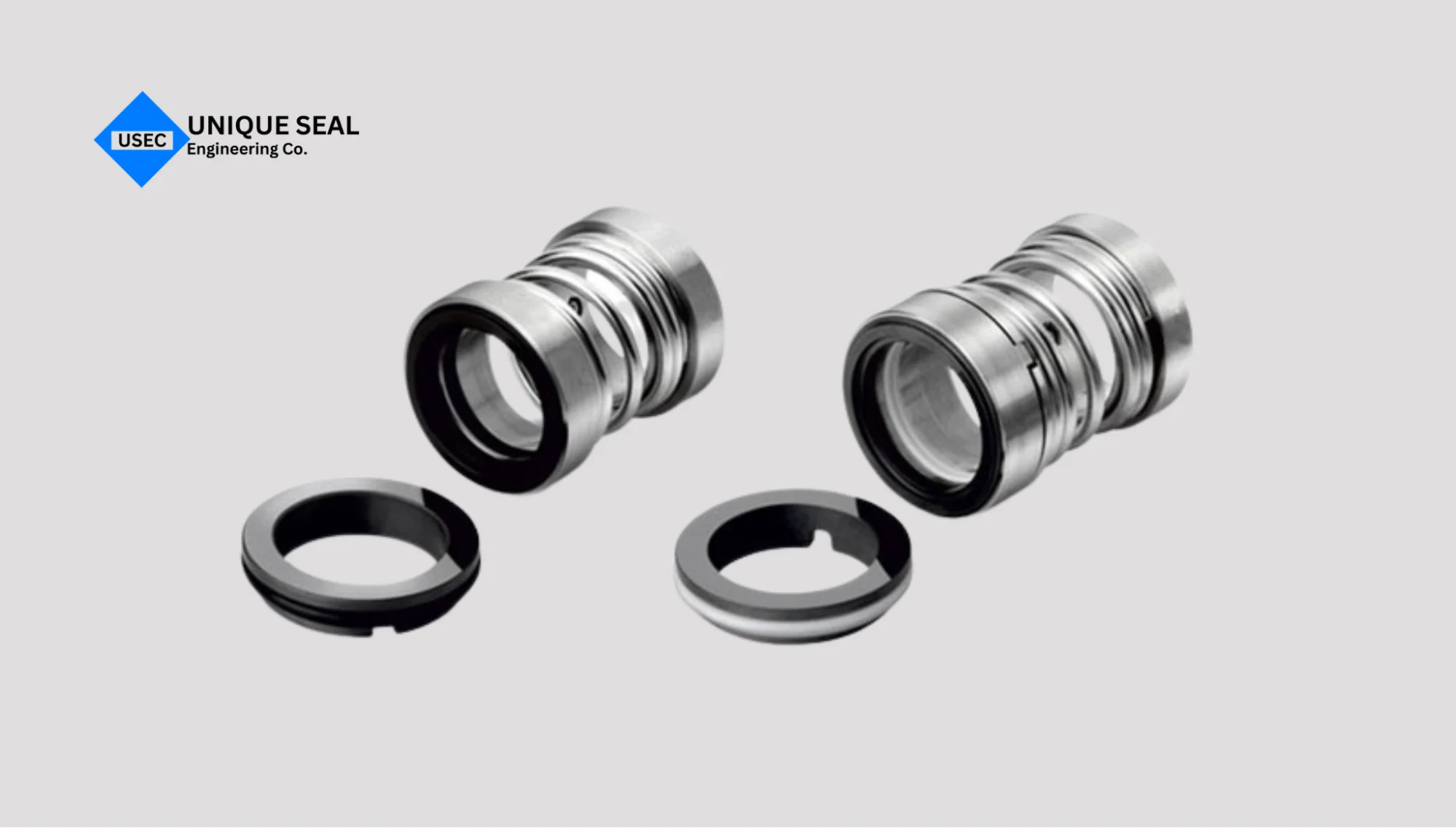
A pusher mechanical seal is a widely used sealing device in pumps. Its main job is to stop liquid from leaking where the rotating shaft passes through the pump casing. It uses a spring and a moving O-ring to keep the sealing faces tight during operation.
The name “pusher” comes from the way the seal works. A spring pushes the rotating face toward the stationary face. At the same time, the O-ring can slide along the shaft. This sliding movement allows the seal to adjust itself when small wear happens on the sealing faces. Because of this simple and practical design, pusher seals are common in many industries.
Main components of a pusher seal assembly
A pusher seal is made of several important parts that work together to create a tight seal.
The rotating face is fixed to the shaft and turns with it. This face stays in contact with the stationary face to form the main sealing point.
The stationary face is installed inside the pump housing and does not move. It provides a solid surface against which the rotating face presses.
The spring mechanism provides constant forward force. This force keeps the two faces pressed together while the pump is running.
The O-ring acts as a secondary seal. It prevents leakage between the shaft and the seal parts. Since it can move slightly on the shaft, it helps the seal adjust during operation.
The shaft sleeve protects the pump shaft from wear and gives a smooth surface for the O-ring to slide on.
All these components combine to ensure proper sealing performance.
How a pusher mechanical seal works
When the pump starts, the shaft begins to rotate. The rotating face moves with the shaft, while the stationary face remains fixed. The spring applies axial spring force that pushes the rotating face against the stationary face. This contact creates the main sealing barrier.
As the pump continues to run, small wear may occur on the seal faces. To handle this, the O-ring sliding action allows the seal to move slightly forward. The spring keeps applying pressure, so the faces stay in close contact.
This process provides wear compensation. It means the seal can adjust automatically for minor wear without losing its sealing ability. Because of this feature, pusher seals can maintain steady performance in normal operating conditions.
Industrial applications of pusher seals
Pusher seals are used in many types of industries due to their simple design and dependable performance.
In water pumps, they are commonly used for clean water and light-duty applications.
In oil and gas systems, they are applied in pumps handling oil and related fluids under moderate conditions.
In chemical processing plants, they are used in pump systems where safe and controlled sealing is required.
Their flexibility makes them suitable for a wide range of general industrial uses.
Performance strengths and design limitations
One major strength of a pusher seal is its simple construction. It is easy to install and works well under standard pressure and temperature ranges. The moving O-ring helps the seal adjust for face wear, which can extend service life.
However, there are some limitations. If the pumped liquid contains dirt or solid particles, the O-ring may not slide smoothly. In very high temperatures or heavy-duty conditions, the moving secondary seal may wear faster.
For many common pump applications, a pusher mechanical seal offers a reliable and cost-effective sealing solution. In more severe operating environments, other seal designs may be more suitable.
What is a non-pusher mechanical seal?
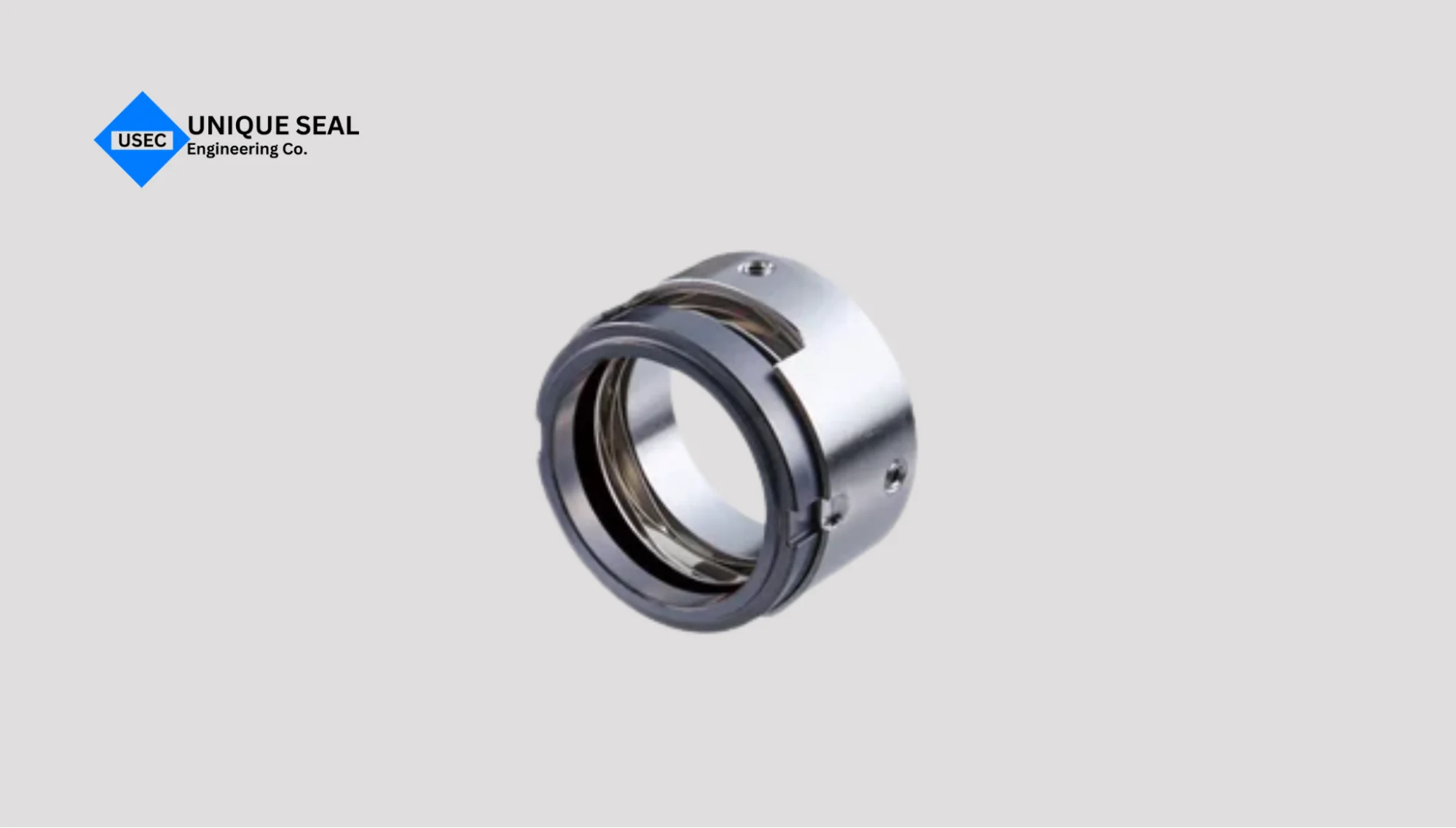
A non-pusher mechanical seal is a type of seal used in pumps to stop leakage along the rotating shaft. Unlike a pusher seal, it does not use a sliding O-ring to adjust for wear. Instead, it uses a flexible bellows unit to keep the seal faces pressed together.
The key difference is simple. In a non-pusher seal, the secondary seal does not slide on the shaft. The bellows itself flexes to maintain contact between the seal faces. Because there is no sliding O-ring, this design can reduce certain problems that happen in tough working conditions.
This type of seal is often chosen when the pump handles high-temperature fluids or chemicals that can affect elastomer parts.
Construction and structural features
The main feature of a non-pusher seal is its bellows assembly. This part replaces the moving O-ring used in pusher seals.
In a metal bellows design, thin metal layers are welded together to form a flexible unit. This metal bellows acts as both the spring and the secondary seal. It can flex back and forth to maintain pressure on the seal faces.
In an elastomer bellows design, a rubber-like material is shaped into a flexible form. It also acts as a sealing element and provides the needed flexibility during operation.
Another important feature is the integrated compression element. In many non-pusher seals, the bellows unit itself provides the closing force. This means fewer separate moving parts are needed.
Because of this structure, the seal does not depend on sliding movement along the shaft.
How a non-pusher seal operates
The working of a non-pusher seal is based on bellows movement. When the pump runs, the rotating face turns with the shaft, and the stationary face stays fixed. The bellows flexes to keep both faces pressed together.
Instead of O-ring sliding, the bellows flex handles the small adjustments caused by wear. This means there is no need for a secondary seal to move along the shaft surface.
Since there is no sliding O-ring, shaft friction is reduced. This can help lower wear on the shaft and reduce the risk of sticking.
Non-pusher seals also offer better performance in high-temperature conditions, especially when metal bellows are used. Metal parts can handle heat better than many rubber materials.
Industrial applications of non-pusher seals
Non-pusher seals are often used in demanding environments.
In high-temperature systems, especially where heat levels are above normal limits, metal bellows seals are a common choice.
In corrosive chemical pumps, non-pusher seals can perform well because there is no sliding elastomer on the shaft that may get damaged by chemicals.
In pharmaceutical processing, these seals are used where clean operation and reliable sealing are required.
Their design makes them suitable for applications where stable performance is needed under harsh conditions.
Performance advantages and technical constraints
One major advantage of a non-pusher seal is the absence of sliding secondary seals. This reduces the risk of sticking or damage due to dirt, solid particles, or chemical attack. It can also reduce shaft wear.
Metal bellows versions perform well in high-temperature environments and can offer steady sealing in critical applications.
However, there are some limits. Non-pusher seals can be more costly than standard pusher seals. The bellows design may also have limits in handling very high pressure compared to some heavy-duty pusher designs.
For applications that involve high temperatures, corrosive fluids, or strict sealing needs, a non-pusher mechanical seal can be a strong and reliable choice.
Working principle explained step by step

To choose the right seal, it is important to know how each one works during real pump operation. Both pusher and non-pusher seals follow a sealing cycle from start-up to steady running. The difference is in how they adjust and maintain face contact over time.
Let us look at both mechanisms step by step.
Sealing cycle in a pusher-type mechanism
A pusher seal works with the help of a spring and a sliding O-ring. Its sealing cycle moves through clear stages during pump operation.
Start-up compression
When the pump starts, the shaft begins to rotate. At the same time, the spring pushes the rotating face against the stationary face. This creates the first sealing contact. The compression force must be strong enough to block leakage but balanced enough to allow smooth rotation.
Rotational sealing phase
As the shaft continues to rotate, the rotating face spins against the stationary face. A very thin liquid film forms between the faces. This film reduces direct surface damage while still preventing leakage. The spring keeps steady pressure so the faces stay properly aligned.
Continuous wear adjustment
Over time, small wear occurs on the sealing faces. In a pusher seal, the O-ring slides slightly along the shaft. The spring pushes the seal face forward to maintain contact. This automatic movement keeps the seal tight even as parts slowly wear.
This sliding action is the key feature of the pusher mechanism.
Sealing cycle in a non-pusher bellows mechanism
A non-pusher seal works differently because it does not use a sliding O-ring. Instead, it uses a flexible bellows unit.
Initial compression
At start-up, the bellows unit applies closing force between the rotating and stationary faces. The bellows act like a built-in spring. It creates firm contact as soon as the pump begins running.
Flexural compensation
As the seal faces wear slightly, the bellows flex. This flexing movement allows the seal to adjust without any part sliding on the shaft. The adjustment happens through bending and movement within the bellows structure.
Because there is no O-ring sliding, there is less risk of sticking or shaft surface damage.
Stable face contact without sliding secondary seal
During normal operation, the bellows continue to provide steady pressure. The seal faces remain in close contact, and sealing performance stays stable. Since the secondary seal does not move along the shaft, the design reduces friction at that point.
This is why non-pusher seals are often selected for high temperature or demanding services where smooth and stable operation is required.
Pusher vs. non-pusher seal - Engineering-level technical differences
When choosing between a pusher and a non-pusher seal, the difference is not only in name. The internal design, working style, and performance limits are different. These differences affect temperature handling, pressure capacity, corrosion resistance, and long-term service.
Let us compare them in a clear and simple way.
Secondary seal movement and mechanical interaction
In a pusher seal, the secondary seal is usually an O-ring that moves along the shaft. It slides forward as the seal faces wear. This movement helps keep the faces in contact, but it also means the O-ring touches and moves on the shaft surface.
In a non-pusher seal, the secondary seal does not move along the shaft. The bellows unit flexes instead. Since there is no sliding action on the shaft, the design reduces the risk of sticking or surface damage.
Force generation mechanism: spring vs. bellows
A pusher seal uses a spring to create closing force. The spring pushes the rotating face toward the stationary face. The O-ring adjusts its position when needed.
A non-pusher seal uses a bellows unit to generate force. The bellows act like both a spring and a seal. When it flexes, it keeps steady pressure between the faces. This design removes the need for a separate moving O-ring.
Temperature and pressure capability comparison
Pusher seals work well in moderate temperature and pressure conditions. They are suitable for many standard pump systems.
Non-pusher seals, especially metal bellows types, can handle higher temperatures. Metal parts perform better in hot environments where rubber parts may fail. In high-heat systems, non-pusher seals are often the safer choice.
Pressure handling depends on design, but many non-pusher seals are selected for demanding conditions.
Corrosion resistance and material compatibility
In pusher seals, the sliding O-ring may be affected by chemicals. If the liquid is aggressive, the elastomer material must be carefully selected.
Non-pusher seals, especially metal bellows designs, can offer better corrosion handling when made from suitable metal materials. Since there is no sliding elastomer on the shaft, chemical attack risk can be lower in some cases.
Material choice plays a big role for both types.
Maintenance requirements and service life
Pusher seals are simple and cost-effective. However, if dirt, solid particles, or sticky fluids are present, the O-ring may not move freely. This can lead to seal failure.
Non-pusher seals remove the hang-up risk because there is no sliding O-ring. This can improve reliability in harsh services. Service life depends on operating conditions, but in high-temperature or chemical systems, non-pusher seals often last longer.
Initial cost for pusher seals is usually lower. Non-pusher seals are generally more expensive due to their design and materials.
Side-by-side technical comparison table
|
Feature |
Pusher Seal |
Non-Pusher Seal |
|
Secondary Seal |
Dynamic, slides on shaft/sleeve |
No sliding secondary seal, bellows flexes |
|
Pressure Mechanism |
Spring-loaded |
Bellows provides spring force |
|
High Temperature Suitability |
Moderate (elastomer limited) |
High (metal bellows) |
|
Corrosion Handling |
Depends on material |
Better in many cases |
|
Hang-Up Risk |
Possible |
Low |
|
Initial Cost |
Lower |
Higher |
Both seal types have their place. The right choice depends on temperature, pressure, fluid type, and budget.
Performance comparison under real operating conditions
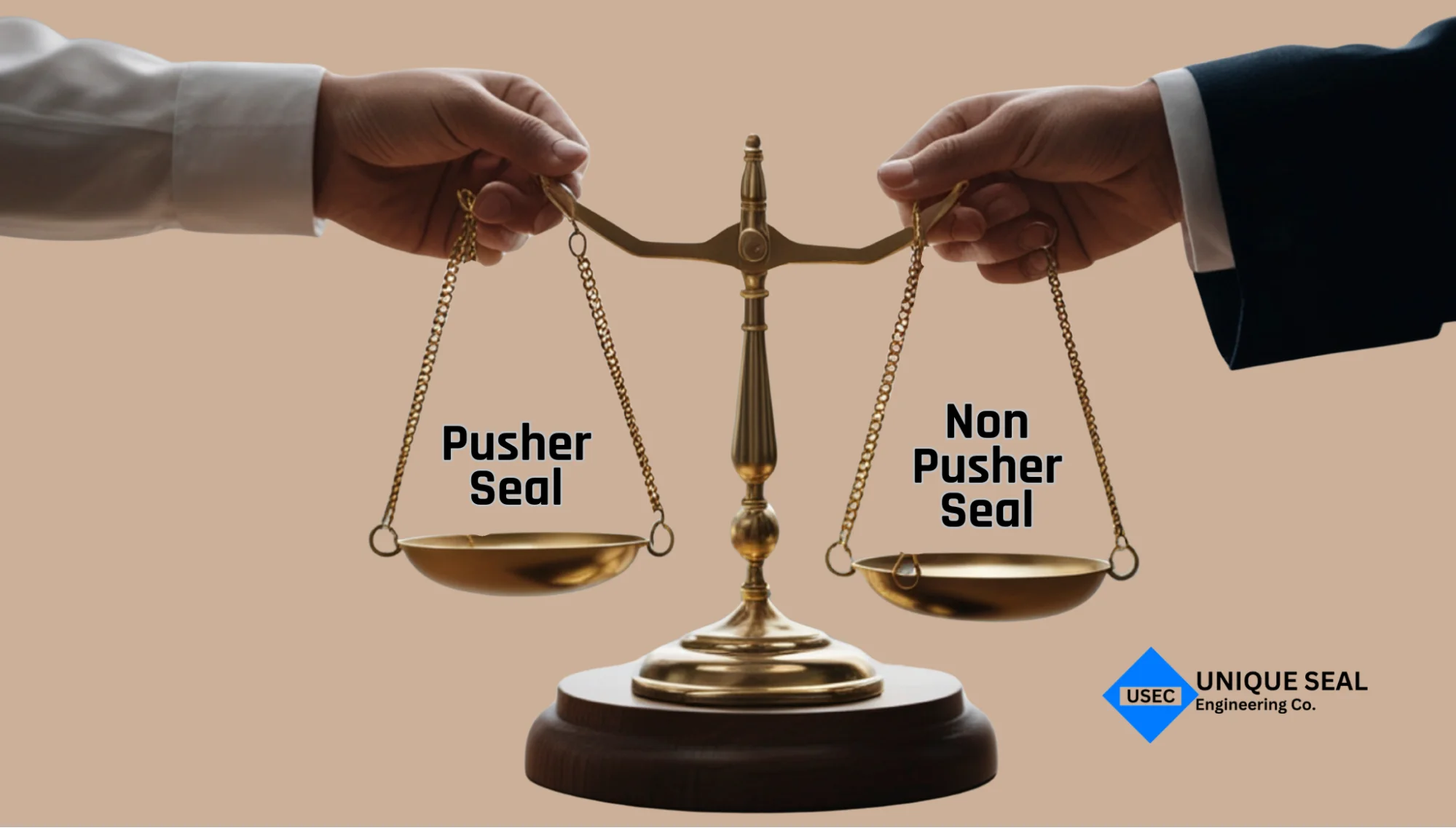
In real plants, seals do not work in perfect lab conditions. They face heat, pressure, chemicals, and dirty fluids every day. This is where the true difference between pusher and non-pusher seals becomes clear. Let us see how both types behave in tough situations.
Behavior in high-temperature systems
High temperature is one of the biggest challenges for any mechanical seal. Heat can damage rubber parts and reduce seal life.
Pusher seals use an O-ring as a moving secondary seal. If the temperature is too high, the elastomer O-ring can harden or lose flexibility. This can affect its sliding movement and sealing ability.
Non-pusher seals, especially metal bellows types, perform better in high heat. Metal parts can handle higher temperatures than most rubber materials. Since there is no sliding O-ring, the risk of heat-related sticking is also lower.
For very hot systems, non-pusher seals are often the safer option.
Stability in high-pressure applications
Pressure pushes the seal faces together with more force. If the seal is not designed properly, leakage can occur.
Pusher seals can handle moderate to high pressure, depending on their design. The spring provides steady closing force, and the sliding O-ring adjusts for wear.
Non-pusher seals also perform well under pressure. The bellows unit applies uniform force across the faces. In many heavy-duty systems, specially designed non-pusher seals are used for stable operation.
The final choice depends on the exact pressure level and seal design.
Compatibility with aggressive chemicals
Some liquids are harsh and can damage seal materials. Chemical compatibility is very important in such cases.
Experiencing Frequent Mechanical Seal Failures?
Recurrent seal leakage causes costly unplanned downtime, batch losses, and shaft fretting. Unique Seal Engineering Co. analyzes your exact operating parameters (shaft speed, fluid media, temperature, pressure) and provides custom face pairings and engineered seal recommendations.
In pusher seals, the O-ring is in contact with the pumped fluid. If the elastomer material is not suitable, it can swell, crack, or lose strength.
Non-pusher seals can offer better chemical resistance when made from suitable metal and face materials. Since there is no sliding elastomer on the shaft, chemical attack on moving rubber parts is reduced.
Material selection is critical for both types, but non-pusher designs are often preferred in highly corrosive systems.
Performance in slurry and contaminated fluids
Slurry and dirty fluids contain solid particles. These particles can affect seal movement and surface contact.
In pusher seals, dirt can collect around the O-ring area. If the O-ring cannot slide freely, sealing performance may suffer. This can lead to hang-up problems.
Non-pusher seals do not rely on sliding O-ring movement. The bellows flexes instead. This reduces the risk of sticking caused by solid particles. Because of this, non-pusher seals may perform better in contaminated fluids.
In harsh and dirty conditions, reducing moving contact points can improve reliability.
Both seal types have their strengths. The right choice depends on temperature, pressure, fluid type, and the level of contamination in the system.
Operational considerations and service behavior
Every mechanical seal works under load, heat, and pressure. Over time, certain issues can appear based on design and working conditions. Knowing these service patterns helps in better selection and maintenance planning.
Let us look at typical service-related issues for both seal types in a simple way.
Service points to watch in pusher seals:
Pusher seals are widely used and perform well in many systems. Still, there are some areas that need attention during operation.
O-ring movement issues
Since the O-ring slides along the shaft, dirt or sticky fluid can block its movement. If it cannot move freely, the seal may not adjust properly when wear happens. This condition is often called a hang-up.
Spring clogging
The spring is exposed to the pumped fluid in many designs. If the liquid contains solid particles or deposits, the spring area can get blocked. This may reduce the closing force over time.
Shaft surface wear
Because the O-ring moves on the shaft or shaft sleeve, surface wear can occur. If the shaft surface becomes rough, sealing performance can reduce and O-ring life may shorten.
Regular inspection and proper material choice can help reduce these issues.
Service points to watch in non-pusher seals
Non-pusher seals remove the sliding O-ring, but they also have their own service considerations.
Bellows fatigue over time
The bellows unit flexes continuously during operation. After long service in high load systems, the bellows may lose strength due to repeated movement.
Material cracking in harsh conditions
If the seal material is not suitable for the temperature or chemical fluid, small cracks can form. This is more common in extreme heat or aggressive chemical systems.
Overpressure impact
If system pressure goes beyond the seal design limit, the bellows structure can get damaged. Proper pressure control is important to avoid this condition.
With correct design selection and proper operating limits, both pusher and non-pusher seals can give long and reliable service.
Cost comparison and lifecycle economics

When selecting a mechanical seal, cost is not only about the buying price. The real picture comes from how much the seal costs over its full service life. This includes purchase price, maintenance cost, replacement frequency, and production loss during downtime.
A seal that looks cheaper at the start may cost more later. A seal with a higher price may save money over time if it reduces breakdowns. That is why lifecycle cost is very important in industrial systems.
Initial purchase cost difference
In most cases, pusher seals have a lower initial purchase cost. Their design is simple, and they are widely available. For standard pump systems, they are often the budget-friendly choice.
Non-pusher seals, especially metal bellows types, usually have a higher initial price. Their design is more advanced, and the materials used can be more expensive.
If the focus is only on the short-term budget, pusher seals may seem more attractive. But the first price is only one part of the decision.
Maintenance and replacement expenses
Maintenance cost depends on operating conditions. In clean and moderate systems, pusher seals can run for a long time with low service cost.
However, in dirty, hot, or chemical systems, the sliding O-ring and spring may need more frequent inspection or replacement. This can increase maintenance expenses over time.
Non-pusher seals often require less attention in high-temperature or harsh chemical systems because they do not rely on a sliding O-ring. In such conditions, they may offer longer service intervals and lower replacement frequency.
The real difference appears in demanding applications.
Downtime cost impact on production
Downtime is often more expensive than the seal itself. When a seal fails, the pump stops. Production may stop. Labor and repair costs increase.
In systems where downtime is very costly, reliability becomes more important than initial price. If a non-pusher seal provides longer stable operation in harsh conditions, it can reduce unexpected shutdowns.
In simple and clean applications, a pusher seal may perform well without causing frequent stoppages. But in critical systems, even one failure can lead to high production loss.
Total cost of ownership TCO analysis
Total Cost of Ownership looks at the complete cost during the seal’s working life. This includes purchase price, maintenance cost, spare parts, labor, and downtime impact.
A pusher seal may have a lower initial cost but a higher service cost in tough conditions.
A non-pusher seal may have a higher initial cost but a lower long-term cost in high-temperature or corrosive systems.
The right choice depends on the operating environment, maintenance schedule, and production value. When evaluating seals for industrial use, looking at full life cycle cost gives a clearer and more practical decision.
Application-based suitability comparison

Choosing between a pusher seal and a non-pusher seal depends on the type of system, working conditions, and budget goals. Some applications need a simple and cost-friendly solution. Others need higher stability in heat or chemical service.
The table below shows where each seal type is usually the better choice.
|
Application Condition |
The pusher seal is the practical choice |
Non-pusher seal delivers better long-term value |
|
Clean water pumps |
Suitable |
Not necessary in most cases |
|
Moderate temperature systems |
Suitable |
Can be used but may not be required |
|
Standard pressure applications |
Suitable |
Suitable but higher cost |
|
Budget-sensitive projects |
Preferred |
Higher initial cost |
|
High-temperature systems |
Limited (elastomer constraints) |
Strong choice (especially metal bellows) |
|
Corrosive chemical pumps |
Depends on material selection |
Better reliability with proper materials |
|
Slurry or dirty fluids |
Risk of sticking due to sliding seal |
Better performance (no sliding secondary seal) |
|
Critical continuous operation |
Acceptable in stable conditions |
Preferred for long-term reliability |
|
High downtime cost environment |
May require more maintenance |
More stable in harsh conditions |
In simple systems with clean fluids and normal temperature, a pusher seal is often enough and cost-effective. In high-heat, chemical, or heavy-duty systems, a non-pusher seal can provide better long-term value and reliability.
Engineering checklist for selecting the right seal type

Choosing the right seal is not only about brand or price. It depends on how your pump works every day. A small mistake in selection can lead to leakage, repair costs, and production loss. Before you decide between a pusher and a non-pusher seal, go through this simple checklist.
Operating temperature range
First, check the working temperature of your system. If the fluid temperature is normal or moderate, a pusher seal can work well. If the system runs at a high temperature, a non-pusher seal, especially a metal bellows type, may be a safer option. Heat affects rubber parts more than metal parts.
System pressure
Next, look at the pressure level inside the pump. Standard pressure systems can use either type, depending on design. For higher-pressure applications, make sure the seal is rated for that level. Always match the seal design with actual working pressure.
Shaft speed
Shaft speed also matters. High speed creates more heat and friction at the seal faces. In such cases, proper seal design and face material are important. Both pusher and non-pusher seals can work at high speed if selected correctly, but the operating limit must be checked carefully.
Pumped media characteristics
The type of liquid inside the pump plays a major role. Clean water is easy to seal. Dirty fluids, slurry, or sticky liquids need more attention. If the fluid contains solid particles, a non-pusher seal may reduce the risk of sticking because it does not use a sliding O-ring. For chemical fluids, material compatibility must be checked for both seal types.
Maintenance capability
Think about your maintenance team and service schedule. If regular inspection and part replacement are possible, a pusher seal can be a good option in many systems. If the system runs continuously and maintenance access is limited, a design with fewer moving contact points may give better long-term stability.
Budget considerations
Finally, review your budget. If the project has strict cost limits, a pusher seal usually has a lower initial price. If long service life and reduced downtime are more important than first cost, a non-pusher seal may offer better value over time.
By checking these points carefully, you can select the seal type that fits your system, working conditions, and financial plan.
Related Seal Technologies Worth Considering
While comparing pusher and non-pusher seals is important, there are other seal technologies that may also fit your system better. In some applications, a different seal design can improve installation, safety, or overall reliability.
Here are a few related seal options that are widely used in industry.
Cartridge mechanical seals
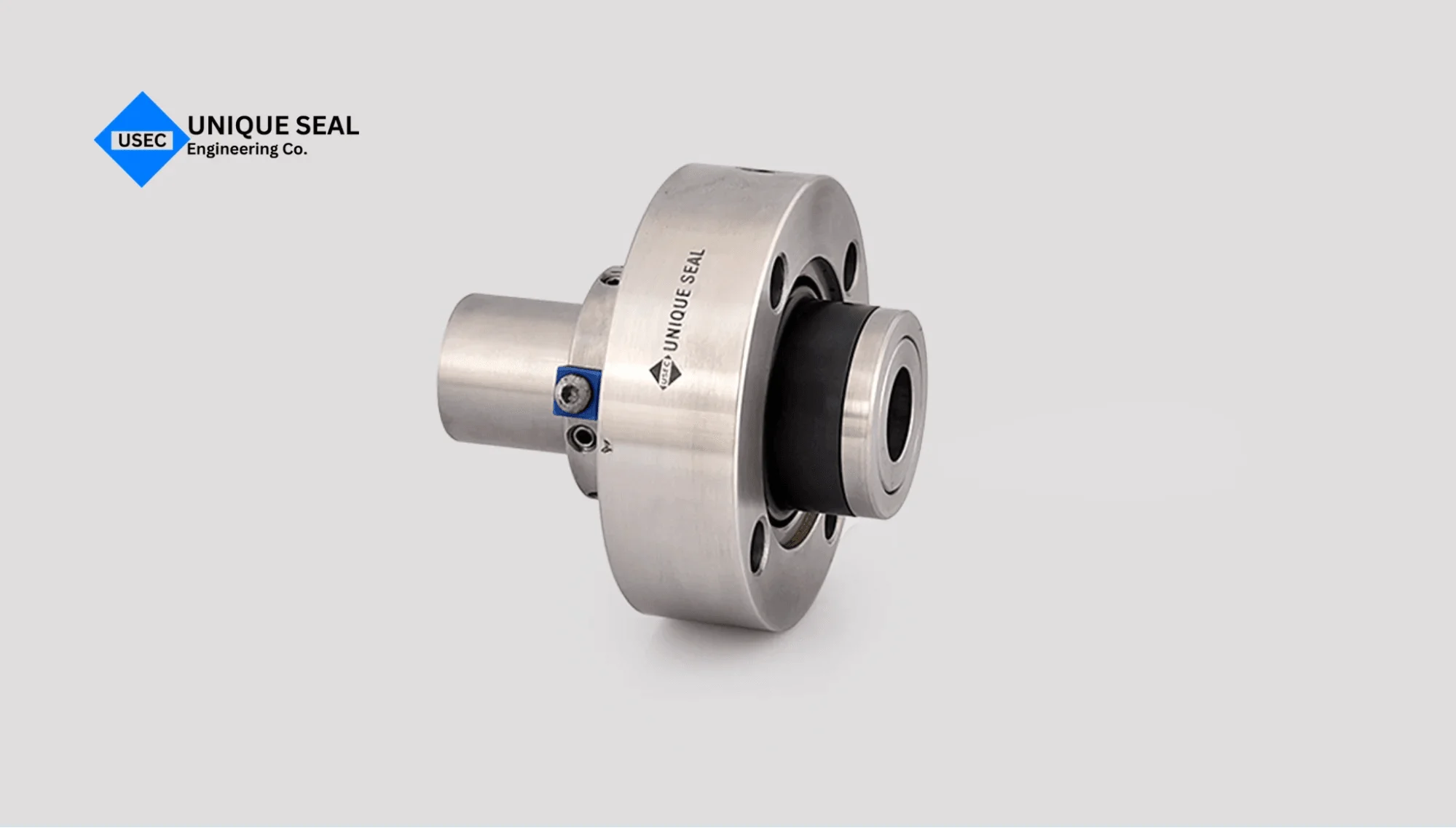
Cartridge mechanical seals come as a complete, pre-assembled unit. All parts are fitted and set at the factory. This makes installation easier and reduces the chance of setting errors during fitting.
They are a practical choice when quick installation and consistent performance are important. Since the seal is pre-set, alignment mistakes are less common. Cartridge seals are often used in industrial pumps where maintenance time needs to be reduced.
Double mechanical seals
Double mechanical seals use two sets of sealing faces instead of one. A barrier fluid is placed between the two seals. This design adds an extra layer of protection against leakage.
They are commonly used in systems that handle hazardous, toxic, or expensive fluids. If one seal face fails, the second seal helps prevent direct leakage to the outside. This makes double seals suitable for critical applications where safety and environmental control are top priorities.
Seal failure analysis and troubleshooting
Seal failure analysis focuses on finding the real reason behind seal damage. Instead of only replacing the seal, this approach looks at operating conditions, shaft alignment, pressure level, and fluid quality.
Regular inspection and proper troubleshooting can help reduce repeated failures. By checking wear patterns, surface marks, and material condition, maintenance teams can improve seal selection and system performance.
Looking at these related technologies along with pusher and non-pusher seals can help in building a stronger and more reliable sealing strategy for your pump system.
Choose the right mechanical seal for long-term pump performance
The small seal inside your pump plays a big role in daily production. When the seal is right, the pump runs smoothly. When the seal is wrong, leakage, repair, and downtime become common.
A pusher seal is a good choice for normal temperature, clean liquid, and standard pressure. It is simple in design and easy to maintain. Many industries use it because it is cost-friendly and reliable in regular working conditions.
A non-pusher seal is better for high temperatures, chemical fluids, and heavy-duty systems. Since it does not use a sliding O-ring, the risk of sticking is lower. It can give more stable sealing in tough environments.
The best choice depends on your system needs. Temperature, pressure, fluid type, and budget all matter.
If you want the right seal for your application, Unique Seal is ready to help. We supply high-quality pusher and non-pusher mechanical seals for many industries.
Get a free quote from Unique Seal today and let our experts help you select the right mechanical seal for your exact pump application.
Frequently asked questions about pusher and non-pusher mechanical seal
1. What is the key difference between a pusher and non-pusher mechanical seal?
The main difference is in the secondary seal design. A pusher seal uses a sliding O-ring that moves on the shaft. A non-pusher seal uses a bellows unit, so there is no sliding O-ring. This change affects heat handling, friction, and reliability.
2. Which seal is better for high-temperature systems?
A non-pusher seal is usually better for high-temperature use. The bellows design handles heat more safely because it does not depend on a moving O-ring.
3. Are pusher seals more affordable?
Yes, pusher seals normally have a lower starting price. That is why they are common in standard pump systems with normal working conditions.
4. When should I choose a non-pusher seal?
You should choose a non-pusher seal when the system has high temperatures, chemical fluids, or tough working conditions. It gives more stable sealing in demanding applications.
5. How do I select the right seal for my pump?
Check temperature, pressure, fluid type, shaft speed, and maintenance support. If you are not sure, you can contact Unique Seal and get a free quote based on your exact system needs.
Need a High-Reliability Replacement Mechanical Seal?
Unique Seal Engineering Co. manufactures Cartridge, Metal Bellows, PTFE Bellows, and Multi-Spring Seals with 100% optical flat inspection under monochromatic light at our Mohan Nagar, Ghaziabad facility. Get fast OEM-grade delivery across India and worldwide.
