

Have you ever seen a machine start leaking even after installing a new seal? This situation is more common than many people think. The seal looks fine from the outside, but inside, it cannot adjust properly with the shaft movement. As a result, leakage begins and machine reliability is affected.
To solve this problem, industries use a better design called a non-pusher type mechanical seal. This seal uses a flexible bellows that moves easily and maintains proper sealing without sticking. Because of this, it provides more reliable performance and a longer service life.
In this blog, you will learn what a non-pusher-type mechanical seal is, understand different non-pusher mechanical seal types, and explore their common applications in industry.
What is a non-pusher mechanical seal?
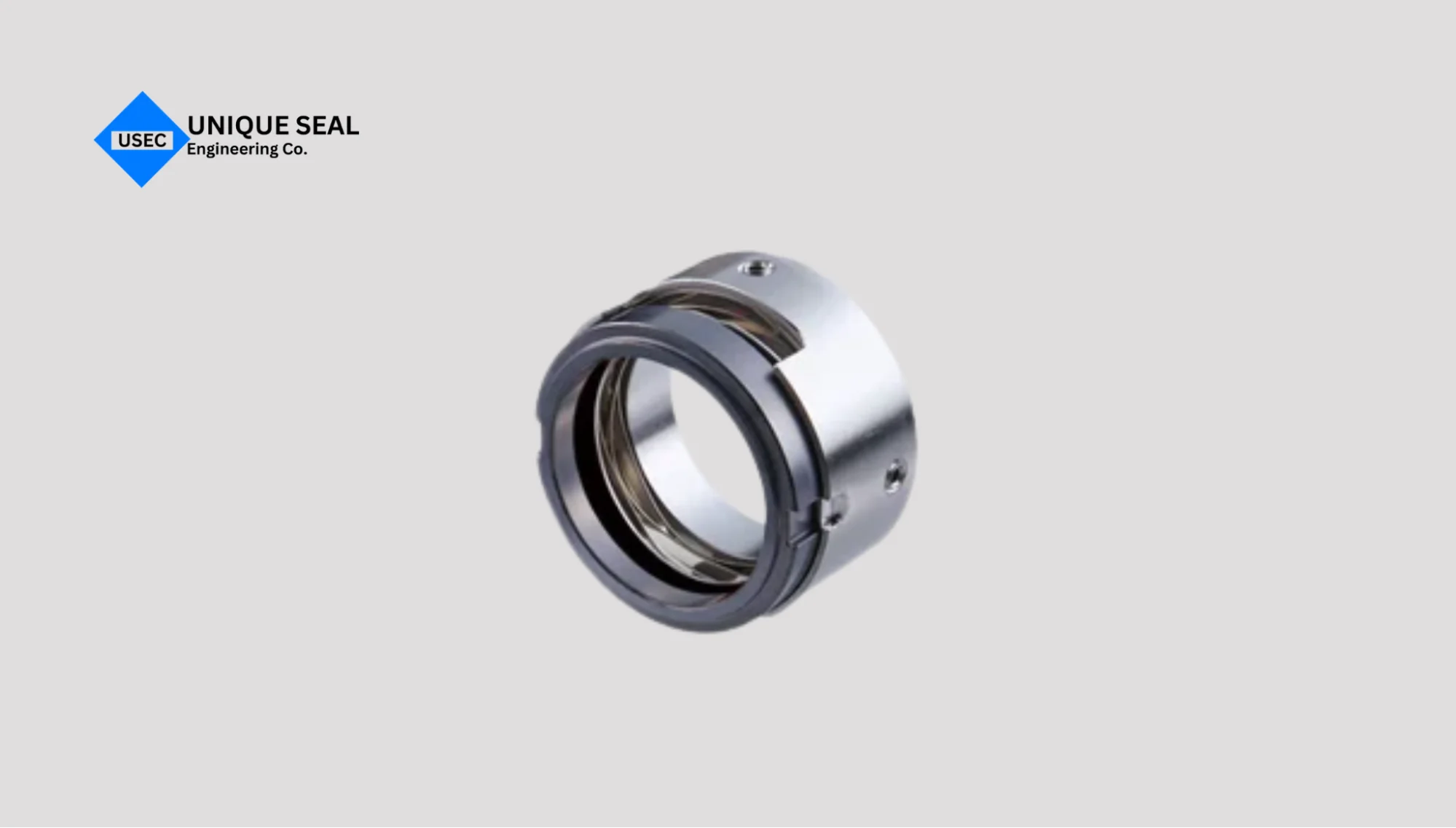
A non-pusher type mechanical seal is used to stop leakage between a rotating shaft and the machine body. It uses flexible bellows instead of a sliding O-ring. This bellows helps the seal adjust automatically and maintain proper sealing during operation.
It is called a non-pusher seal because it does not use a sliding secondary seal to push the seal face. The bellows itself moves and keeps the seal faces in contact. This reduces the chances of sticking, wear, and leakage, and makes the seal more reliable.
How a non-pusher mechanical seal works

A non-pusher mechanical seal works by keeping two seal faces in constant contact while the shaft rotates. One face rotates with the shaft, and the other stays fixed in the housing. The bellows help maintain proper pressure between these faces so leakage does not occur.
Because the bellows can flex easily, the seal adjusts automatically during shaft movement, vibration, or temperature changes. This helps the seal work smoothly and improves its life. Since there is no sliding O-ring, the risk of seal sticking or hanging is much lower.
How sealing faces create sealing
The sealing faces are flat and smooth surfaces. When they press against each other, they form a tight seal. This prevents fluid from escaping while allowing the shaft to rotate normally.
Role of bellows or flexible element
The bellows is the flexible part that helps the seal move slightly when needed. It keeps constant pressure on the seal faces and ensures proper sealing even when conditions change.
How it avoids sliding secondary seals
In this seal, the bellows handle the movement instead of a sliding O-ring. Because there is no sliding secondary seal, there is less friction, less wear, and fewer chances of leakage.
Main components of a non-pusher seal
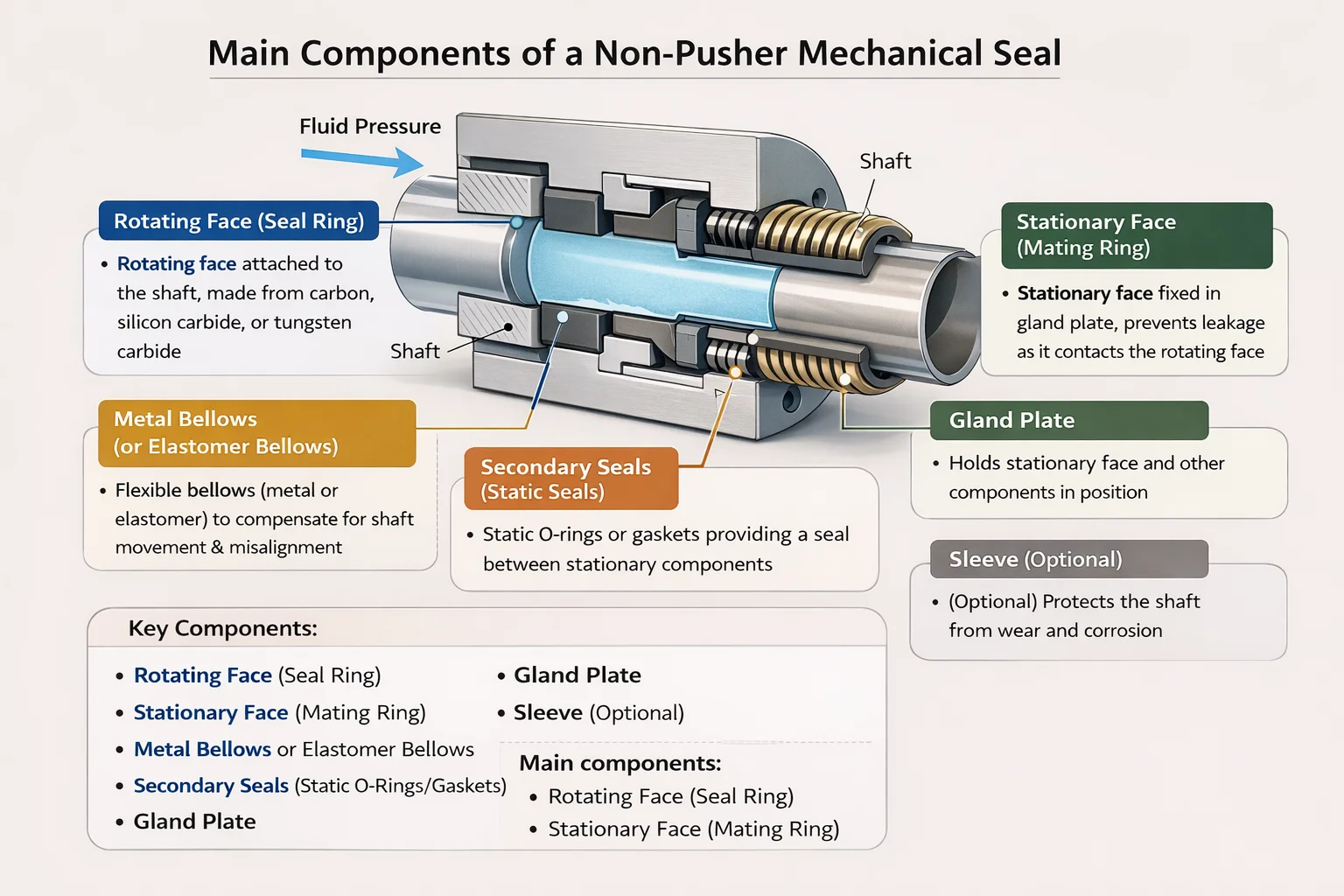
A non-pusher mechanical seal has several important parts that work together to prevent leakage and ensure smooth operation. Each component has a specific role in maintaining sealing performance and protecting the equipment.
Seal faces
Seal faces are the most important parts of the seal. One face rotates with the shaft, and the other stays fixed. These faces create the main sealing point and prevent fluid leakage.
Bellows (metal or elastomer)
Flexible bellows provide spring force to maintain seal face contact and accommodate axial shaft movement.
Gland plate
The gland plate holds the seal in position and connects it to the machine housing. It ensures the seal stays properly fixed during operation.
Springs (if present)
Some non-pusher seals use springs to support the bellows. These springs help maintain proper pressure between the seal faces and improve sealing reliability.
Sleeve
The sleeve is installed on the shaft and supports the seal components. It also helps protect the shaft from wear and damage.
Difference between pusher and non-pusher mechanical seals
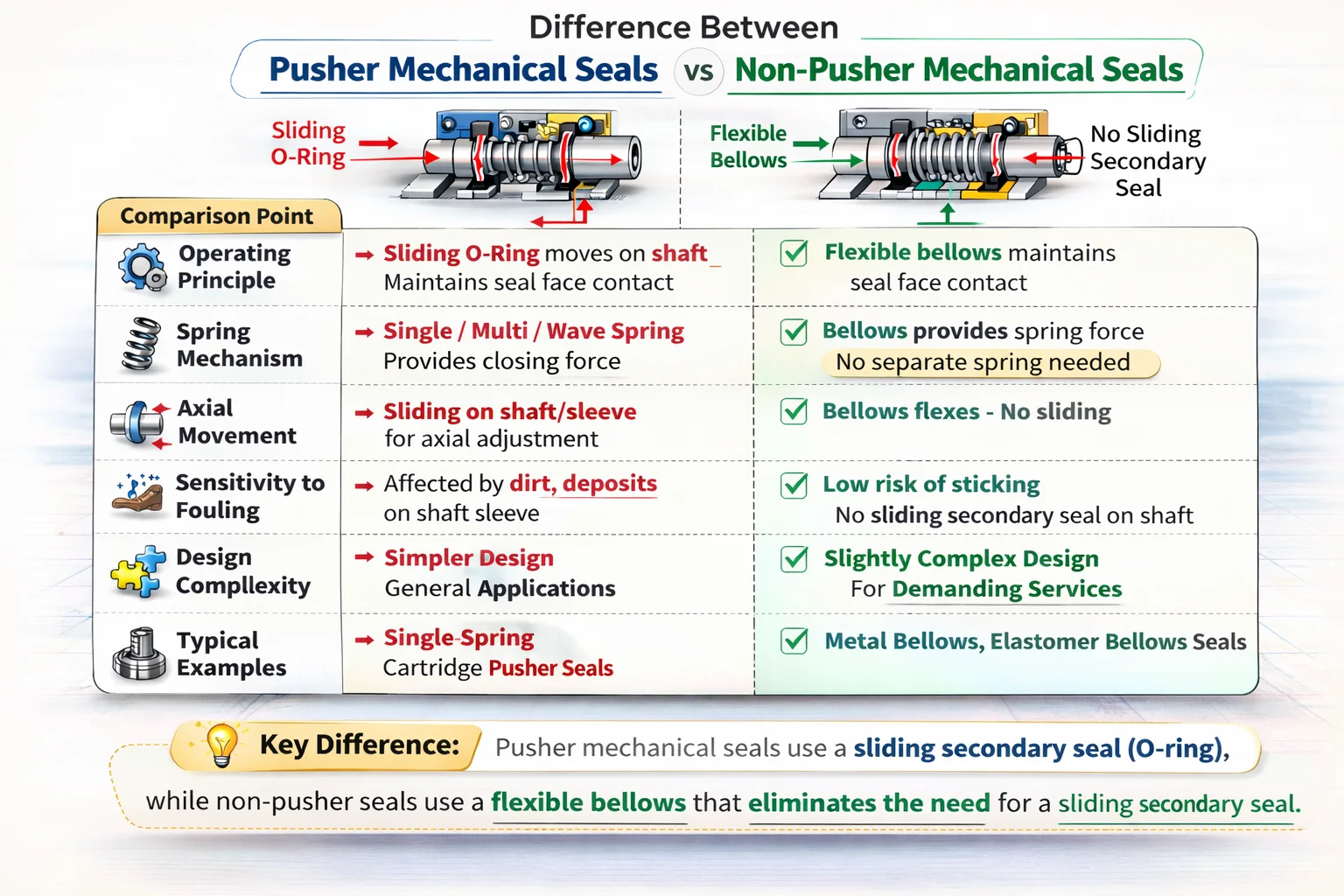
Pusher and non-pusher mechanical seals are used for the same purpose, but their design and working method are different. The main difference is how the seal adjusts during operation and how it maintains sealing. This difference affects reliability, performance, and application suitability.
Comparison table: pusher vs. non-pusher mechanical seal
|
Comparison Point |
Pusher Mechanical Seal |
Non-Pusher Mechanical Seal |
|
Operating Principle |
Uses a sliding secondary seal such as an O-ring or wedge that moves along the shaft or sleeve to keep the seal faces in contact. |
Uses a flexible bellows instead of a sliding secondary seal to maintain seal face contact. |
|
Spring Mechanism |
Uses springs such as single spring, multi-spring, or wave spring to create pressure between the seal faces. |
The bellows itself provides the spring force, so separate springs are usually not required. |
|
Axial Movement |
The secondary seal slides along the shaft or sleeve to adjust for axial movement. |
The bellows flexes to adjust for axial movement without sliding on the shaft. |
|
Sensitivity to Fouling |
Sliding seals may be affected by dirt, deposits, or corrosion on the shaft sleeve. |
Less risk of sticking because there is no sliding secondary seal on the shaft. |
|
Design Complexity |
Simpler design and commonly used in general industrial applications. |
Slightly more complex design and often used in demanding applications. |
|
Typical Examples |
Single spring seals, multi-spring seals, and cartridge pusher seals. |
Metal bellows seals and elastomer bellows seals. |
This table helps clearly understand why non-pusher mechanical seals are preferred for demanding and critical applications.
Non-pusher mechanical seal types
There are different non-pusher mechanical seal types available, and each type is designed for specific working conditions. These seals mainly use bellows instead of sliding O-rings, which improves reliability and reduces the risk of leakage. The choice of seal type depends on temperature, pressure, and the type of fluid being handled.
Metal bellows non-pusher mechanical seal
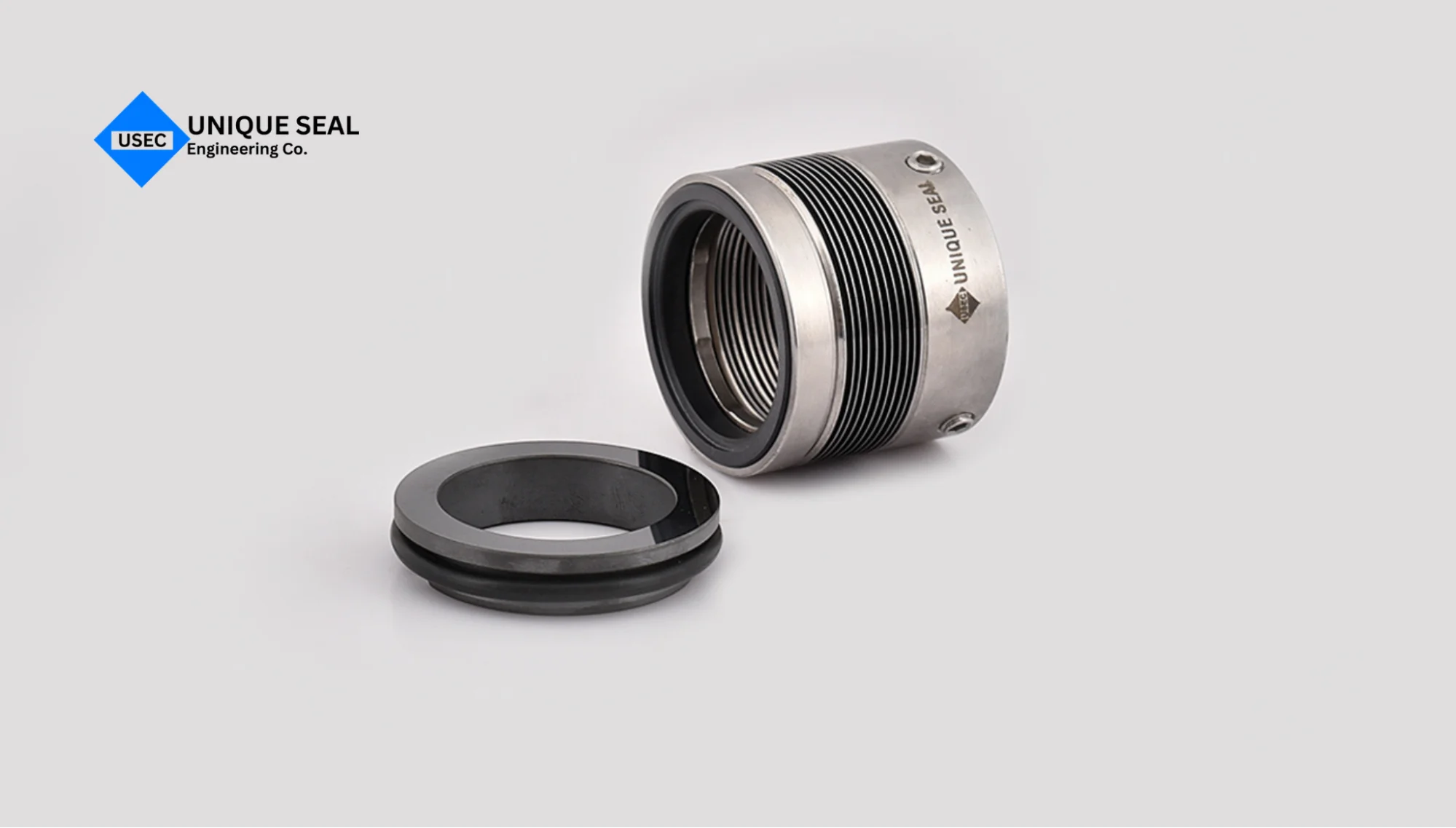
Design explanation
This type of seal uses a metal bellows as the flexible element. The metal bellows expands and contracts to maintain proper contact between the seal faces. Since it is made of metal, it can handle temperature changes and harsh operating conditions more effectively.
Experiencing Frequent Mechanical Seal Failures?
Recurrent seal leakage causes costly unplanned downtime, batch losses, and shaft fretting. Unique Seal Engineering Co. analyzes your exact operating parameters (shaft speed, fluid media, temperature, pressure) and provides custom face pairings and engineered seal recommendations.
Typical applications
These seals are commonly used in chemical industries, oil processing equipment, and high temperature applications. They are suitable for handling hot fluids and corrosive liquids.
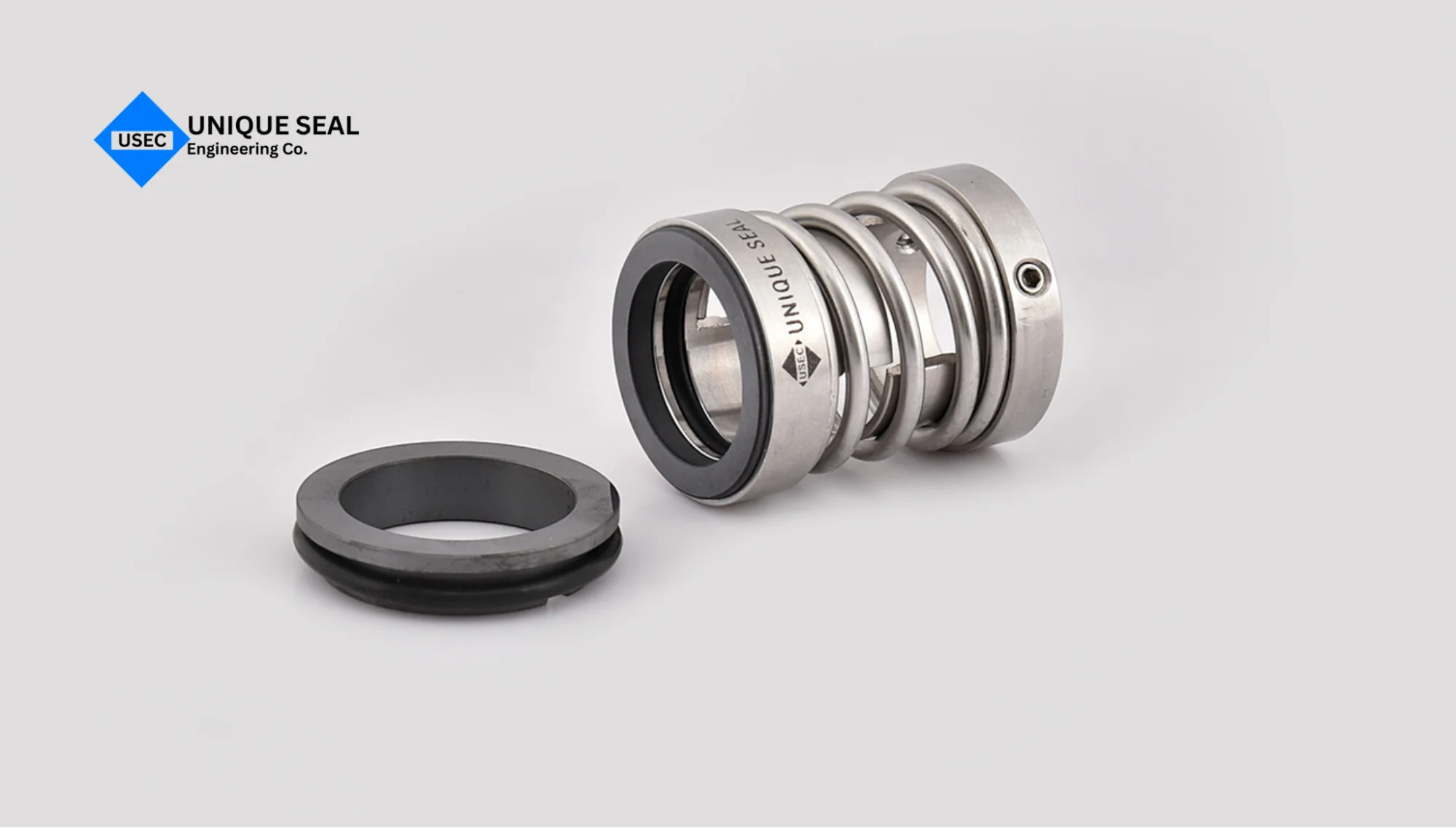
Elastomer bellows non-pusher mechanical seal
Design explanation
This seal uses elastomer bellows made from rubber-like material. The elastomer bellows provides flexibility and helps maintain sealing contact. It is designed for applications where temperature and pressure are moderate.
Typical applications
These seals are widely used in water handling equipment, general industrial machines, and applications with moderate temperature and pressure.
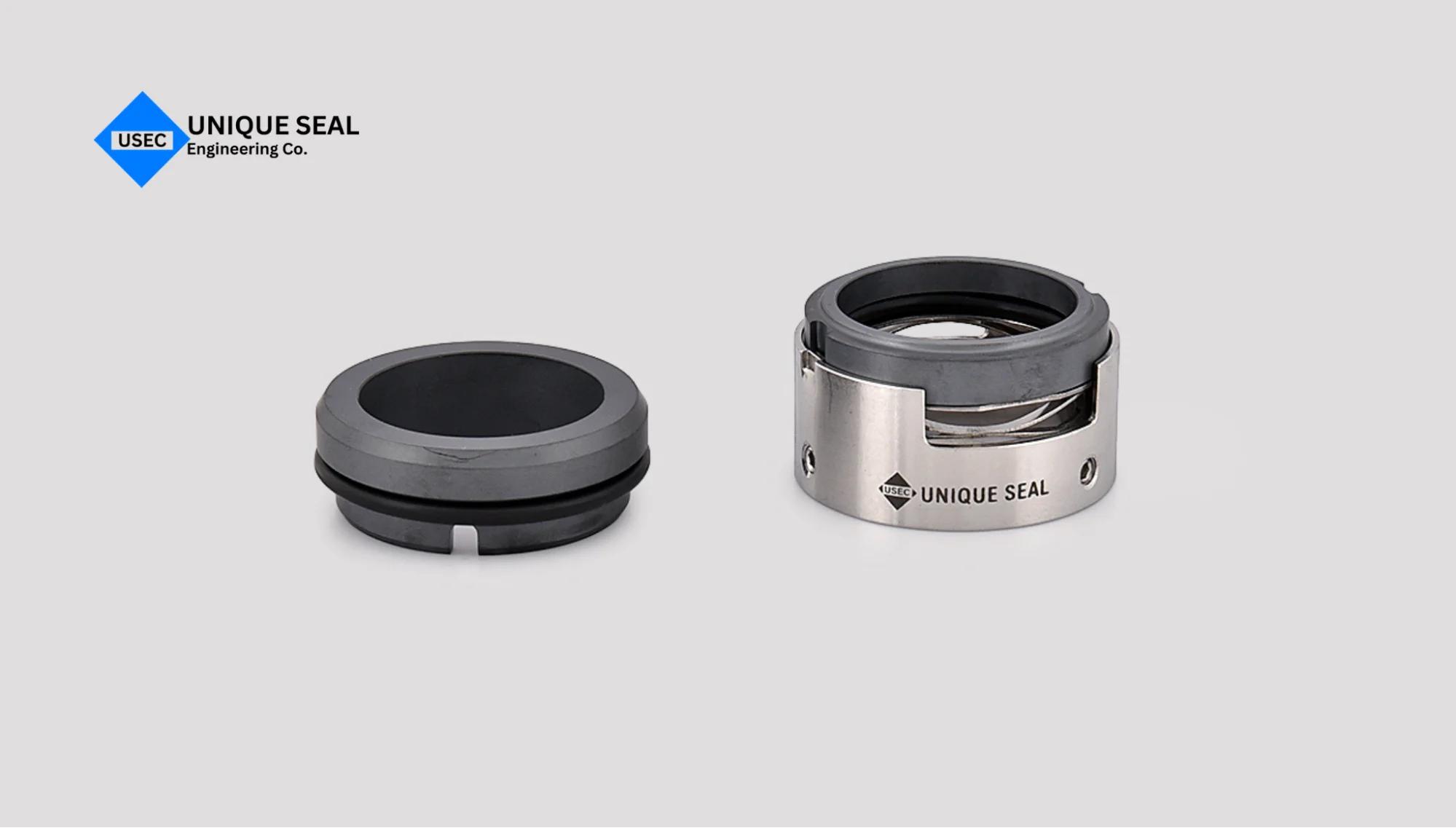
Welded metal bellows mechanical seal
Strong construction
This seal uses welded metal bellows, which makes the structure very strong and durable. The welded design improves seal strength and allows it to perform reliably in demanding environments.
High-temperature suitability
Welded metal bellows seals are specially designed for high-temperature applications. They can handle extreme heat without losing sealing performance. These seals are commonly used in chemical processing, oil and gas equipment, and other high-temperature machinery.
These non-pusher mechanical seal types are selected based on application needs, operating conditions, and reliability requirements.
Advantages of non-pusher type mechanical seals

Non-pusher-type mechanical seals offer many benefits compared to traditional seal designs. Their flexible bellows design helps them work smoothly and provide better sealing performance. Because of this, they are widely used in many industrial applications.
No hang-up problem
In this seal, there is no sliding O-ring. The bellows move easily and do not stick. This reduces the risk of seal hang-up and helps prevent leakage.
Works well in dirty or viscous fluids
Non-pusher seals work better in dirty, thick, or sticky fluids. Since there is no sliding secondary seal, dirt cannot block the movement. This helps the seal work properly even in difficult conditions.
Better performance in high temperature
These seals can handle high temperatures more effectively. The bellows design allows the seal to adjust easily during temperature changes. This helps maintain proper sealing.
Less wear on shaft or sleeve
Because there is no sliding O-ring, there is less friction on the shaft or sleeve. This reduces wear and helps protect the equipment.
Reliable sealing performance
Non-pusher mechanical seals provide stable and reliable sealing. They reduce leakage problems and help improve machine life and performance.
Applications of non-pusher mechanical seals
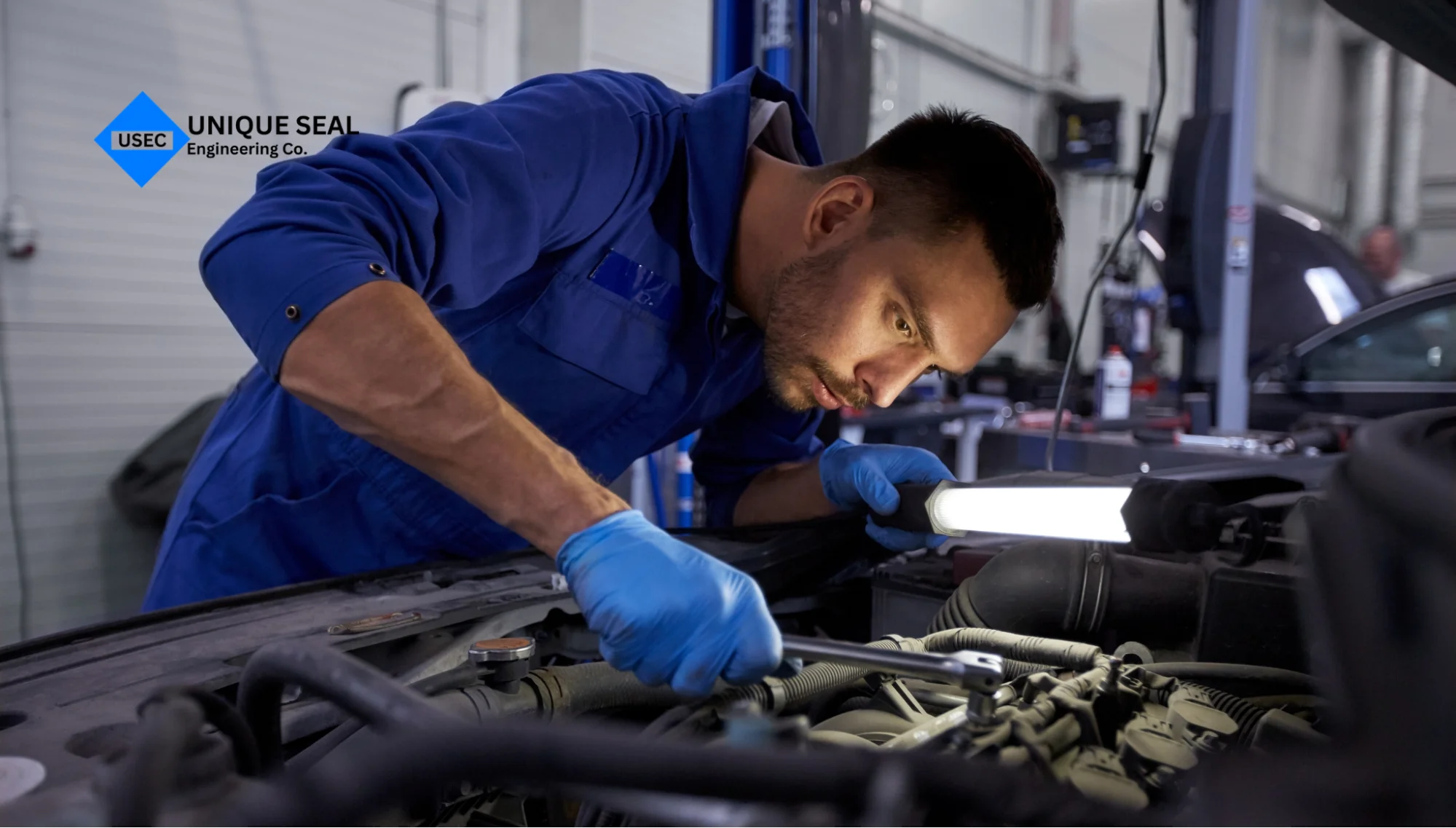
Non-pusher mechanical seals are used in many industries where reliable sealing is important. These seals work well in high-temperature, dirty fluids, and corrosive conditions. Their bellows design helps them perform smoothly and reduces the risk of leakage.
Chemical industry
In the chemical industry, machines handle aggressive and harmful liquids. These fluids can damage normal seals. Non-pusher mechanical seals work well in these conditions because the bellows design prevents sticking and provides reliable sealing. They help improve safety and reduce leakage.
Oil and gas industry
Oil and gas equipment often works under high pressure and temperature. Seal failure in these applications can cause serious problems. Non-pusher seals provide stable sealing and work reliably even in tough operating conditions. This helps protect equipment and reduce maintenance.
Pharmaceutical industry
In the pharmaceutical industry, clean and safe operation is very important. Leakage can affect product quality. Non-pusher seals provide proper sealing and help maintain safe and clean production conditions.
Food processing industry
Food processing machines require safe and leak-free operation. Non-pusher seals help prevent leakage and support smooth machine operation. They are suitable for handling liquids used in food production.
High-temperature equipment
Some machines operate at very high temperatures. Normal seals may fail in such conditions. Non-pusher mechanical seals, especially metal bellows types, work well in high temperatures and provide reliable sealing.
Corrosive fluid handling equipment
Corrosive fluids can damage seal parts and cause leakage. Non-pusher seals are suitable for handling such fluids because their design reduces wear and improves durability. This helps increase equipment life and reduce maintenance problems.
Common failure reasons and how non-pusher seals help prevent them

Mechanical seals can fail for many reasons, and this can cause leakage and machine problems. Many of these failures happen because of seal design limitations. Non-pusher mechanical seals help reduce these problems because they use flexible bellows instead of a sliding secondary seal.
Secondary seal sticking
In pusher seals, the O-ring slides on the shaft or sleeve. Over time, dirt, heat, or fluid deposits can cause the O-ring to stick. When this happens, the seal cannot move properly, and leakage starts.
Non-pusher seals do not use a sliding O-ring. The bellows handle the movement, so there is no sticking problem. This helps maintain proper sealing.
Shaft wear
In seals with sliding O-rings, friction can cause wear on the shaft or sleeve. This damage can affect seal performance and reduce equipment life.
Non-pusher seals reduce friction because there is no sliding secondary seal. This helps protect the shaft and improves equipment durability.
Heat damage
High temperature can damage seal components, especially rubber O-rings. Heat can cause hardening, cracking, or seal failure.
Non-pusher seals, especially metal bellows types, handle heat better. The bellows design helps maintain proper sealing even in high-temperature conditions.
Improper seal movement
For proper sealing, the seal must adjust during shaft movement and vibration. In pusher seals, sticking or friction can prevent proper movement, causing leakage.
Non-pusher seals use flexible bellows that move easily. This helps the seal adjust smoothly and maintain reliable sealing performance.
When should you choose a non-pusher mechanical seal?

Choosing the right seal is important for safe and reliable machine operation. A non-pusher mechanical seal is a better choice when working conditions are difficult or when traditional seals do not perform well. Its bellows design helps prevent sticking and improves sealing performance.
High-temperature applications
Non-pusher seals are suitable for high-temperature conditions. The bellows can handle heat better than sliding O-rings. This helps maintain proper sealing and reduces the risk of seal failure.
Dirty or sticky fluids
In dirty or sticky fluids, sliding O-rings may get stuck and cause leakage. Non-pusher seals do not use sliding secondary seals, so they work more smoothly in such conditions.
Corrosive environments
Corrosive fluids can damage seal parts and affect performance. Non-pusher seals, especially metal bellows types, provide better resistance and reliable sealing in corrosive environments.
Situations where pusher seals fail
If pusher seals fail frequently due to sticking, wear, or leakage, switching to a non-pusher seal can be a better solution. It provides more stable performance and reduces maintenance problems.
Is a non-pusher-type mechanical seal the right choice for your application?
A non-pusher-type mechanical seal is a reliable solution for preventing leakage, especially in high-temperature, dirty, or corrosive conditions. Its flexible bellows design helps avoid common problems like seal sticking, shaft wear, and improper movement. This improves seal life, reduces maintenance, and keeps machines running smoothly.
Choosing the right seal depends on your operating conditions and reliability needs. Using the correct seal can improve equipment performance and reduce downtime. Unique Seals offers high-quality non-pusher mechanical seals designed for long life and dependable performance across industries.
If you are selecting a seal or facing leakage issues, our experts are ready to help. Contact Unique Seals today to get a free quote and find the right sealing solution for your application.
Need a High-Reliability Replacement Mechanical Seal?
Unique Seal Engineering Co. manufactures Cartridge, Metal Bellows, PTFE Bellows, and Multi-Spring Seals with 100% optical flat inspection under monochromatic light at our Mohan Nagar, Ghaziabad facility. Get fast OEM-grade delivery across India and worldwide.
