
You get a call from the plant floor.
A pump is leaking.
Again.
Your maintenance team rushes in, shuts down the line, and starts the whole process of disassembling the pump to replace the seal.
Three hours later, the pump is back online.
And you're staring at the lost production hours, the labor cost, and wondering: is there a better way?
There is.
It's called a cartridge mechanical seal.
If you are an engineer, a maintenance professional, or someone who deals with rotating equipment such as pumps, mixers, agitators, and compressors, this guide is for you.
By the time you finish reading, you will know:
-
What a cartridge mechanical seal is and how it works
-
Its main parts and types (single, double, and split)
-
How it compares to a non-cartridge mechanical seal
-
Where it is used across industries
-
How to pick the right one for your application
Let's get into it.
What is a cartridge mechanical seal?
Imagine receiving a sealing solution that arrives fully assembled, pre-aligned, and ready to install.
No need to position individual components on the shaft.
No need to manually set spring compression.
No need to worry about alignment errors during installation.
That is exactly what a cartridge mechanical seal is designed to do.
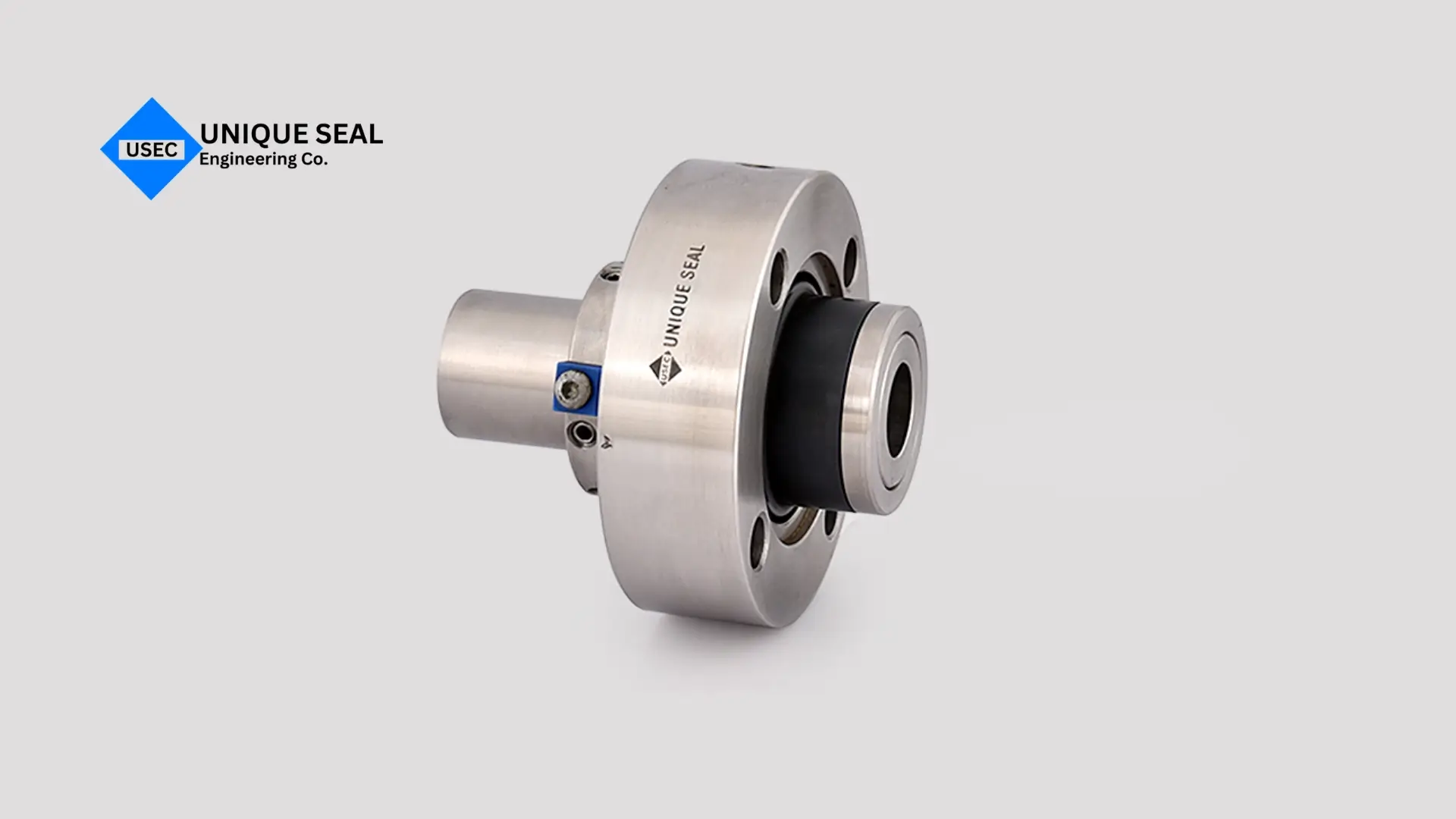
A cartridge mechanical seal is a pre-assembled, self-contained sealing unit in which all major components, including the seal faces, springs, sleeve, gland plate, and O-rings, are assembled into a single package before installation.
Unlike conventional component seals, which require assembly and adjustment on the equipment shaft, a cartridge seal is supplied as a complete unit. The installer simply mounts the assembly onto the shaft, secures the gland plate, removes the setting clips, and the seal is ready for operation.
This pre-set design significantly reduces installation errors, improves reliability, and shortens maintenance time.
Its primary function is straightforward but critical: preventing process fluid from leaking along the rotating shaft of pumps, mixers, agitators, compressors, and other rotating equipment.
In industrial environments, even a small seal failure can result in:
-
Unplanned downtime
-
Product loss
-
Equipment damage
-
Safety hazards
-
Environmental compliance issues
By simplifying installation and improving sealing reliability, cartridge mechanical seals have become a preferred choice across industries such as chemical processing, pharmaceuticals, water treatment, oil and gas, food processing, and power generation.
How does a cartridge mechanical seal work?
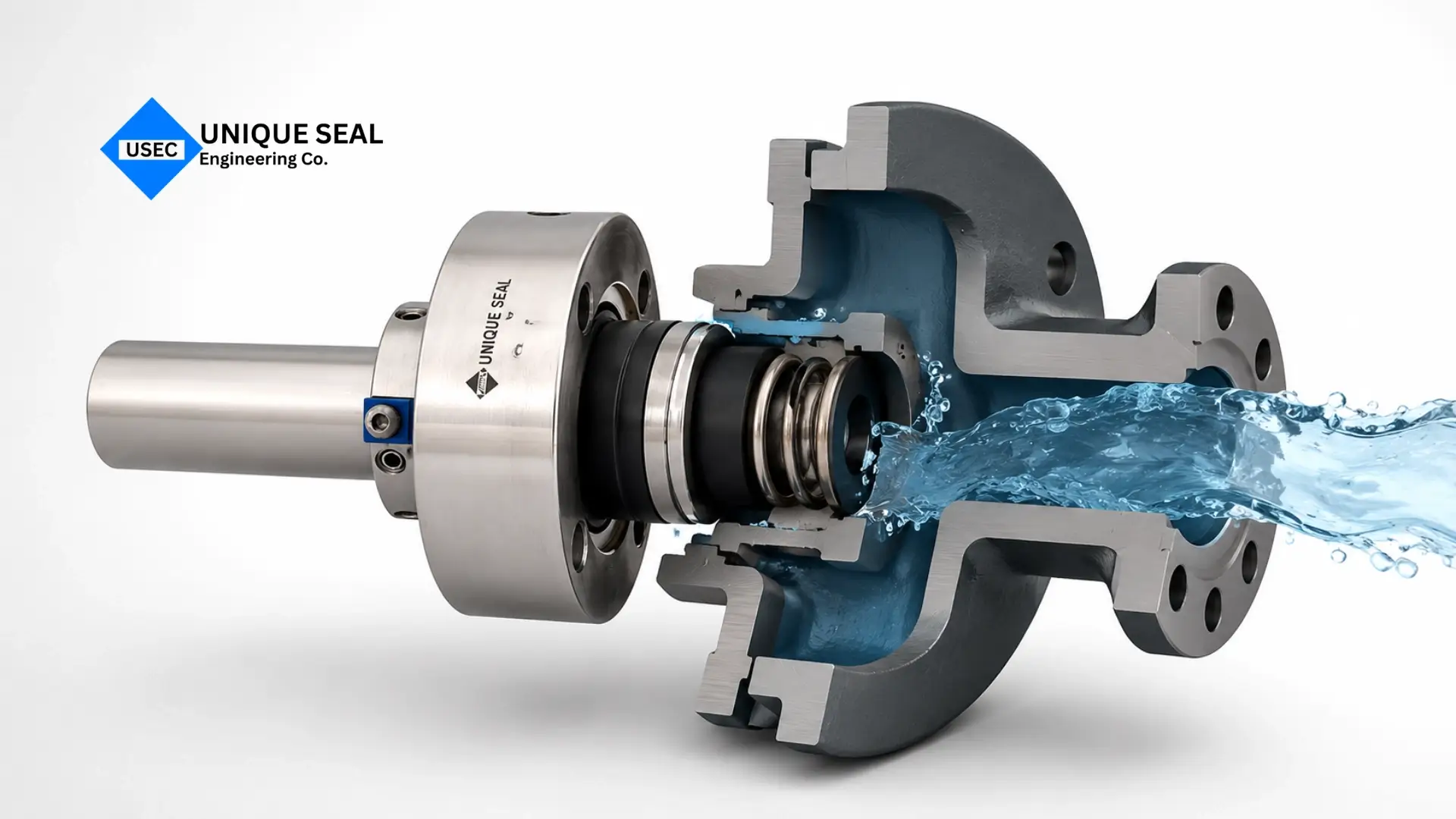
At its core, a cartridge mechanical seal prevents fluid leakage by creating a controlled sealing interface between two precision-engineered faces: one rotating and one stationary.
As the equipment operates, these seal faces work together to contain the process fluid while allowing the shaft to rotate freely.
Here's how the sealing process works.
Step 1: The seal faces create the primary seal
The rotating face is mounted on the seal sleeve and rotates along with the equipment shaft.
The stationary face is fixed within the gland plate, which is attached to the pump or equipment housing.
These two highly polished faces are pressed together to form the primary sealing interface. Although the faces appear to be in direct contact, a microscopic fluid film exists between them during operation.
This sealing interface is responsible for preventing most process fluid leakage.
Step 2: Springs maintain face contact
A set of springs applies a constant closing force on the rotating face.
This force ensures that the seal faces remain properly aligned and in contact, even when the equipment experiences:
-
Shaft movement
-
Vibration
-
Pressure fluctuations
-
Thermal expansion
Maintaining consistent face contact is essential for reliable sealing performance and extended seal life.
Step 3: The fluid film provides lubrication
A very thin fluid film forms between the rotating and stationary seal faces during operation.
This fluid film performs two critical functions:
-
Lubricates the seal faces to minimize friction and wear
-
Controls leakage while maintaining an effective seal
The thickness of this film is carefully balanced.
If the film becomes too thin, excessive friction and overheating can damage the seal faces. If it becomes too thick, leakage may increase.
Cartridge mechanical seals are designed to maintain this balance under normal operating conditions.
Step 4: O-rings provide secondary sealing
In addition to the primary seal faces, O-rings and secondary sealing elements prevent fluid leakage through other potential leak paths.
These components seal:
-
Between the sleeve and shaft
-
Between the gland plate and equipment housing
-
Around other mating components within the seal assembly
This ensures complete containment of the process fluid.
Step 5: Setting clips ensure proper installation
One of the key advantages of a cartridge mechanical seal is its pre-set design.
During manufacturing, setting clips lock the seal components in the correct installation position.
After the seal is mounted and the gland plate is secured, the setting clips are removed. This allows the springs to apply the correct load and enables the seal faces to operate as designed.
Because the seal is factory-set, installation errors are significantly reduced compared to conventional component seals.
In simple terms
A cartridge mechanical seal works by maintaining controlled contact between a rotating seal face and a stationary seal face. Springs provide the necessary closing force, a thin fluid film minimizes friction, and O-rings seal secondary leakage paths. Together, these components create a reliable sealing system that helps prevent fluid leakage and supports efficient equipment operation.
Main parts of a cartridge mechanical seal
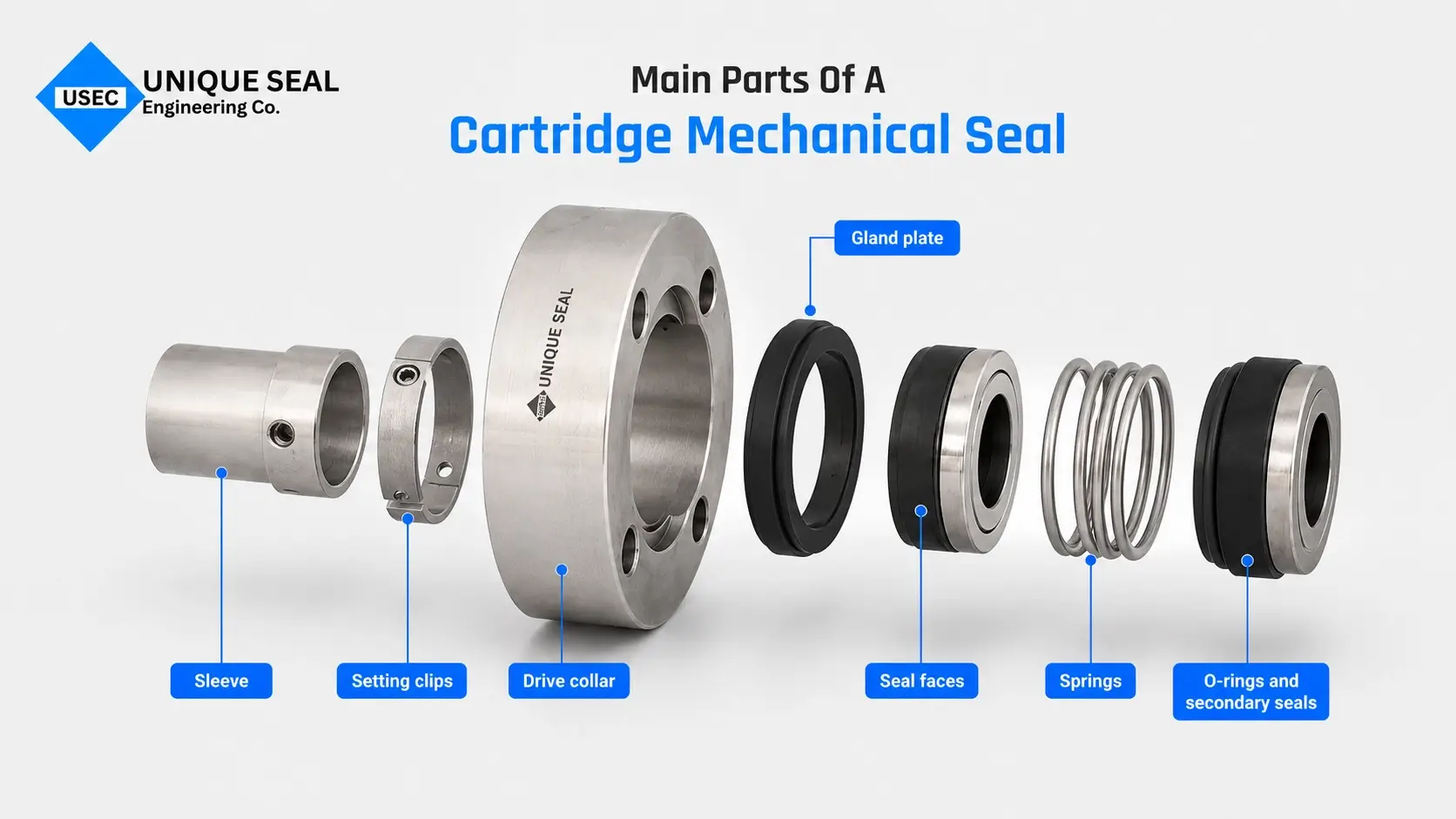
To understand how a cartridge mechanical seal works, it's important to understand the role of each component within the assembly.
A cartridge mechanical seal consists of several precision-engineered parts that work together to prevent leakage, reduce wear, and ensure reliable operation.
Seal faces
The seal faces are the most critical components of the entire assembly.
A mechanical seal typically contains two highly polished faces:
-
A rotating face attached to the shaft assembly
-
A stationary face mounted within the gland plate
These faces create the primary sealing interface and are responsible for controlling fluid leakage.
The material used for the seal faces depends on operating conditions such as pressure, temperature, fluid properties, and abrasiveness.
Common seal face materials include:
-
Silicon Carbide (SiC): Highly wear-resistant and suitable for abrasive or corrosive applications.
-
Carbon Graphite: Offers excellent self-lubricating properties and good chemical compatibility.
-
Tungsten Carbide: Extremely hard and commonly used in abrasive service conditions.
The flatness of seal faces is measured in helium light bands, highlighting the precision required during the lapping process.
Sleeve
The sleeve is a cylindrical component mounted over the equipment shaft.
It serves multiple functions:
-
Protects the shaft from wear and corrosion
-
Supports the rotating seal components
-
Provides a mounting surface for the cartridge assembly
Because the seal is installed on the sleeve rather than directly on the shaft, maintenance and replacement are often simpler.
Gland plate
The gland plate forms the stationary portion of the cartridge seal assembly.
It is bolted to the pump stuffing box or equipment housing and performs several important functions:
-
Holds the stationary seal face in position
-
Secures the seal assembly to the equipment
-
Provides connections for flush, quench, or barrier fluid systems when required
The gland plate also helps maintain proper alignment of the sealing components during operation.
Springs
Springs maintain the closing force required between the rotating and stationary seal faces.
This continuous force helps compensate for:
-
Normal seal face wear
-
Shaft movement
-
Equipment vibration
-
Thermal expansion
Most cartridge seals use one of the following spring arrangements:
-
Single Coil Springs: Simple, durable, and suitable for many standard applications.
-
Multiple Springs: Provide more uniform face loading and are often preferred for higher-speed or demanding applications
Without proper spring loading, effective sealing cannot be maintained.
O-rings and secondary seals
While the seal faces create the primary seal, O-rings and secondary sealing elements prevent leakage through other potential pathways.
These components seal:
-
Between the sleeve and shaft
-
Between the gland plate and equipment housing
-
Around internal mating surfaces within the seal assembly
Material compatibility is essential for long-term performance.
Common O-ring materials include:
-
Nitrile (NBR)
-
EPDM
-
Viton (FKM)
-
PTFE-encapsulated elastomers for aggressive chemical applications
Selecting the correct elastomer helps ensure reliable sealing and longer service life.
Drive collar
The drive collar connects the rotating seal assembly to the equipment shaft.
Its primary purpose is to transfer rotational torque from the shaft to the rotating seal face and associated components.
Depending on the design, the drive collar is secured using:
-
Set screws
-
Clamping mechanisms
-
Locking arrangements
Proper installation is important to ensure smooth operation and prevent component slippage.
Setting clips
Setting clips are temporary installation aids supplied with cartridge mechanical seals.
They hold the seal components in their factory-set position during shipping and installation, ensuring correct alignment and spring compression.
Once the seal has been mounted and the gland plate secured, the setting clips must be removed before equipment startup.
Operating the equipment with the setting clips still installed can result in seal damage and improper performance.
Quick summary of cartridge mechanical seal parts
|
Component |
Function |
|
Seal Faces |
Create the primary sealing interface |
|
Sleeve |
Protect the shaft and support rotating components |
|
Gland Plate |
Secure the seal assembly and hold stationary components |
|
Springs |
Maintain continuous contact between seal faces |
|
O-Rings & Secondary Seals |
Prevent leakage through secondary sealing points |
|
Drive Collar |
Transfer shaft rotation to the rotating seal components |
|
Setting Clips |
Maintain factory-set alignment during installation |
Understanding these components makes it easier to troubleshoot seal issues, select the right seal design, and ensure proper installation and maintenance.
Types of cartridge mechanical seals
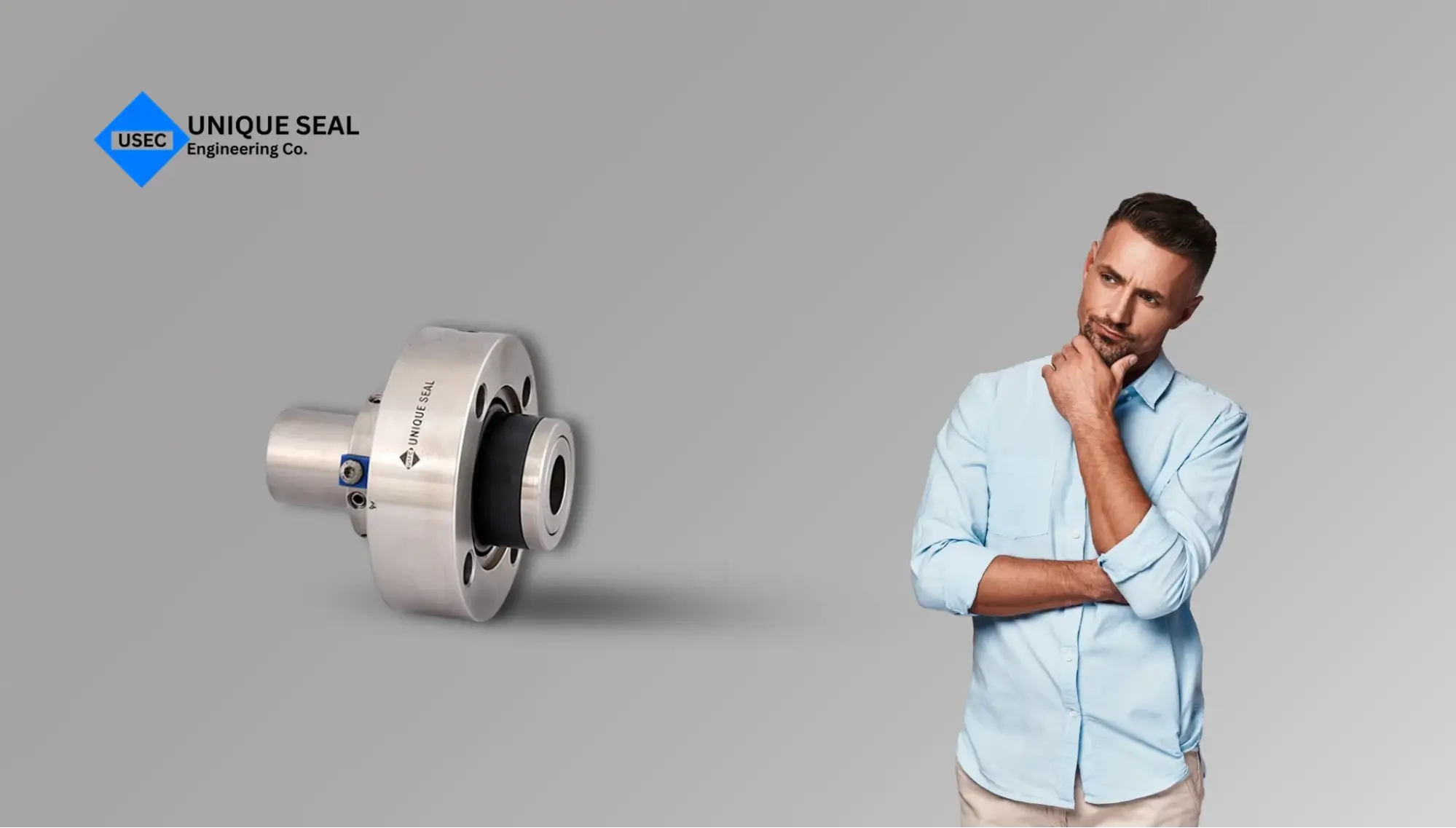
Not all cartridge mechanical seals are designed for the same operating conditions.
The right seal selection depends on several factors, including:
-
Process fluid characteristics
-
Operating pressure and temperature
-
Equipment design
-
Safety requirements
-
Environmental regulations
-
Maintenance objectives
The three most common types of cartridge mechanical seals are single cartridge seals, double cartridge seals, and split cartridge seals.
Let's take a closer look at each.
Single cartridge mechanical seal
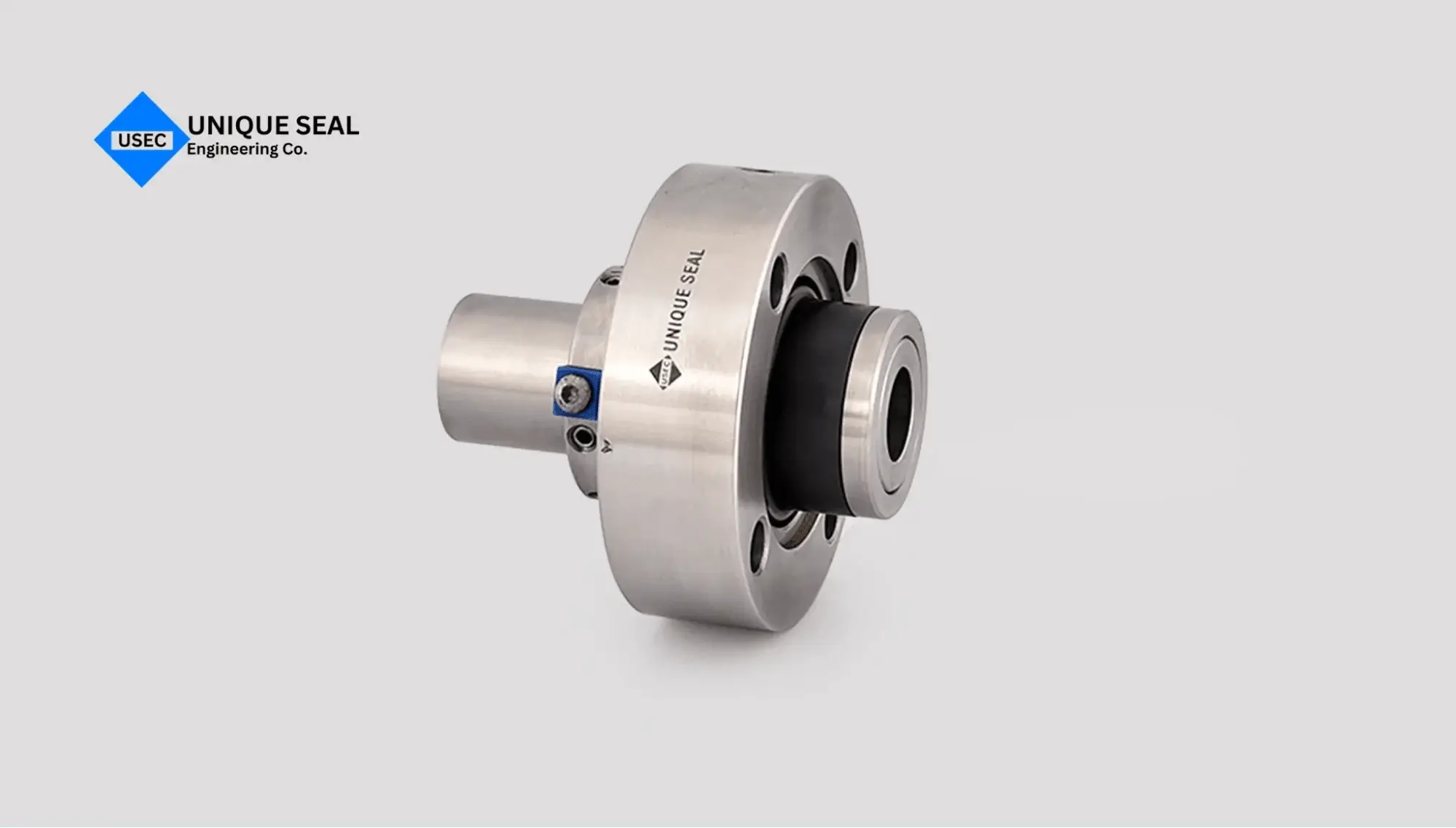
A single cartridge mechanical seal is the most widely used cartridge seal design across industrial applications.
It contains one set of seal faces, along with all supporting components assembled into a single pre-set cartridge unit.
Construction
A typical single cartridge mechanical seal includes:
-
One rotating seal face
-
One stationary seal face
-
Springs for face loading
-
Sleeve and drive components
-
Gland plate
-
O-rings and secondary sealing elements
All components are factory assembled and pre-aligned, reducing installation complexity.
Advantages
-
Simple and reliable design
-
Easy installation and replacement
-
Lower initial cost compared to double seals
-
Reduced risk of installation errors
-
Suitable for a wide range of standard industrial applications
Typical applications
Single cartridge mechanical seals are commonly used in:
-
Water and wastewater pumps
-
General industrial process pumps
-
HVAC systems
-
Utility services
-
Light chemical processing applications
Limitations
In a single seal arrangement, the process fluid acts as the lubricant between the seal faces.
While this works well for many applications, it may not be suitable when handling:
-
Hazardous chemicals
-
Toxic fluids
-
Flammable products
-
Highly abrasive media
If seal failure occurs, the process fluid can leak directly into the atmosphere.
For clean, non-hazardous fluids, a single cartridge mechanical seal is often the most economical and practical solution.
Double cartridge mechanical seal
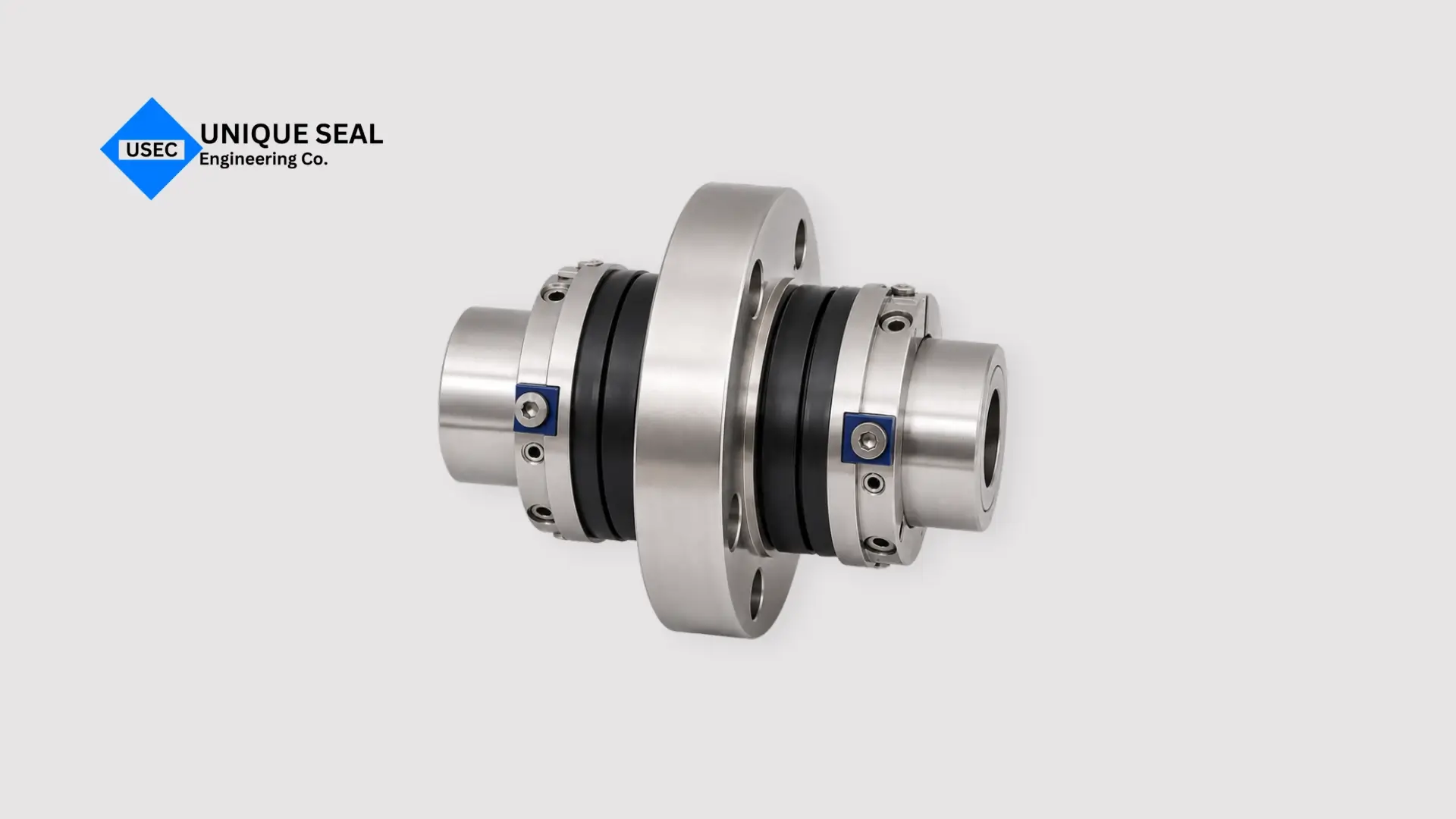
A double cartridge mechanical seal is designed for applications where leakage control, environmental protection, and operational safety are critical.
Instead of one sealing interface, it uses two sets of seal faces separated by a barrier fluid chamber.
Construction
A double cartridge mechanical seal typically consists of:
-
An inner seal face set
-
An outer seal face set
-
A pressurized barrier fluid chamber
-
Sleeve and gland assembly
-
Secondary sealing elements
The barrier fluid is maintained at a pressure higher than the process fluid to prevent leakage to the atmosphere.
How the barrier fluid works
The barrier fluid is usually a clean, compatible liquid such as water, glycol, or light oil.
Because the barrier fluid pressure exceeds the process pressure:
-
The barrier fluid flows toward the process side
-
Process fluid is prevented from escaping to the atmosphere
-
Seal faces receive additional cooling and lubrication
This arrangement significantly improves sealing reliability in demanding applications.
Advantages
-
Minimizes or eliminates process fluid emissions
-
Suitable for hazardous and toxic services
-
Improved seal life through enhanced lubrication and cooling
-
Supports compliance with environmental and safety standards
-
Provides greater protection for personnel and equipment
Typical applications
Double cartridge mechanical seals are commonly used in:
-
Chemical processing plants
-
Petrochemical facilities
-
Oil and gas operations
-
Pharmaceutical manufacturing
-
Specialty chemical production
-
Applications involving hazardous or flammable fluids
Important considerations
Double cartridge seals require a supporting barrier fluid system, which may include:
-
Reservoirs
-
Piping arrangements
-
Pumps or circulation systems
-
Cooling equipment
Although this increases initial system cost, the added protection often outweighs the expense in critical applications.
Split cartridge mechanical seal
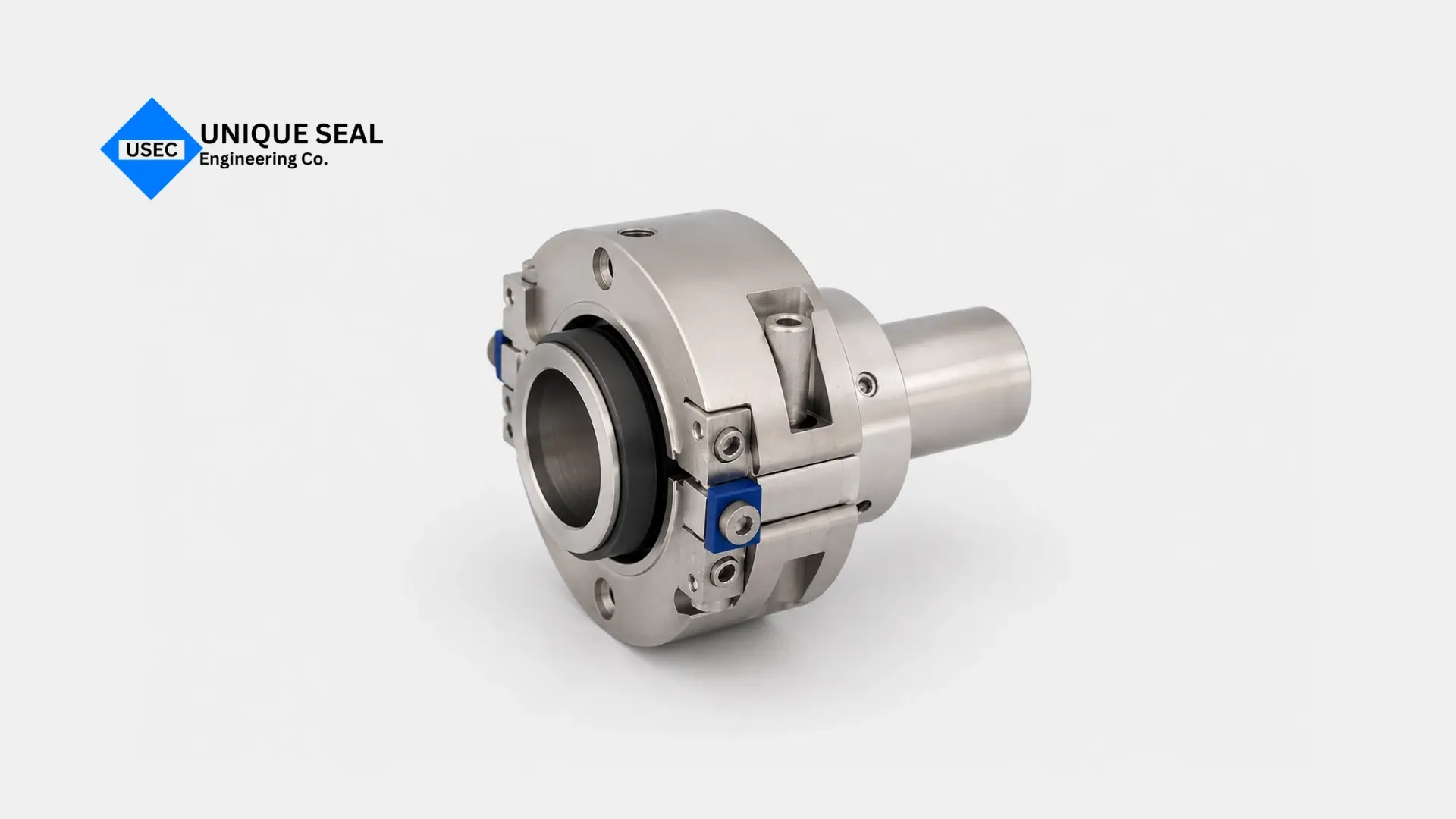
A split cartridge mechanical seal is specifically designed to simplify maintenance on large rotating equipment.
Unlike conventional seals, the entire assembly is manufactured in two matching halves that can be installed around the shaft.
This eliminates the need for extensive equipment disassembly during seal replacement.
What makes it different
The following components are split into two sections:
-
Seal faces
-
Sleeve
-
Gland plate
-
Secondary sealing elements
The halves are assembled around the shaft and secured in place after installation.
Installation benefits
Split cartridge seals offer several maintenance advantages:
-
No need to remove the shaft
-
No need to remove bearings or couplings
-
Reduced disturbance to equipment alignment
-
Faster installation and replacement procedures
These benefits can significantly reduce maintenance labor and equipment downtime.
Reduced downtime advantages
In large industrial equipment, seal replacement can often require several hours of disassembly and reassembly.
With a split cartridge seal:
-
Installation time is substantially reduced
-
Maintenance activities become simpler
-
Production interruptions are minimized
-
Overall maintenance costs can be lowered
Typical Applications
Split cartridge mechanical seals are commonly found in:
-
Large horizontal split-case pumps
-
Cooling water pumps
-
Circulating water systems
Engineering Reliability SupportExperiencing Frequent Mechanical Seal Failures?
Recurrent seal leakage causes costly unplanned downtime, batch losses, and shaft fretting. Unique Seal Engineering Co. analyzes your exact operating parameters (shaft speed, fluid media, temperature, pressure) and provides custom face pairings and engineered seal recommendations.
-
Paper and pulp industry equipment
-
Mining and mineral processing applications
-
Large mixers and agitators
-
Equipment where shaft removal is difficult or costly
Choosing the right cartridge seal type
Each cartridge seal design serves a different purpose:
|
Seal Type |
Best For |
|
Single Cartridge Seal |
Clean, non-hazardous fluids and general industrial applications |
|
Double Cartridge Seal |
Hazardous, toxic, flammable, or environmentally sensitive services |
|
Split Cartridge Seal |
Large equipment where minimizing maintenance downtime is a priority |
Selecting the correct cartridge mechanical seal depends on the operating environment, process requirements, and maintenance objectives of the application.
Cartridge mechanical seal vs non-cartridge mechanical seal
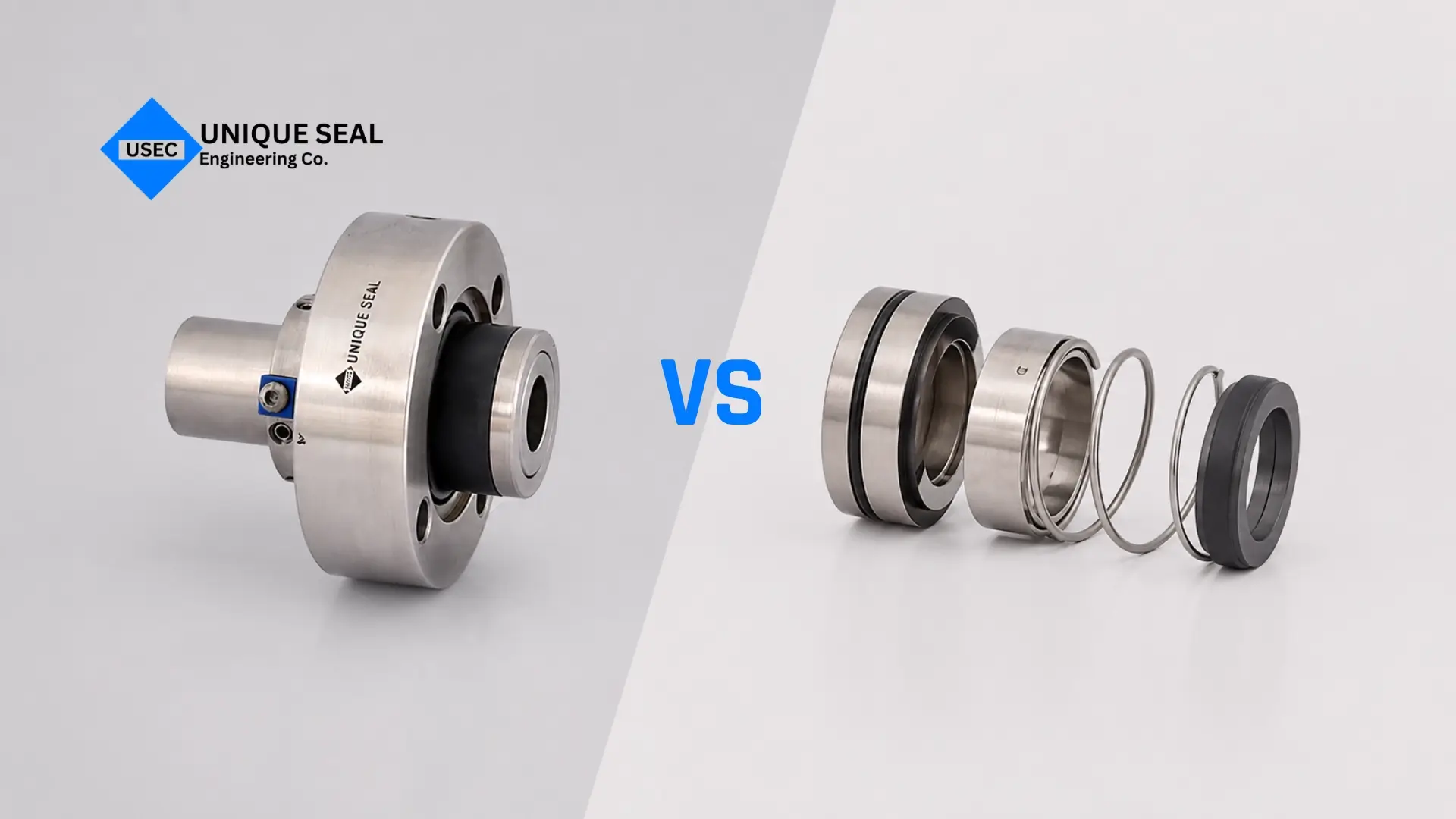
This is one of the most common questions engineers and maintenance teams ask when selecting a sealing solution.
Both seal types perform the same fundamental function: preventing fluid leakage along a rotating shaft. However, they differ significantly in design, installation, maintenance requirements, and overall reliability.
What is a cartridge mechanical seal?
A cartridge mechanical seal is a fully assembled, factory-set sealing unit supplied as a single package.
All major components, including the seal faces, springs, sleeve, gland plate, and O-rings, are pre-aligned and assembled before installation.
Instead of building the seal directly on the shaft, the installer simply slides the cartridge assembly into position, secures the gland plate, removes the setting clips, and the seal is ready for operation.
Because the seal is factory preset, installation errors are minimized, maintenance becomes easier, and equipment downtime is reduced.
What is a non-cartridge mechanical seal?
A non-cartridge mechanical seal, also known as a component mechanical seal, is supplied as individual components.
The rotating face, stationary face, springs, O-rings, and other parts must be assembled directly on the equipment shaft during installation.
Proper installation requires accurate positioning, spring compression, and alignment of each component.
While component seals can be cost-effective, their performance often depends heavily on installation quality and technician experience.
Key differences between cartridge and non-cartridge mechanical seals
|
Feature |
Cartridge Mechanical Seal |
Non-Cartridge Mechanical Seal |
|
Installation |
Pre-assembled, slide-on installation |
Components assembled individually on-site |
|
Alignment |
Factory preset |
Manually adjusted during installation |
|
Installation Errors |
Low risk |
Higher risk |
|
Maintenance Time |
Lower |
Higher |
|
Initial Cost |
Higher |
Lower |
|
Skill Requirement |
Moderate |
Higher |
|
Replacement Time |
Faster |
Slower |
|
Reliability |
More consistent |
Depends on installation quality |
|
Downtime Impact |
Lower |
Higher |
Which option should you choose?
Choose a cartridge mechanical seal when:
-
Fast installation is important
-
Downtime costs are high
-
Consistent sealing performance is required
-
Hazardous or critical fluids are being handled
-
Reducing installation errors is a priority
Choose a non-cartridge mechanical seal when:
-
Initial budget is the primary consideration
-
Skilled maintenance personnel are available
-
The application is relatively simple
-
A cartridge configuration is not available for the equipment
In many modern industrial facilities, cartridge mechanical seals have become the preferred choice because they simplify installation, improve reliability, and reduce the risk of human error during maintenance.
Key features of cartridge mechanical seals
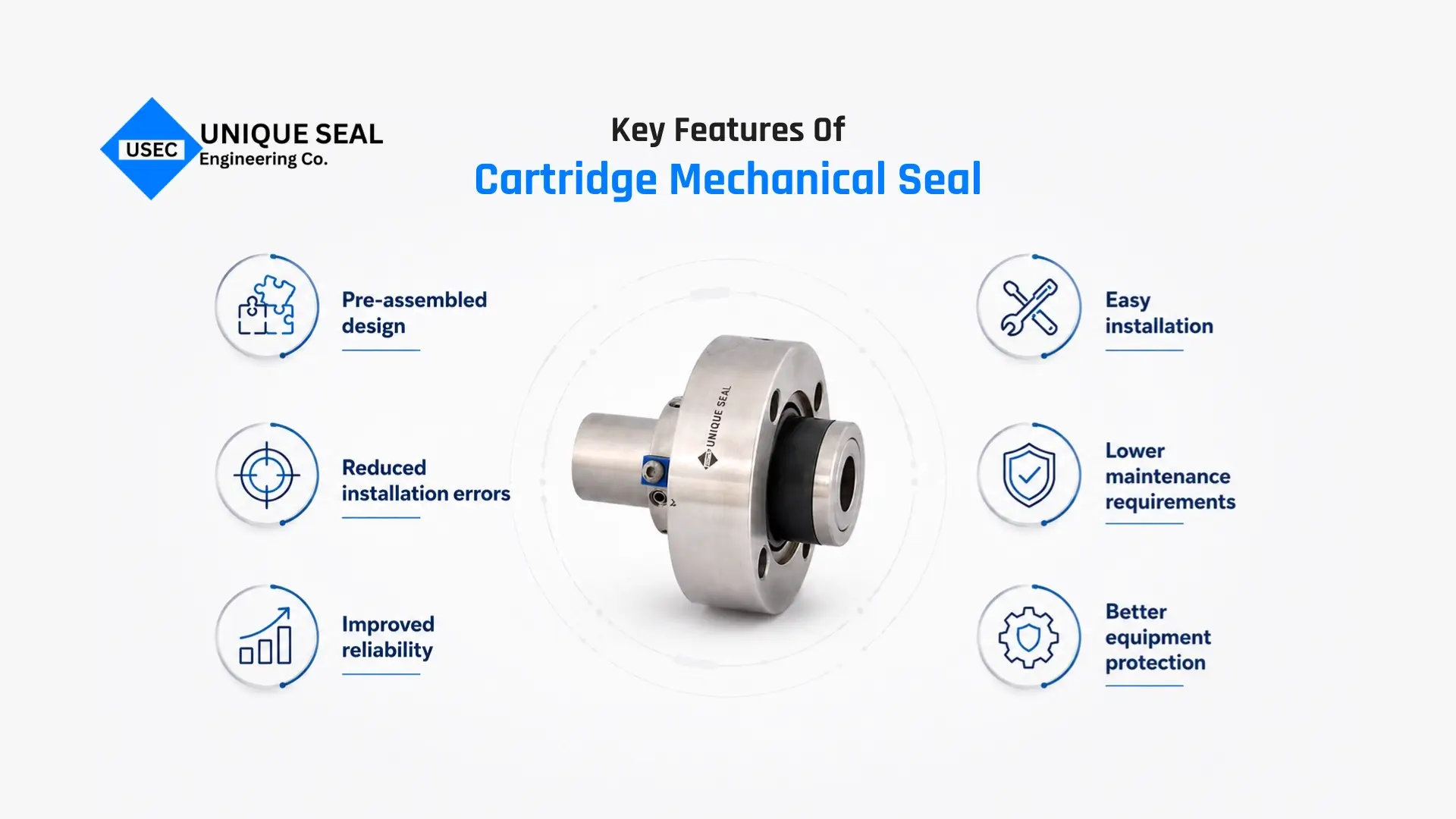
Let's be specific about what makes cartridge seals stand out in industrial applications.
Pre-assembled design
Every component comes aligned, pre-set, and ready to install straight from the manufacturer.
No measuring spring compression. No checking face squareness. No risk of assembling components in the wrong order.
The factory did all of that for you.
Easy installation
The cartridge design is engineered so that even a moderately trained technician can complete a correct installation.
Slide onto shaft → bolt gland plate → remove setting clips → done.
This is especially valuable in high-turnover environments where consistent skill levels cannot be guaranteed.
Reduced installation errors
In component seals, a small error in spring compression, face alignment, or O-ring seating can cause premature failure, often within hours of restart.
Cartridge seals remove this variable entirely.
The alignment is locked in at the factory. The spring load is pre-set. The setting clips hold everything in position until the moment of installation.
Improved reliability
Because installation variables are eliminated, cartridge seals consistently perform closer to their designed service life.
The seal works as the engineer who designed it intended it to work, not as well as (or as poorly as) the person who installed it.
Lower maintenance requirements
Less time spent on seal installation. Less time diagnosing installation-related failures. Less unplanned downtime.
Over the operating life of equipment, this translates into real cost savings.
Better equipment protection
Because cartridge seals are designed as a complete system, they protect not just the seal itself but the shaft and equipment around it.
The sleeve protects the shaft from wear. The gland plate provides proper flush and quench connections. The pre-set alignment ensures the shaft is not over-stressed during installation.
Advantages of using cartridge seals in industrial equipment

The popularity of cartridge mechanical seals is not just about easier installation. Their benefits extend across maintenance, reliability, safety, and overall operating costs.
Here's why many industrial facilities prefer cartridge seals over conventional component seals.
Reduced downtime
One of the biggest advantages of cartridge seals is faster installation and replacement.
Because the seal arrives pre-assembled and pre-set, maintenance teams can complete installation much more quickly compared to component seals.
Less maintenance time means equipment can return to service sooner, helping reduce costly production interruptions.
Longer service life
Seal performance depends heavily on proper alignment and face loading.
Since cartridge seals are factory-set, they are installed exactly as intended by the manufacturer. This helps maintain:
-
Correct seal face alignment
-
Proper spring loading
-
Stable fluid film formation
The result is reduced wear and longer operating life under normal service conditions.
Improved safety
In applications involving hazardous, toxic, or flammable fluids, sealing reliability is critical.
Double cartridge mechanical seals provide an additional layer of protection by using a barrier fluid system that helps prevent process fluid from reaching the atmosphere.
This improves workplace safety and reduces environmental risks.
Better leakage control
The pre-set design minimizes installation-related issues that can lead to premature leakage.
Because critical settings are established during manufacturing, the seal operates within its intended design parameters from startup, improving overall leakage control and performance consistency.
Lower total cost of ownership
Although cartridge seals typically have a higher initial purchase cost than component seals, they often deliver lower long-term operating costs.
Potential savings come from:
-
Reduced installation labor
-
Fewer maintenance-related failures
-
Lower downtime costs
-
Extended seal life
-
Improved equipment reliability
Over the life of the equipment, these benefits can outweigh the higher upfront investment.
Easier replacement process
When maintenance is required, the entire cartridge assembly can be removed and replaced as a single unit.
There is no need to:
-
Assemble individual components
-
Set spring compression manually
-
Align seal faces during installation
-
Rebuild seal assemblies on-site
This simplifies maintenance procedures and helps ensure consistent installation quality every time.
Common industrial applications of cartridge mechanical seals
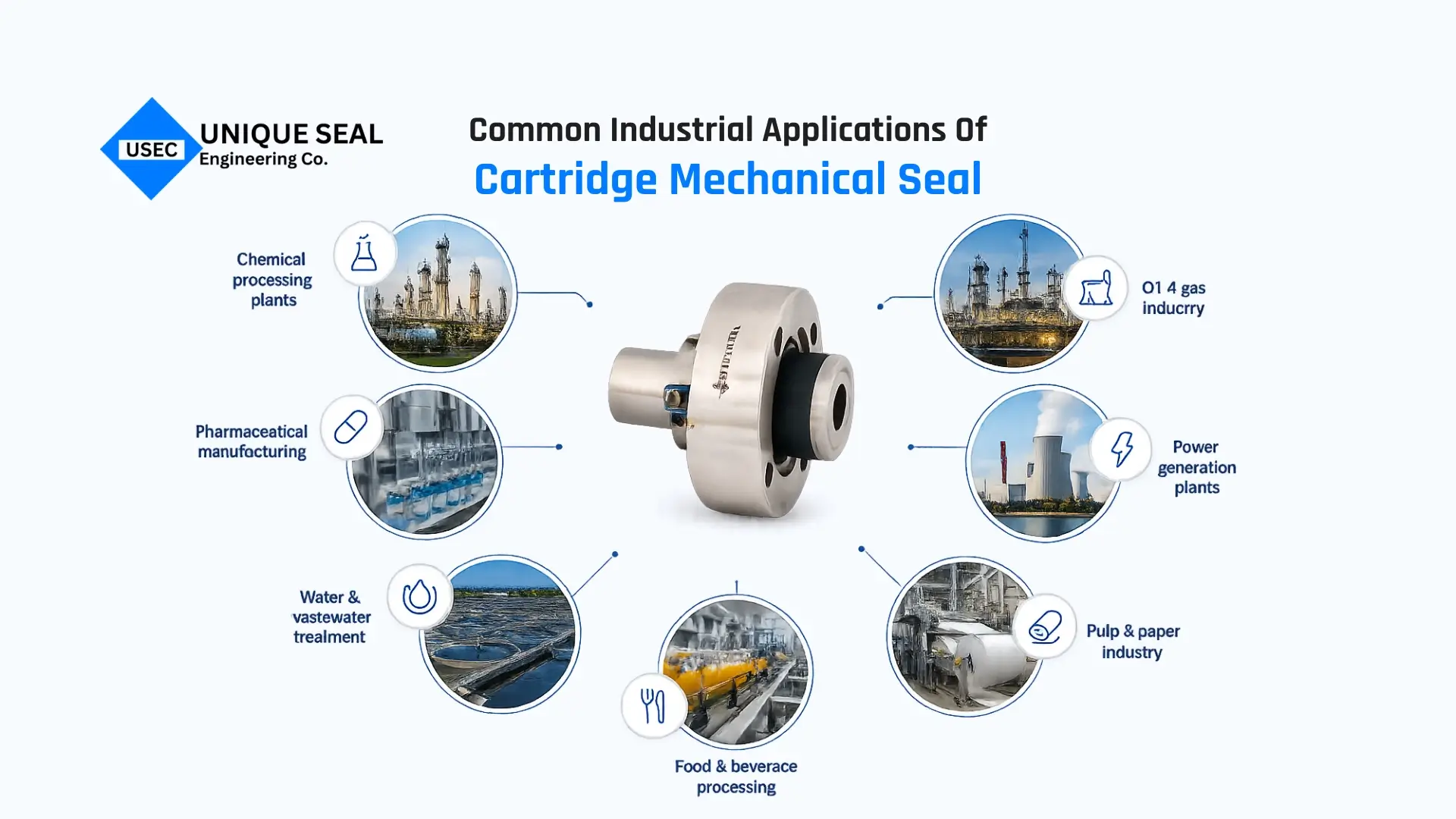
Cartridge mechanical seals are used wherever a rotating shaft passes through a pressurized or fluid-filled housing.
That's a long list.
Chemical processing plants
Chemical plants deal with aggressive, corrosive, and often toxic process fluids.
Cartridge seals, particularly double cartridge configurations, are used in reactor agitators, process pumps, transfer pumps, and blenders.
Material selection is critical here. Silicon carbide faces paired with Viton or PTFE O-rings are common for highly corrosive chemical services.
Pharmaceutical manufacturing
Pharmaceutical processes demand zero contamination and zero leakage.
Cartridge seals meet FDA and cGMP requirements. They are easy to clean-in-place (CIP) and sterilize-in-place (SIP), making them ideal for process pumps, mixing vessels, and transfer systems.
Double cartridge configurations with sterile barrier fluids are common in this industry.
Water & wastewater treatment
From clean water supply pumps to sewage and effluent pumps, cartridge seals are used extensively here.
Single cartridge seals are common in clean water applications. Double or specially designed cartridge seals handle abrasive slurries and chemically dosed wastewater streams.
Food & beverage processing
Hygiene and compliance with food safety standards are non-negotiable here.
Cartridge seals used in food and beverage applications are typically made with FDA-compliant materials, including Buna-N or EPDM O-rings, silicon carbide or carbon faces, and polished surfaces to prevent bacterial build-up.
Used in pumps for dairy, beverages, edible oils, sauces, and brewery applications.
Oil & gas industry
Refineries, upstream, and midstream oil and gas facilities run pumps and compressors handling flammable, toxic, and high-pressure hydrocarbons.
API 682 is the governing standard for mechanical seals in this industry.
Double and tandem cartridge seal configurations are the norm here, meeting the most stringent emission control and safety standards.
Power generation plants
Cooling water pumps, condensate extraction pumps, boiler feed pumps, all critical equipment in power plants, use cartridge mechanical seals.
High temperature and pressure capabilities are key requirements here.
Pulp & paper industry
Pumps handling pulp, black liquor, and other abrasive or corrosive slurries in pulp and paper mills create difficult sealing conditions.
Split cartridge seals are particularly popular here because of the ease of replacement on large, difficult-to-dismantle equipment.
Factors to consider when selecting a cartridge mechanical seal

Getting the right cartridge seal for your application isn't just about picking single or double.
Here are the key factors that need to go into your selection decision.
Operating pressure
Every cartridge seal has a rated operating pressure limit.
Exceeding it causes the seal faces to separate, leading to immediate leakage.
Always select a seal rated comfortably above your maximum operating pressure, with an appropriate safety margin.
Temperature range
Seal face materials, O-ring materials, and spring materials all have temperature limits.
If your process runs at elevated temperatures, you need materials and design features (such as cooling flush arrangements) that can handle it.
For cryogenic applications, special low-temperature O-ring materials and face combinations are required.
Shaft speed
Higher shaft speeds generate more heat at the seal faces and create more dynamic instability.
At very high shaft speeds, multi-spring configurations and harder face materials are typically required to handle the heat and maintain stable face contact.
Fluid characteristics
This is often the most decisive factor.
Is the fluid corrosive or chemically aggressive?
Is it abrasive (containing suspended solids)?
Is it toxic, flammable, or hazardous to the environment?
Is it clean or dirty?
Does it solidify or crystallize if it contacts the atmosphere?
Each of these characteristics drives material selection, seal type, and flush arrangement.
Material compatibility
Seal faces, O-rings, springs, and the sleeve must all be chemically compatible with the process fluid.
A small oversight in material compatibility, such as selecting Nitrile O-rings for an application involving aromatic hydrocarbons, can cause O-ring swelling, failure, and leakage within days.
Always verify chemical compatibility with the seal manufacturer before finalizing selection.
Regulatory requirements
Some industries and applications are governed by strict standards.
-
API 682: Oil and gas industry pumps
-
ATEX / IECEx: Explosive atmosphere compliance
-
FDA / cGMP: Pharmaceutical and food processing
-
ISO 21049 / EN 12756: European mechanical seal standards
Make sure your selected cartridge seal meets the applicable standards for your industry.
How cartridge mechanical seals are manufactured
Ever wonder what goes into making a cartridge seal that can run reliably for years in a harsh industrial environment?
It's more than just machining metal. Let's walk through the process.
Material selection
Everything starts here.
Seal face materials are selected based on fluid compatibility, hardness, thermal conductivity, and friction coefficient.
O-ring materials are chosen based on chemical resistance and temperature range.
Metal components such as the sleeve, gland plate, and drive collar are selected for corrosion resistance, durability, and strength in the operating environment.
Precision machining
All metal components are CNC machined to very tight dimensional tolerances.
The sleeve must be concentric to within microns. The gland plate faces must be flat and square. The drive collar bore must match the shaft diameter precisely.
Any deviation at this stage can affect the final seal performance and operating life.
Face lapping process
This is the heart of cartridge seal manufacturing.
Seal faces undergo a precision lapping process to achieve an exceptionally flat sealing surface.
Surface flatness is often measured in helium light bands, typically between 1 and 3 light bands, which corresponds to approximately 0.3 to 0.9 micrometers of flatness.
This level of precision allows a microscopic fluid film to form between the seal faces during operation, enabling effective sealing while minimizing wear.
It is not done for appearance. It is done to ensure sealing performance and long-term reliability.
Assembly and testing
Once all components have been manufactured and inspected, the cartridge seal is assembled in a controlled environment.
The seal faces, springs, sleeve, gland plate, O-rings, and drive components are assembled into a single pre-set unit.
Setting clips are then installed to maintain the correct spring compression and alignment during shipping and installation.
Many manufacturers also perform pressure testing, leak testing, or functional testing before the seal leaves the facility.
Quality inspection
Before packaging and shipment, the finished seal undergoes final quality checks.
These inspections may include:
-
Dimensional verification
-
Seal face flatness inspection
-
Material certification review
-
Pressure or performance test verification
-
Visual inspection of assembled components
A quality cartridge mechanical seal is typically supplied with supporting documentation such as material test reports (MTRs), dimensional inspection records, and test certificates where required.
This combination of material selection, precision manufacturing, controlled assembly, and rigorous inspection is what enables cartridge mechanical seals to deliver reliable performance in demanding industrial applications.
Common problems and maintenance tips

Cartridge mechanical seals are designed for reliability, but like any mechanical component, they require proper operation and periodic maintenance to deliver their expected service life.
Here are some of the most common seal problems and practical ways to address them.
Seal leakage
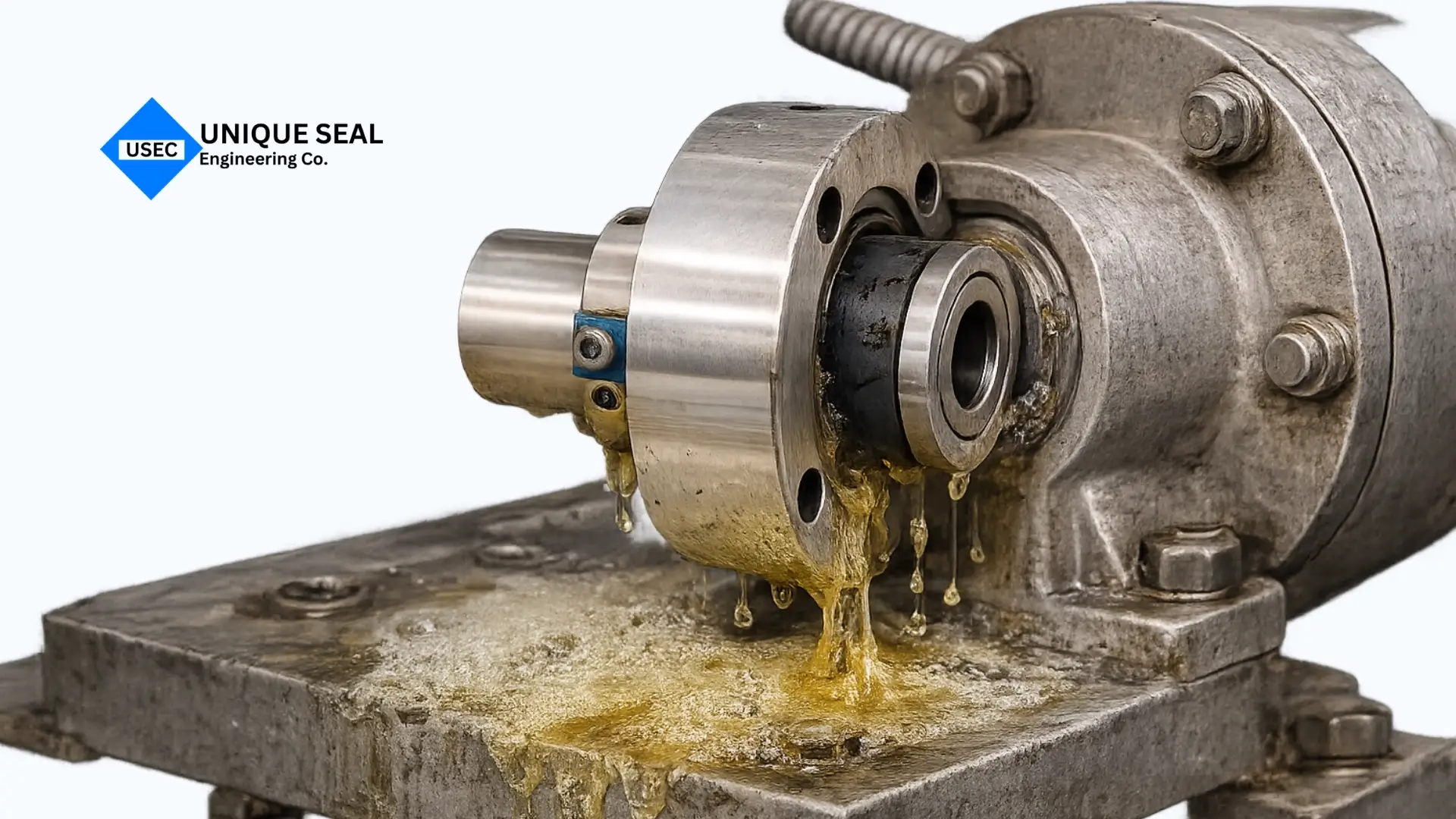
Possible causes
-
Worn or damaged seal faces
-
Improper installation
-
O-ring damage due to chemical incompatibility
-
Operating outside rated pressure or temperature limits
-
Excessive shaft movement or vibration
Recommended actions
If the seal was recently installed, verify that the setting clips were removed and that the gland plate has been properly secured.
For seals that have been in service for an extended period, inspect the seal faces and O-rings for signs of wear, damage, or chemical attack.
Also review operating conditions to ensure the seal is being used within its design limits.
Excessive heat generation
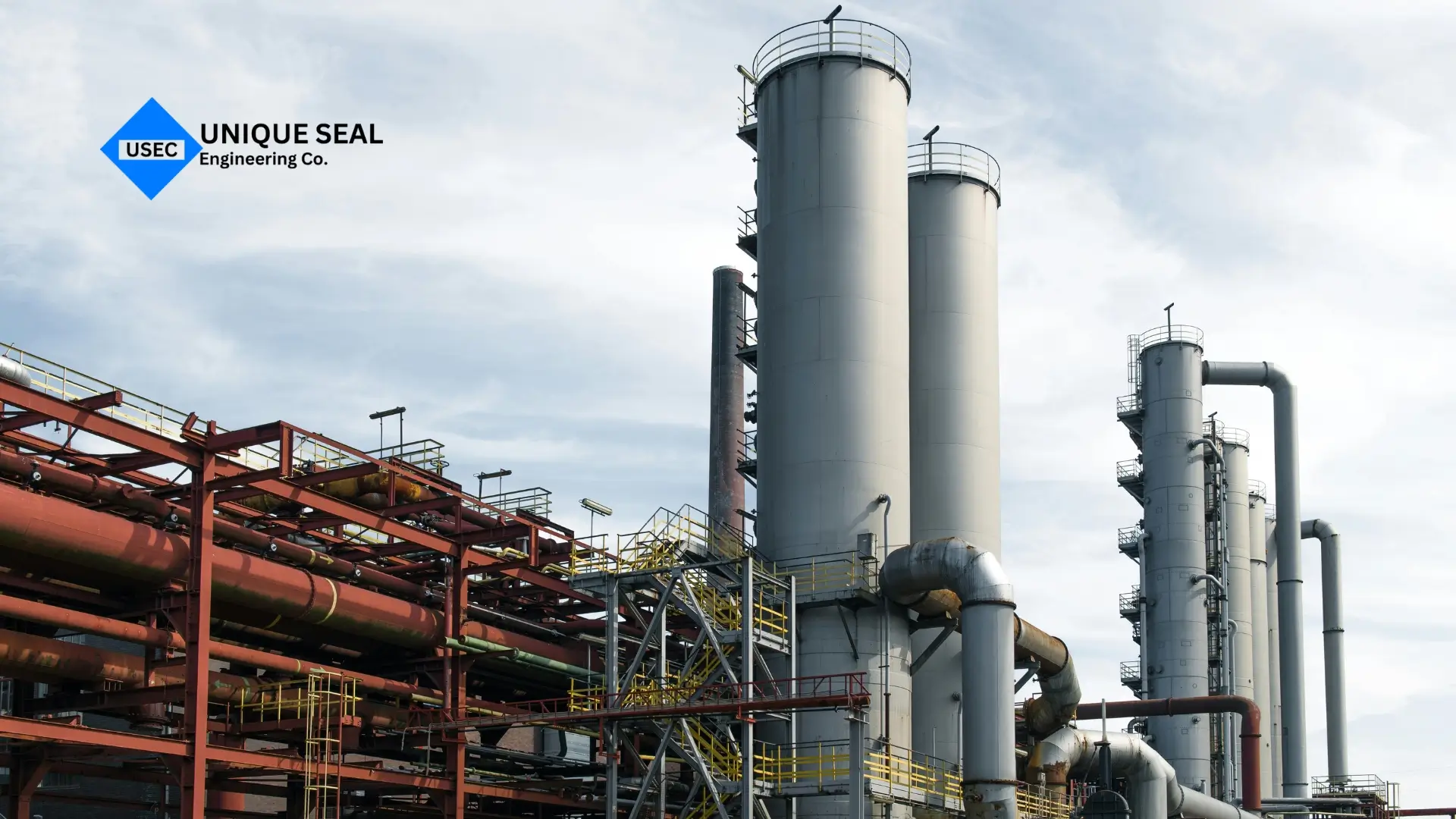
Possible causes
-
Insufficient flush or cooling flow
-
Inadequate lubrication at the seal faces
-
Dry-running conditions
-
Process fluid vaporization at the sealing interface
Recommended actions

Inspect the flush system and verify that all piping is clear and functioning correctly.
Confirm that the flush fluid and flow rate meet the seal manufacturer's recommendations.
For volatile fluids, a dual-pressurized seal arrangement with a barrier fluid system may help prevent vapor formation at the seal faces.
Premature seal wear
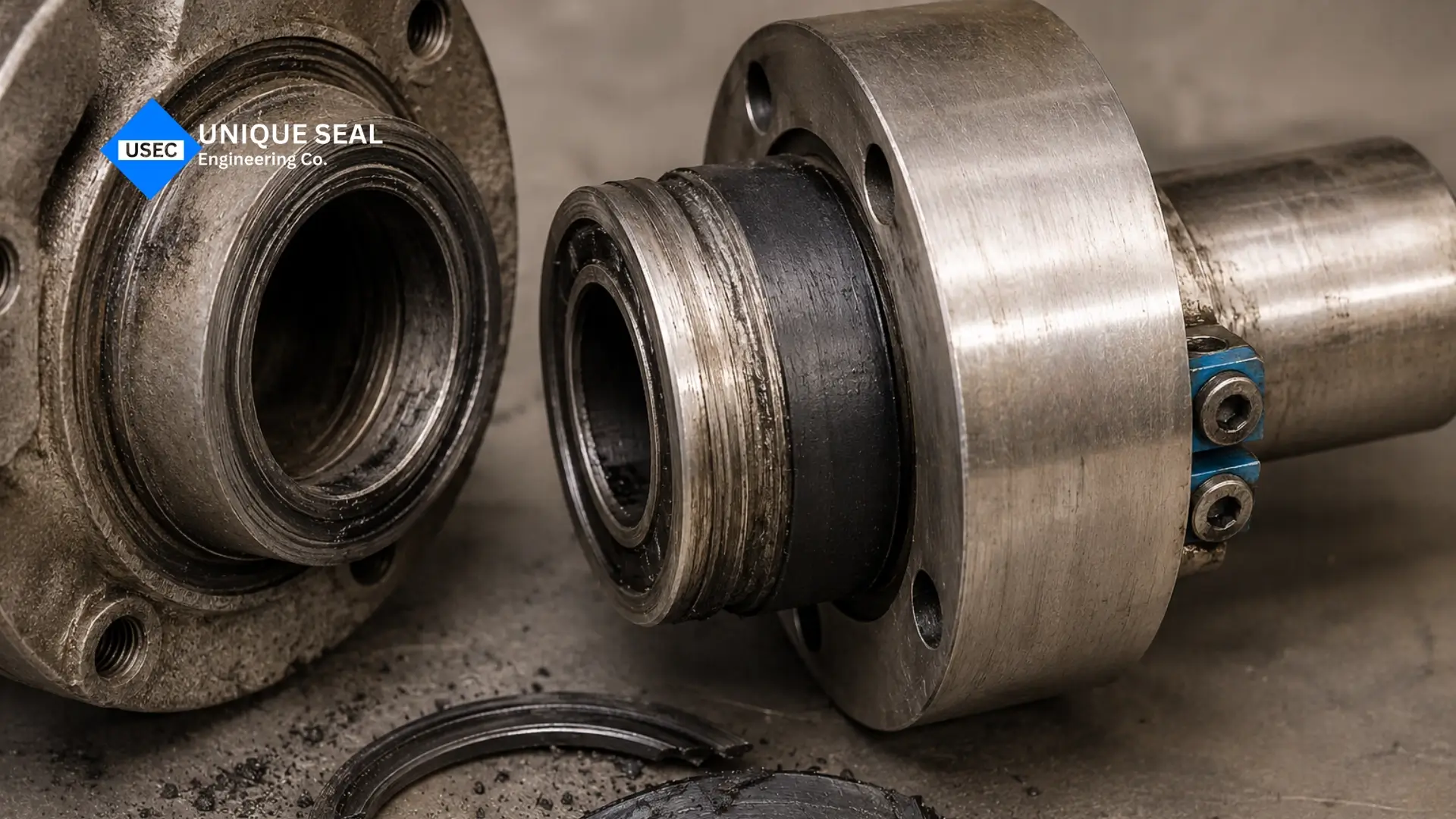
Possible causes
-
Abrasive particles in the process fluid
-
Pump shaft misalignment
-
Excessive vibration
-
Incorrect seal face material selection
Recommended actions
For abrasive applications, consider a suitable flush arrangement that introduces clean fluid to protect the seal faces from wear.
Inspect shaft alignment, coupling alignment, and bearing condition. Even minor misalignment can create additional loads that accelerate seal face wear.
Material selection should also be reviewed if wear occurs earlier than expected.
Dry-running damage
Dry running is one of the most common causes of catastrophic seal failure.
Mechanical seals rely on a thin fluid film between the seal faces for lubrication and cooling. Without this fluid film, friction increases rapidly, causing excessive heat and face damage within seconds.
Prevention measures
-
Verify fluid is present before startup
-
Use dry-run protection systems where possible
-
Maintain adequate flush flow
-
Ensure barrier fluid systems are operational on double cartridge seals before equipment startup
Preventive maintenance best practices
A proactive maintenance approach can significantly improve seal reliability and service life.
Consider the following practices:
-
Inspect flush and quench lines regularly, as blocked lines are a common cause of seal failure
-
Monitor barrier fluid pressure and level on double cartridge seals
-
Check equipment vibration levels periodically
-
Review operating pressure and temperature trends
-
Schedule seal inspections during planned maintenance shutdowns
-
Maintain detailed installation and maintenance records
Documenting installation dates, operating conditions, seal configurations, and maintenance history can make troubleshooting faster and help identify recurring issues before they lead to unplanned downtime.
With proper installation, monitoring, and preventive maintenance, cartridge mechanical seals can provide years of reliable service in demanding industrial environments.
How can Unique Seal help you choose the right cartridge mechanical seal?
Choosing a cartridge mechanical seal is about more than selecting a product from a catalog. The right seal must match your operating pressure, temperature, shaft speed, fluid characteristics, material compatibility requirements, and industry standards.
A seal that is properly selected and installed can help reduce downtime, improve equipment reliability, minimize maintenance costs, and support safer plant operations. On the other hand, an incorrect seal selection can lead to premature failures, unplanned shutdowns, and costly production losses.
 Explore cartridge mechanical seal options and expert guidance from Unique Seal for industrial sealing applications.
At Unique Seal Engineering Co., we help engineers, maintenance teams, OEMs, and industrial buyers identify the most suitable sealing solution for their specific applications. Whether you need a single cartridge mechanical seal for a water pump, a double cartridge seal for hazardous chemical service, or a split cartridge seal for large rotating equipment, our team can recommend a solution based on your operating conditions and performance requirements.
With years of experience in mechanical sealing solutions and a commitment to quality manufacturing, we work closely with customers to deliver reliable products that perform in demanding industrial environments.
If you're evaluating a new application, replacing an existing seal, or looking to improve equipment reliability, our experts are ready to help.
Get your free quote today and discuss your cartridge mechanical seal requirements with the team at Unique Seal Engineering Co.
Need a High-Reliability Replacement Mechanical Seal?
Unique Seal Engineering Co. manufactures Cartridge, Metal Bellows, PTFE Bellows, and Multi-Spring Seals with 100% optical flat inspection under monochromatic light at our Mohan Nagar, Ghaziabad facility. Get fast OEM-grade delivery across India and worldwide.
