
Last year, I faced a leakage problem in one of the running machines. At first, I thought it was a normal issue and could be fixed quickly. But the leakage slowly increased, and the machine had to be stopped. When I opened the seal area and checked it closely, I noticed something unexpected. The seal was not moving properly. The pusher was stuck, and in another case, I even saw a broken bolt head in the seal pusher area.
That moment made me realize that even a small moving part can create a big problem. The spring and seal were in place, but the pusher couldn't move around freely. Because of this, the seal faces could not stay in proper contact, and leakage started.
After this experience, I understood the importance of a pusher-type mechanical seal. This seal works by using a spring to push the seal face forward and maintain proper sealing during operation. But if problems like pusher seal hangup or damage in the pusher area happen, the seal cannot work correctly.
In this blog, I will explain what a pusher mechanical seal is, how it works, its types, and its applications. This will help you understand its role and why it is widely used in industrial equipment.
What is a pusher mechanical seal?
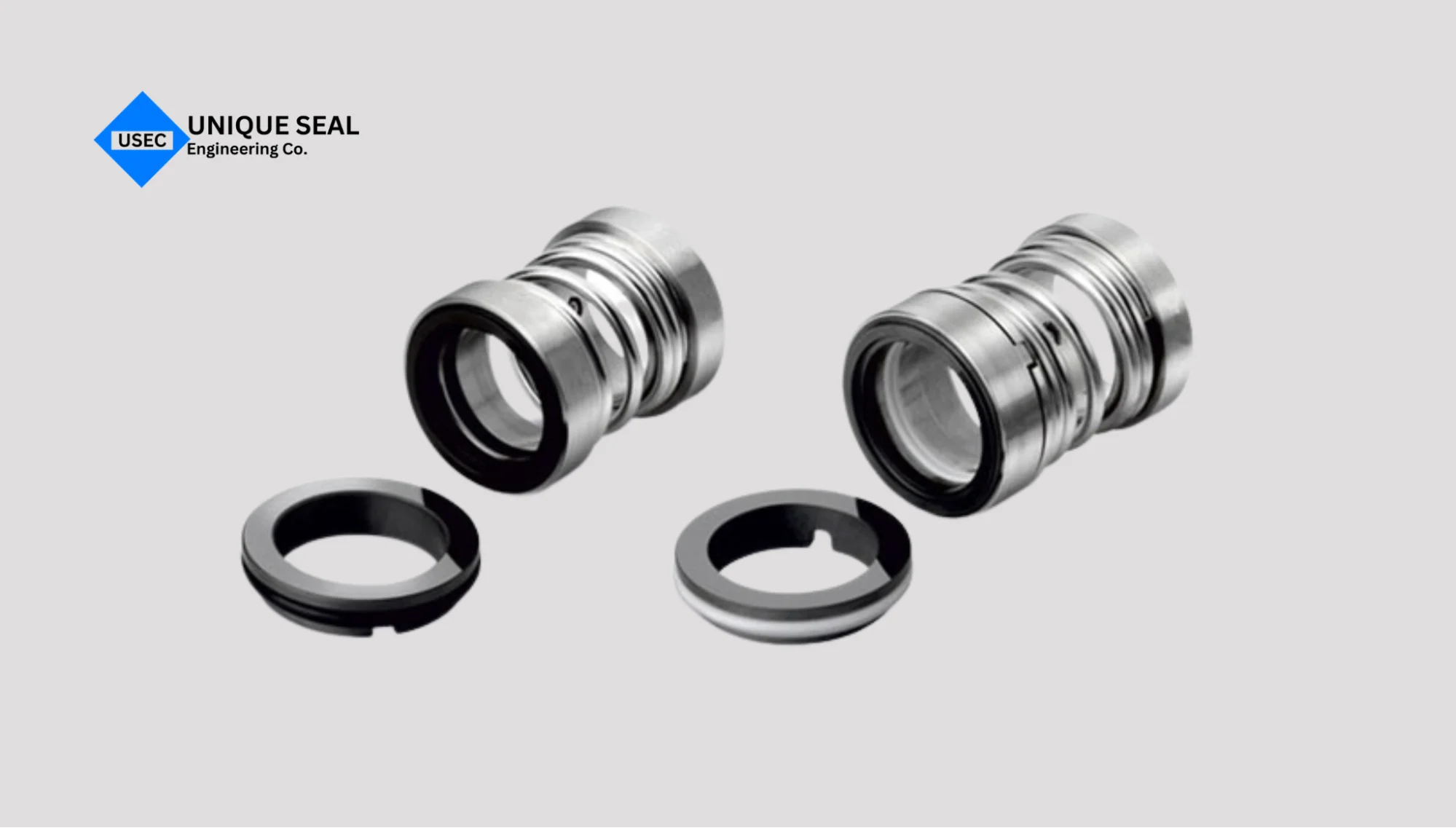
A pusher mechanical seal is a seal used to stop liquid from leaking along a rotating shaft. It works with the help of a spring that pushes the seal face forward. This pushing action keeps the seal faces in contact and prevents leakage.
This seal has two main sealing surfaces. One surface rotates with the shaft, and the other surface stays fixed. When these two surfaces stay in contact, they form a proper seal and stop liquid from coming out.
Pusher-type mechanical seals are commonly used because they are simple, reliable, and suitable for many industrial machines. They can adjust automatically as the seal faces wear, which helps maintain proper sealing.
Why is it called a pusher seal?
It is called a pusher seal because the spring pushes the seal face forward. This forward movement helps keep the rotating seal face and stationary mating ring in contact. This is one variation of a mechanical seal, with the main difference being the moving secondary seal.
As the seal faces wear over time, the spring continues to push the seal face forward. This helps maintain proper sealing and prevents leakage. This pushing action is the main feature of a pusher mechanical seal.
Main parts of a pusher mechanical seal
A pusher mechanical seal has several important parts that work together to stop leakage. Each part has a specific role in maintaining proper sealing.
These parts help keep the seal faces in contact and allow the seal to adjust during operation. When all parts work correctly, the seal provides reliable sealing and protects the machine from leakage.
Seal face
The seal face is the rotating part of the seal. It rotates with the shaft and helps create the main sealing surface.
Mating ring
The mating ring is the stationary part. It stays fixed and touches the seal face to form a seal.
Spring
The spring pushes the seal face forward. This helps maintain contact between the seal face and mating ring.
O-ring or secondary seal
The O-ring is a soft sealing part. It prevents leakage from other small gaps and helps the seal move properly along the shaft.
How a pusher-type mechanical seal works
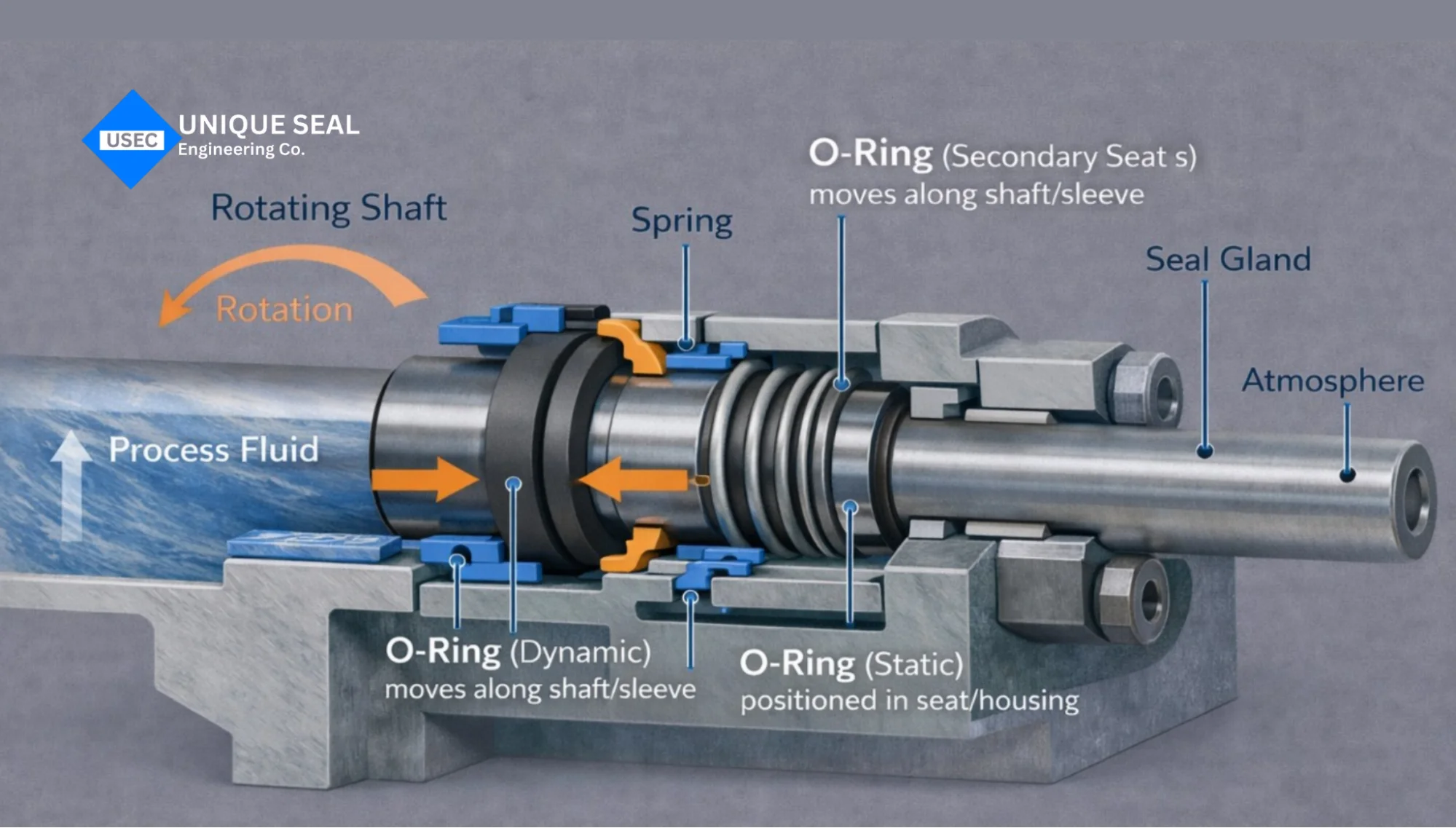
A pusher-type mechanical seal works by keeping two seal faces in close contact. One seal face rotates with the shaft, and the other seal face stays fixed. The spring pushes the seal face forward, which helps maintain contact between the two faces. This contact prevents liquid from leaking.
This seal adjusts automatically during operation. As the seal faces wear, the spring continues to push the seal forward. This helps maintain proper sealing and keeps the machine safe from leakage.
How the spring maintains seal face contact
The spring plays a very important role in a pusher seal. It pushes the rotating seal face toward the stationary mating ring.
This pushing force keeps both seal faces touching each other. Even when there is wear or slight movement, the spring continues to push the seal forward. This helps maintain proper contact and ensures effective sealing.
Without the spring, the seal faces can separate, and leakage can happen.
How the seal prevents leakage
The seal prevents leakage by creating tight contact between the rotating seal face and the stationary mating ring.
These two flat surfaces press against each other and form a sealing point. This sealing point stops liquid from passing through the gap between the rotating shaft and the stationary part.
The O-ring, or secondary seal, also helps prevent leakage from other small gaps.
Step-by-step working process in a pump
Here is a simple example of how a pusher mechanical seal works in a pump:
1. When the pump starts, the shaft begins to rotate.
2. The seal face rotates with the shaft.
3. The mating ring stays fixed in one position.
4. The spring pushes the seal face toward the mating ring.
5. Both seal faces stay in contact and create a seal.
6. This seal prevents liquid from leaking out of the pump.
7. As the seal faces wear, the spring pushes the seal forward to maintain sealing.
This simple working process helps prevent leakage and keeps the pump operating safely.
Types of pusher mechanical seals used in industry
Pusher mechanical seals are available in different types based on design and working conditions. Each type is made for specific applications. Some are simple and used in normal conditions, while others are designed for high pressure or better performance.
Choosing the right type of pusher mechanical seal is important for proper sealing, longer seal life, and safe machine operation. Below are the most commonly used types in industry.
Single spring pusher mechanical seal
A single spring pusher mechanical seal uses one spring to push the seal face forward. This is a simple and commonly used seal type.
It has a basic design, which makes it easy to install and maintain. It is suitable for clean liquids and normal operating conditions. This type of seal is widely used in general industrial equipment.
Multi-spring pusher mechanical seal
A multi-spring pusher mechanical seal uses multiple small springs instead of one spring. These springs provide balanced force on the seal face.
This design improves stability and performance. It helps the seal work better at higher speeds and in demanding conditions. It also provides more reliable sealing compared to single spring seals.
Balanced pusher mechanical seal
A balanced pusher mechanical seal is designed for high-pressure applications. It reduces the load on the seal faces, which helps reduce wear.
This improves seal life and performance. Balanced seals are commonly used in applications where pressure is high or operating conditions are more demanding.
Unbalanced pusher mechanical seal
An unbalanced pusher mechanical seal is used in normal pressure applications. It has a simple design and is easy to use.
This type of seal is suitable for low- to medium-pressure conditions. It is commonly used in general industrial machines where operating pressure is not very high.
Applications of pusher-type mechanical seals
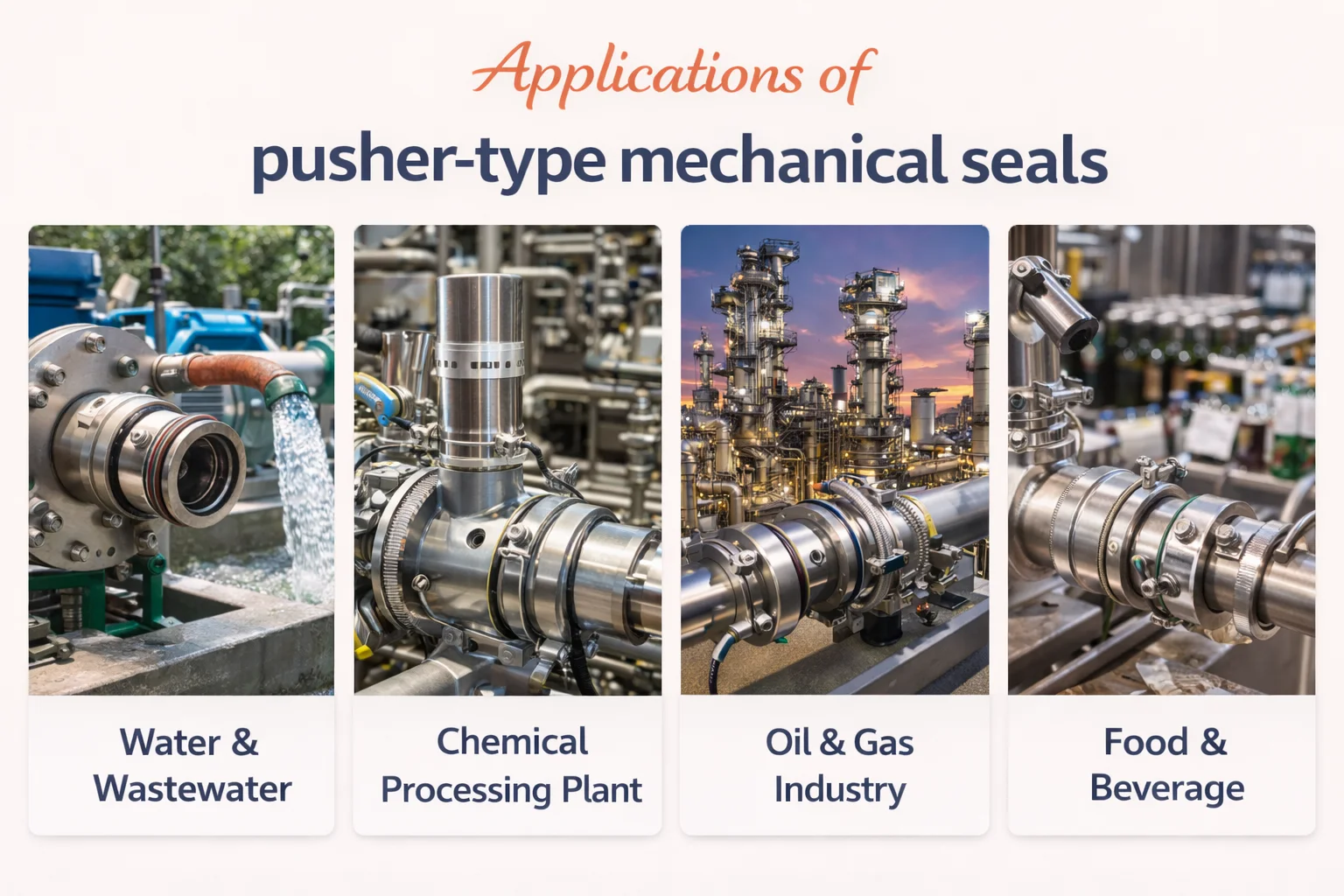
Pusher-type mechanical seals are widely used in many industries to prevent leakage from rotating equipment. They are reliable, simple in design, and suitable for different operating conditions. These seals help protect equipment, reduce liquid loss, and improve machine safety.
They are commonly used in pumps and other rotating machines where proper sealing is important.
Use in water and industrial pumps
Pusher mechanical seals are commonly used in water pumps and industrial pumps. They help prevent water and other liquids from leaking along the shaft.
These seals are used in water supply systems, industrial plants, and utility services. They help ensure safe and efficient pump operation.
Use in the chemical industry
In the chemical industry, pusher mechanical seals are used to seal pumps that handle chemicals. They help prevent chemical leakage and protect the equipment.
Proper sealing is very important in chemical applications to ensure safety and prevent loss of chemicals.
Use in the oil and gas industry
Pusher mechanical seals are also used in the oil and gas industry. They are used in pumps that handle oil, fuel, and other fluids.
These seals help prevent leakage and ensure safe operation in demanding conditions.
Use in the food and pharmaceutical industry
In the food and pharmaceutical industry, pusher mechanical seals are used in equipment that handles liquids such as water, syrups, and other fluids.
They help maintain proper sealing and support safe and clean operation of machines.
Common issues and solutions in pusher mechanical seals
Pusher mechanical seals are reliable, but sometimes problems can happen during operation. These problems can affect seal movement and sealing performance. When the seal does not move properly or parts get damaged, leakage can start.
Common problems include pusher seal hangup and bolt damage in the seal pusher area. Understanding these problems helps in preventing seal failure and improving seal life.
What is pusher seal hangup, and why does it happen?
Pusher seal hangup is a condition where the seal cannot move freely along the shaft. The spring tries to push the seal forward, but the seal gets stuck and cannot adjust properly.
This can happen due to several reasons:
-
Dirt or solid particles on the shaft
-
Corrosion on the shaft surface
-
Dry running without proper lubrication
-
Product buildup on the secondary seal, like the O-ring
-
Damaged or rough shaft surface
When the seal gets stuck, it cannot maintain proper contact between the seal faces.
How pusher seal hangup affects seal performance
When pusher seal hangup happens, the seal cannot move forward as needed. This creates a small gap between the seal faces.
Experiencing Frequent Mechanical Seal Failures?
Recurrent seal leakage causes costly unplanned downtime, batch losses, and shaft fretting. Unique Seal Engineering Co. analyzes your exact operating parameters (shaft speed, fluid media, temperature, pressure) and provides custom face pairings and engineered seal recommendations.
Because of this gap, leakage can start. If the problem continues, it can cause seal damage and complete seal failure. It can also lead to machine downtime and repair costs.
Proper cleaning, correct installation, and regular maintenance can help prevent hang-up problems.
How to fix a bolt head broken in the seal pusher area
Sometimes the bolt head in the seal pusher area can break. This can happen due to overtightening, corrosion, vibration, or use of weak bolts.
When the bolt breaks, the seal may become loose or stop working properly. This can cause leakage and seal failure.
To fix this problem, follow these steps:
-
Stop the machine safely
-
Remove the damaged seal carefully
-
Remove the broken bolt using proper tools
-
Clean the seal area and shaft surface
-
Replace the broken bolt with a new and correct bolt
-
Install the seal properly and tighten bolts correctly
Using proper bolts, correct tightening, and regular inspection can help prevent this problem.
Advantages of using pusher-type mechanical seals

Pusher-type mechanical seals are widely used because they are simple, reliable, and effective. They provide proper sealing and help prevent leakage in many types of industrial equipment. Their design allows them to adjust automatically, which helps maintain sealing during operation.
These seals are suitable for many working conditions and are a popular choice in different industries.
Simple design and easy installation
Pusher mechanical seals have a simple design with fewer complex parts. This makes them easy to install and replace.
Maintenance is also easier compared to more complex seal types. This helps reduce maintenance time and makes seal handling more convenient.
Cost-effective sealing solution
Pusher seals are a cost-effective sealing solution. They are available at a reasonable cost and provide reliable sealing performance.
Their simple design also helps reduce maintenance and replacement costs. This makes them a good choice for many industrial applications.
Suitable for many industrial applications
Pusher mechanical seals can be used in many types of machines and industries. They work well in water systems, chemical applications, and general industrial equipment.
Their ability to adjust automatically and maintain proper sealing makes them suitable for different operating conditions.
Difference between pusher and non-pusher mechanical seals
|
Feature |
Pusher Mechanical Seal |
Non-Pusher Mechanical Seal |
|
Design |
Uses springs to create force and has a moving secondary seal like an O-ring or wedge that slides on the shaft |
Uses metal or elastomer bellows for flexibility and face loading, no moving O-ring |
|
Secondary seal movement |
O-ring (secondary seal) moves along the shaft or sleeve |
Secondary seal does not move along the shaft, no sliding seal |
|
Working principle |
Spring force and fluid pressure keep the seal faces in contact |
Bellows flexibility keeps the seal faces in contact without a sliding seal |
|
Risk of hangup |
Higher chance of hangup due to O-ring movement, dirt, or shaft wear |
Lower chance of hangup because there is no sliding O-ring |
|
Pressure handling |
Suitable for low to high pressure, depending on seal design |
Generally suitable for low to moderate pressure, limited by bellows strength |
|
Temperature handling |
Suitable for normal to moderately high temperature, depends on elastomer |
Better for high temperature, especially with metal bellows |
|
Maintenance |
Easy to install and maintain, more tolerant to handling and shaft condition |
Needs careful handling and proper installation, especially metal bellows |
|
Cost |
More cost-effective and widely used |
More expensive due to complex design |
|
Common applications |
Water pumps, hydrocarbons, and general industrial equipment |
Chemical processing, high temperature services, corrosive fluids, and critical applications |
How to select the right pusher mechanical seal for your pump

Selecting the right pusher mechanical seal is very important for proper sealing and long seal life. The correct seal helps prevent leakage, reduces maintenance, and keeps the pump running safely. Choosing the wrong seal can lead to seal failure and machine downtime.
There are several important factors to consider before selecting a pusher mechanical seal.
Consider pressure and temperature
Always check the operating pressure and temperature of the pump. Different seals are designed for different pressure and temperature ranges.
If the pressure is high, a balanced pusher mechanical seal is a better choice. For normal pressure, an unbalanced seal can work properly. Also, make sure the seal materials are suitable for the operating temperature.
Consider fluid type
The type of fluid is another important factor. Some fluids are clean, while others may contain chemicals, particles, or corrosive materials.
The seal material must be compatible with the fluid. This helps prevent damage, corrosion, and seal failure. For chemical fluids, use seals made from suitable and resistant materials.
Consider pump and shaft conditions
Check the condition of the pump and shaft before selecting the seal. The shaft surface should be smooth and free from damage.
Also, consider shaft speed, alignment, and vibration. Proper shaft condition helps the seal work correctly and prevents problems like seal wear and hangup.
Choosing the correct seal based on pump condition helps improve seal performance and increases seal life.
Is a pusher mechanical seal the right choice for your machine?
A pusher mechanical seal is a simple and trusted sealing solution used in many industries. It helps stop leakage and keeps machines running safely. When you understand how it works, its types, applications, and common problems, you can choose the right seal and avoid failures. The correct seal selection and proper installation help improve seal life and machine performance.
If you need a reliable pusher mechanical seal, Unique Seal offers high-quality seals for many industrial applications. Our team helps you choose the correct seal for your machine and working condition. Contact Unique Seal today to get a free quote and expert support for your sealing requirements.
Need a High-Reliability Replacement Mechanical Seal?
Unique Seal Engineering Co. manufactures Cartridge, Metal Bellows, PTFE Bellows, and Multi-Spring Seals with 100% optical flat inspection under monochromatic light at our Mohan Nagar, Ghaziabad facility. Get fast OEM-grade delivery across India and worldwide.
