
Every part of our body has a different role to play, right?
Our eyes help us see, our lungs help us breathe, and our heart keeps blood moving through the body.
A mechanical seal works in a similar way. It has different parts, and each part has a specific role inside a pump.
Understanding how these parts work together can be confusing, especially when you choose a mechanical seal. You may have questions like:
Which mechanical seal is right for my pump?
Why are different types of mechanical seals used for different applications?
Why is my mechanical seal leaking or not working properly, even after choosing the right type?
In this guide, I will explain how a mechanical seal works, its main parts, different types, common problems, and how to choose the right seal for your pump.
Let’s get started.
What is a mechanical seal?
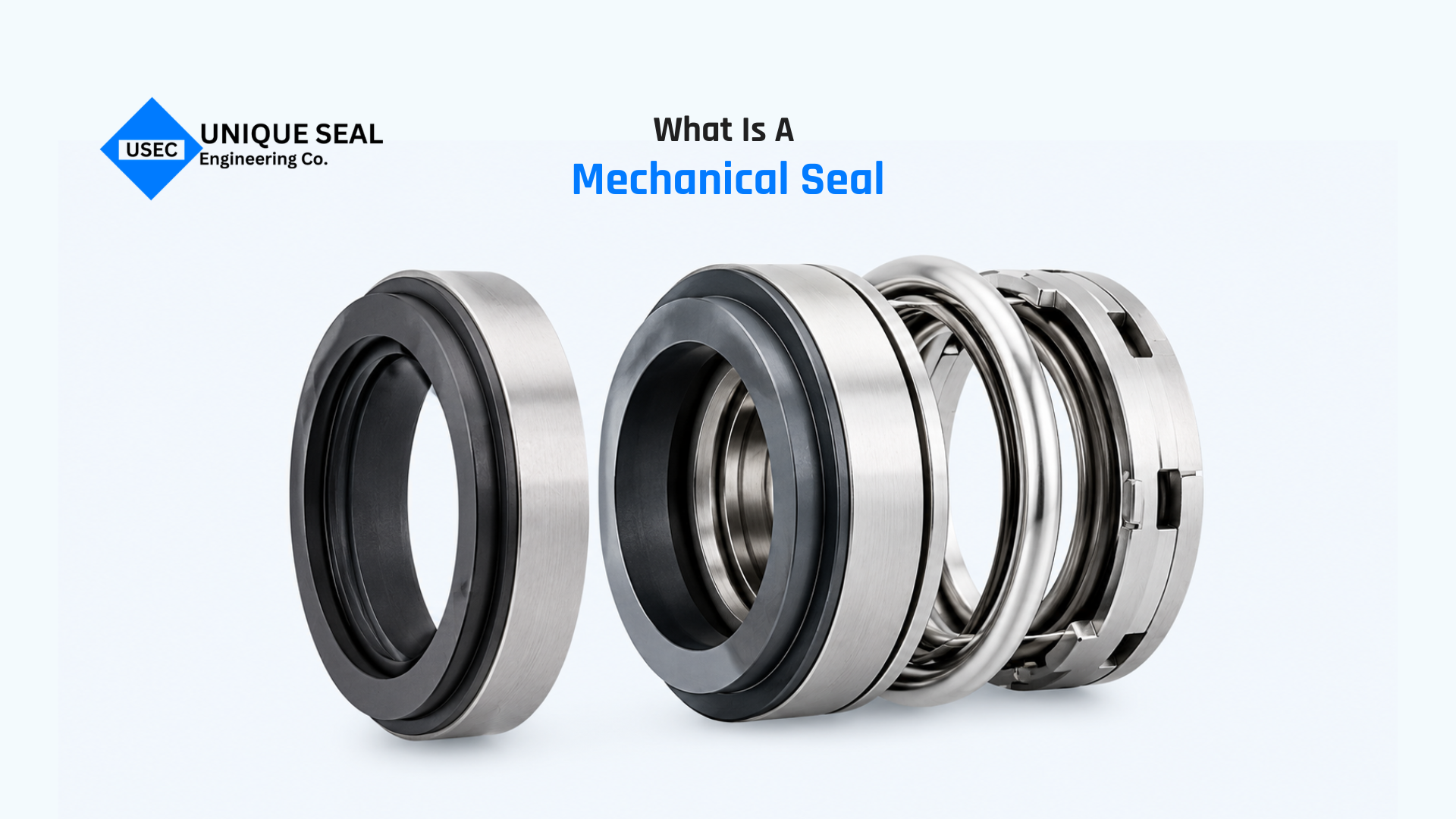
A mechanical seal is a component used in pumps to keep the fluid inside while the pump is running. It works around the rotating shaft and helps prevent the fluid from escaping through the point where the shaft moves.
It has several parts that work together to maintain a proper seal. The type of mechanical seal needed depends on the pump, the fluid, temperature, pressure, and other working conditions.
How does a mechanical seal work?
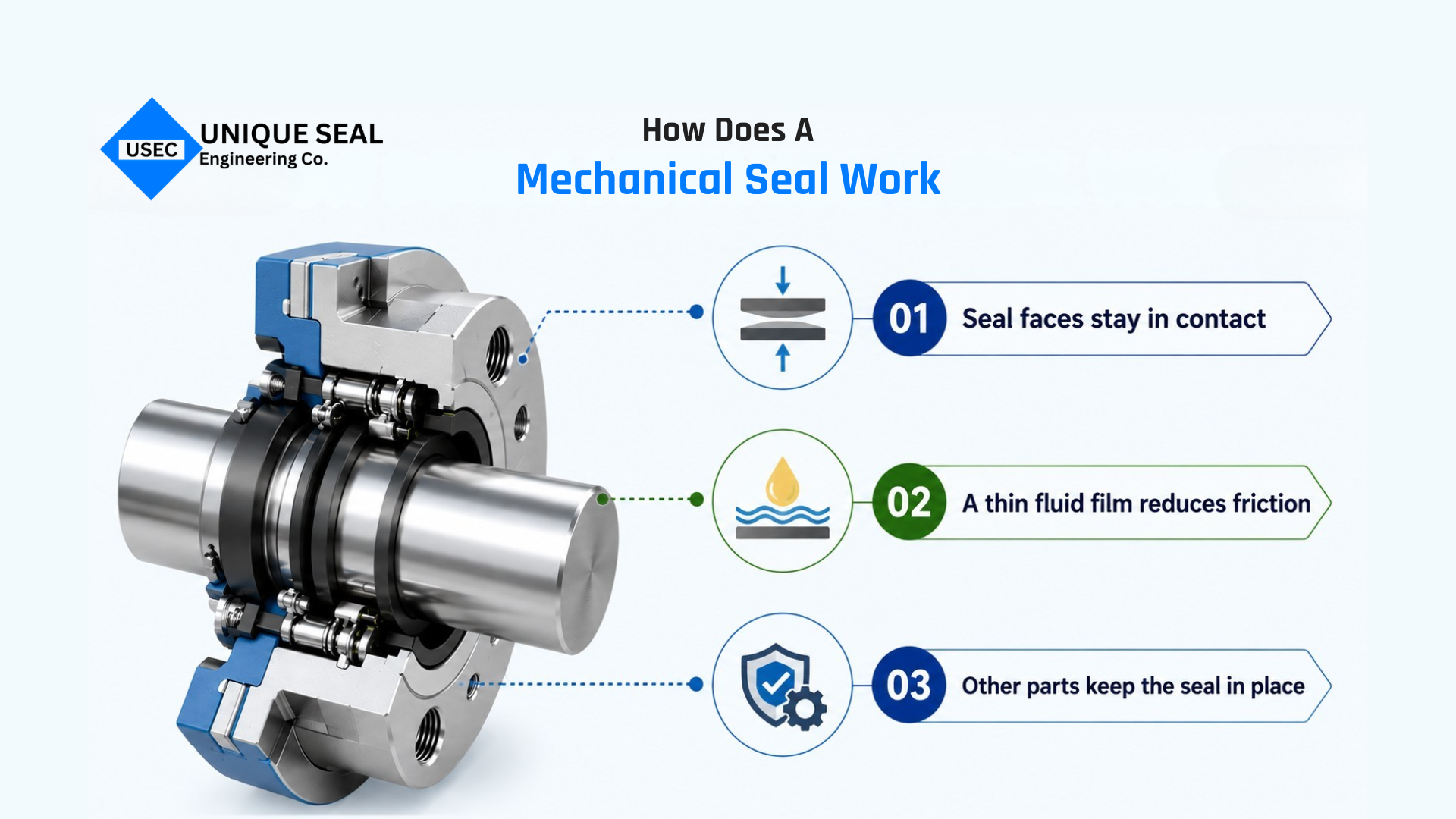
A mechanical seal works by keeping two seal faces close together around the pump shaft. Together, they control fluid movement and reduce leakage while the shaft rotates.
Seal faces stay in contact
Two smooth surfaces, called seal faces, press against each other around the pump shaft. One rotates with the shaft, while the other remains stationary. This contact helps control the fluid and prevents it from escaping.
A thin fluid film reduces friction
When the pump runs, a very thin layer of fluid forms between the seal faces. This helps reduce friction and heat while the shaft continues to rotate.
Other parts keep the seal in place
Springs and secondary seals support the seal faces and help maintain the right pressure. Together, these parts allow the mechanical seal to work properly and reduce leakage during pump operation.
Main parts of a mechanical seal
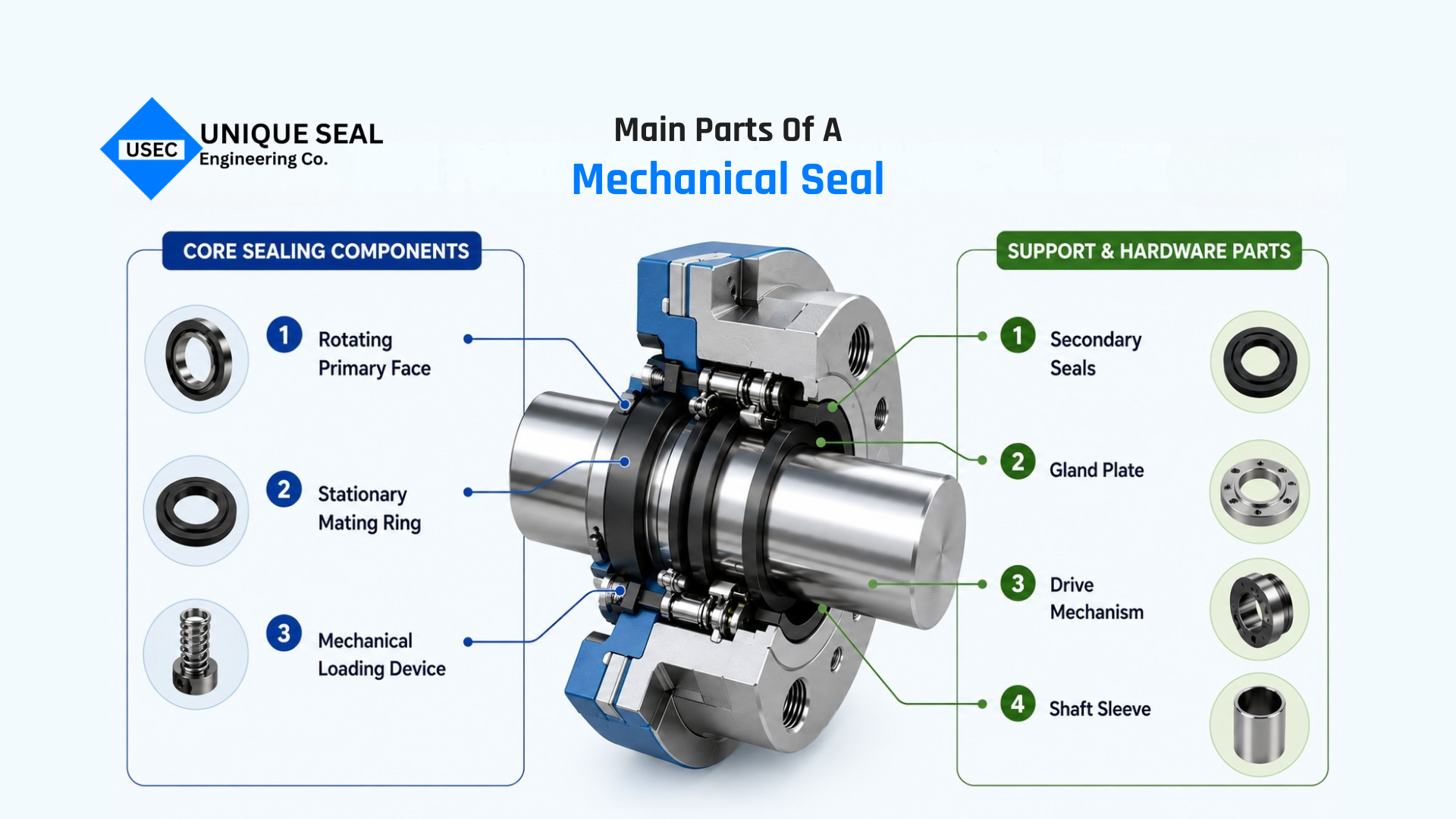
A mechanical seal has several parts that work together around the pump shaft. Each part helps maintain the seal, control fluid movement, and reduce leakage during pump operation.
Core sealing components
-
Rotating primary face: The ring that rotates with the pump shaft.
-
Stationary mating ring: The fixed ring that works with the rotating face to maintain the seal.
-
Mechanical loading device: Springs or bellows that keep the seal faces pressed together.
Support & hardware parts
-
Secondary seals: O-rings or gaskets that help prevent fluid from passing around the seal.
-
Gland plate: Holds the stationary parts of the seal in place.
-
Drive mechanism: Keeps the rotating face connected to the shaft so it rotates with it.
-
Shaft sleeve: A protective cover around the shaft that helps reduce wear.
Different types of mechanical seals for different purposes
Mechanical seals come in different designs to suit different pumps, fluids, and operating conditions. Here’s a quick comparison of some commonly used types:
|
Type of mechanical seal |
Best suited for |
Example application |
|
Pusher seal |
General purpose pumping |
Water pumps, HVAC systems |
|
Non pusher seal |
Applications with shaft movement concerns |
Chemical & process pumps |
|
Cartridge seal |
Easy installation and quick maintenance |
Industrial water & centrifugal pumps |
|
Double mechanical seal |
Difficult to seal fluids or extra leakage protection |
Chemical, oil & wastewater pumps |
|
Split mechanical seal |
Large pumps where shaft removal is difficult |
Cooling water & large industrial pumps |
|
Balanced mechanical seal
Engineering Reliability Support
Experiencing Frequent Mechanical Seal Failures?Recurrent seal leakage causes costly unplanned downtime, batch losses, and shaft fretting. Unique Seal Engineering Co. analyzes your exact operating parameters (shaft speed, fluid media, temperature, pressure) and provides custom face pairings and engineered seal recommendations. |
Higher pressure applications |
Boiler feed & process pumps |
|
Unbalanced mechanical seal |
Low to moderate pressure applications |
Standard water & circulation pumps |
|
Bellows mechanical seal |
Applications needing a flexible sealing element |
Chemical & corrosive fluid pumps |
How to choose the right mechanical seal for your pump
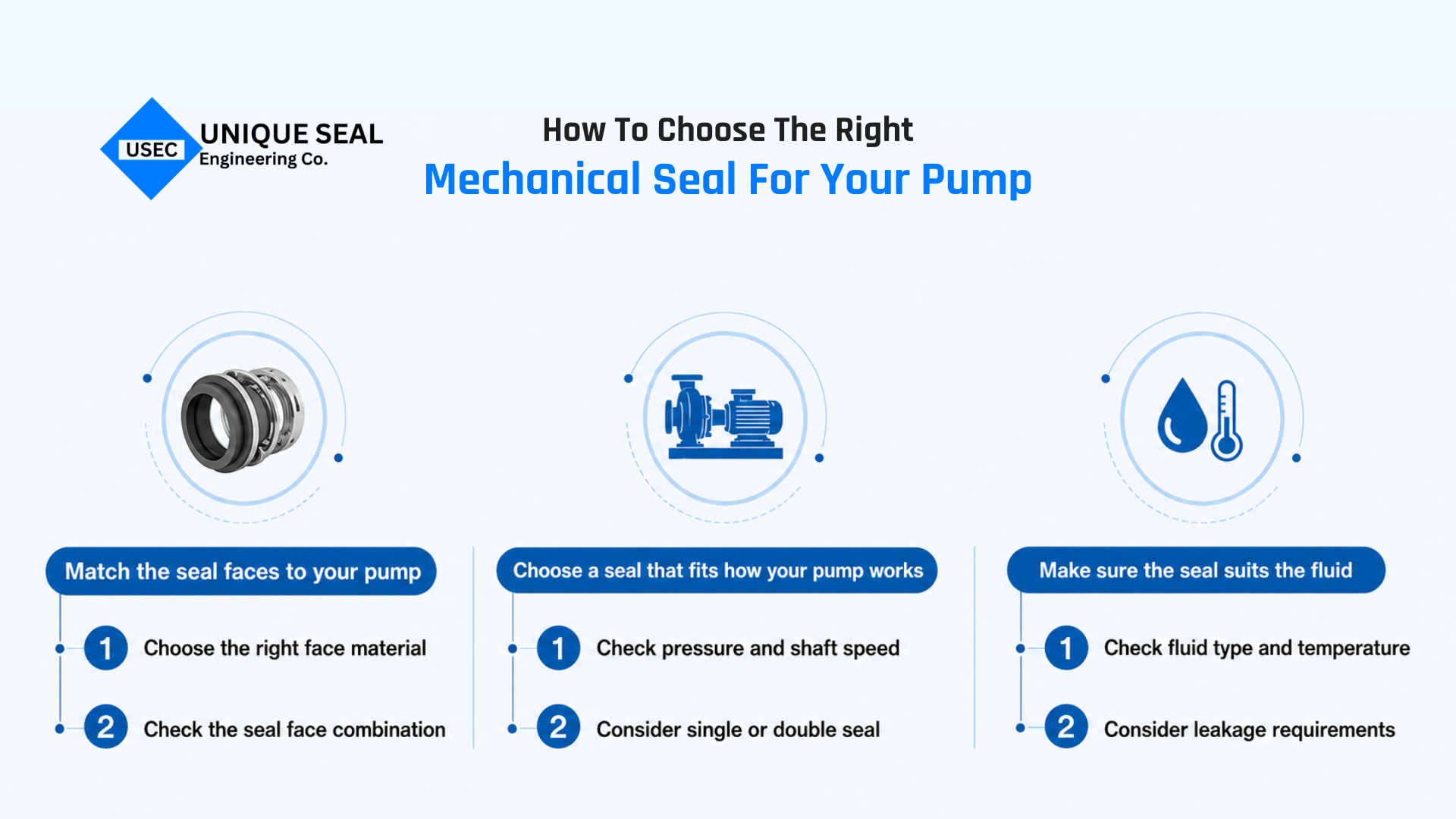
Not every mechanical seal works the same way in every pump. The right choice depends on how the seal works with the pump shaft, the fluid, and the conditions inside the pump.
Match the seal faces to your pump
The seal faces are important for how a mechanical seal works. Their material and combination should suit the pump and the fluid.
Choose the right face material
The seal face material should match the fluid and pump conditions. Common options include carbon, ceramic, and silicon carbide.
Check the seal face combination
The two seal faces should be compatible with the fluid and pump conditions. A good combination helps reduce wear and leakage.
Choose a seal that fits how your pump works
The way a pump operates can affect how the mechanical seal works. Pressure, shaft speed, and seal arrangement should match the pump’s working conditions.
Check pressure and shaft speed
The seal should match the pump’s pressure and shaft speed. The right match helps the seal work properly and reduces wear.
Consider single or double seal
A single seal is suitable for many standard pump applications. A double seal can be used when extra leakage control is needed.
Make sure the seal suits the fluid
The fluid inside the pump directly affects how the mechanical seal works. Its type and temperature should match the seal materials to help prevent leakage and wear.
Check fluid type and temperature
The fluid and temperature affect how the seal faces work inside the pump. Choosing suitable materials helps maintain a proper seal during operation.
Consider leakage requirements
Choose a seal that keeps leakage under control while the pump is running. The right seal also helps maintain a tight seal around the rotating shaft.
Common problems with mechanical seals
When a mechanical seal is not working properly, the pump may show signs of leakage or wear. Knowing these common problems can help you understand what may be affecting the seal’s performance.
-
Fluid leakage around the shaft
-
Wear on the seal faces
-
Overheating during pump operation
-
Damage caused by improper installation
-
Excessive vibration and seal movement
-
Seal failure due to wrong material selection
When should you replace a mechanical seal?
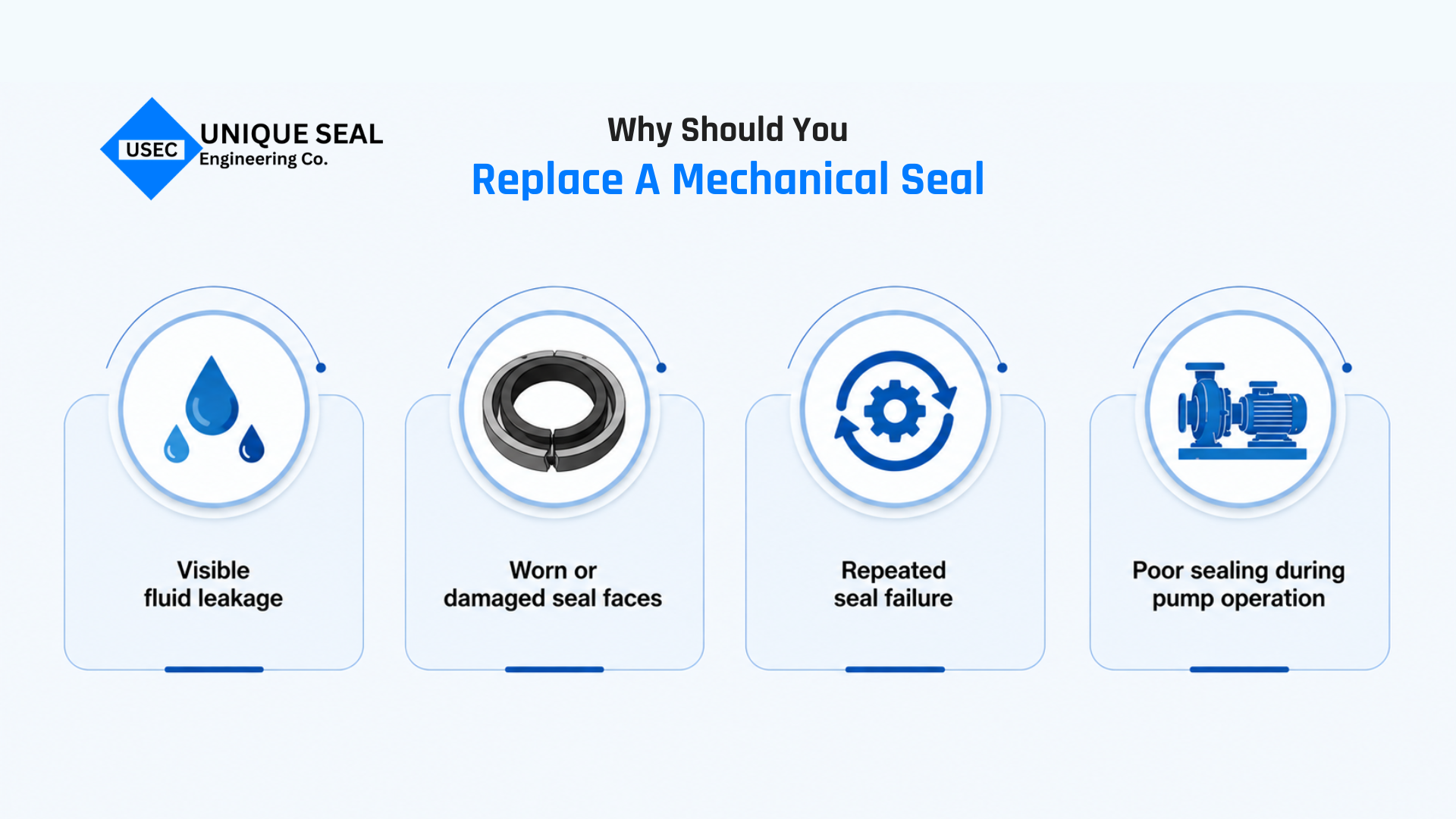
A mechanical seal does not need regular replacement. But if it starts leaking, wearing out, or affecting pump performance, it may be time for a new seal.
Visible fluid leakage
Visible leakage around the pump shaft can mean the seal faces are not working properly. If the leakage continues, the mechanical seal may need to be replaced.
Worn or damaged seal faces
When seal faces become worn or damaged, they may not seal the pump properly. If the damage is severe, replacing the mechanical seal may be necessary.
Repeated seal failure
If the mechanical seal keeps failing after repairs, it may be time to replace it. Repeated failure can also point to a problem with the seal or pump.
Poor sealing during pump operation
If the seal is not sealing properly while the pump is running, it may need to be replaced. Poor sealing can cause fluid leakage.
Ready to choose a mechanical seal for your pump
Choosing the right mechanical seal starts with understanding how it works inside your pump. Consider the seal faces, fluid type, pressure, temperature, shaft speed, and the level of leakage control you need.
A properly selected seal can help the pump run smoothly and reduce common problems such as leakage, wear, and early seal failure. Always choose a seal that matches your pump’s actual working conditions.

If you are looking for a mechanical seal for your pump, Unique Seal can help you find an option that matches your application. From seal type and face materials to pump conditions, choosing the right seal is important for better sealing and reliable operation.
Need the right mechanical seal for your pump. Get your free quote today.
Frequently asked questions about mechanical seals
What is a double mechanical seal?
A double mechanical seal uses two sets of seal faces instead of one. It is often used when extra leakage control is needed or when the pumped fluid is difficult to seal.
Which type of mechanical seal is best for a pump?
The best mechanical seal depends on the pump, fluid, pressure, temperature, and shaft speed. A seal that matches these conditions can provide better sealing and longer service life.
Which mechanical seal is best for high pressure pumps?
A balanced mechanical seal is often preferred for higher-pressure pump applications. The final choice should match the pump pressure and operating conditions.
Can a mechanical seal run without water?
It depends on the seal design and pump application. Some seals need the pumped fluid or another suitable liquid for cooling and lubrication during operation.
What happens if a mechanical seal fails?
A failed mechanical seal can allow fluid to leak around the pump shaft. Continued operation may also affect pump performance and cause further seal or equipment issues.
Why is my new mechanical seal leaking?
A new seal may leak because of incorrect installation, damaged seal faces, wrong materials, or unsuitable pump conditions. Checking the installation and seal selection can help find the cause.
Need a High-Reliability Replacement Mechanical Seal?
Unique Seal Engineering Co. manufactures Cartridge, Metal Bellows, PTFE Bellows, and Multi-Spring Seals with 100% optical flat inspection under monochromatic light at our Mohan Nagar, Ghaziabad facility. Get fast OEM-grade delivery across India and worldwide.
