
Wait... there are so many types of double mechanical seals?
That was my first reaction.
I honestly thought choosing one would be simple. But the more I read, the more confusing it became.
Single mechanical seal.
Double mechanical seal.
Back to back.
And there are more like face to face and a few other arrangements.
Now, which one actually fits the pump?
They all sounded similar. But each one serves a different pump application.
The challenge is not knowing their names. It is knowing which double mechanical seal is right for your pump and its operating conditions.
That is exactly why I put this guide together. I have kept everything simple so you can understand how double mechanical seals work, where they are used and which option is the right fit for your pump.
What is a double mechanical seal?
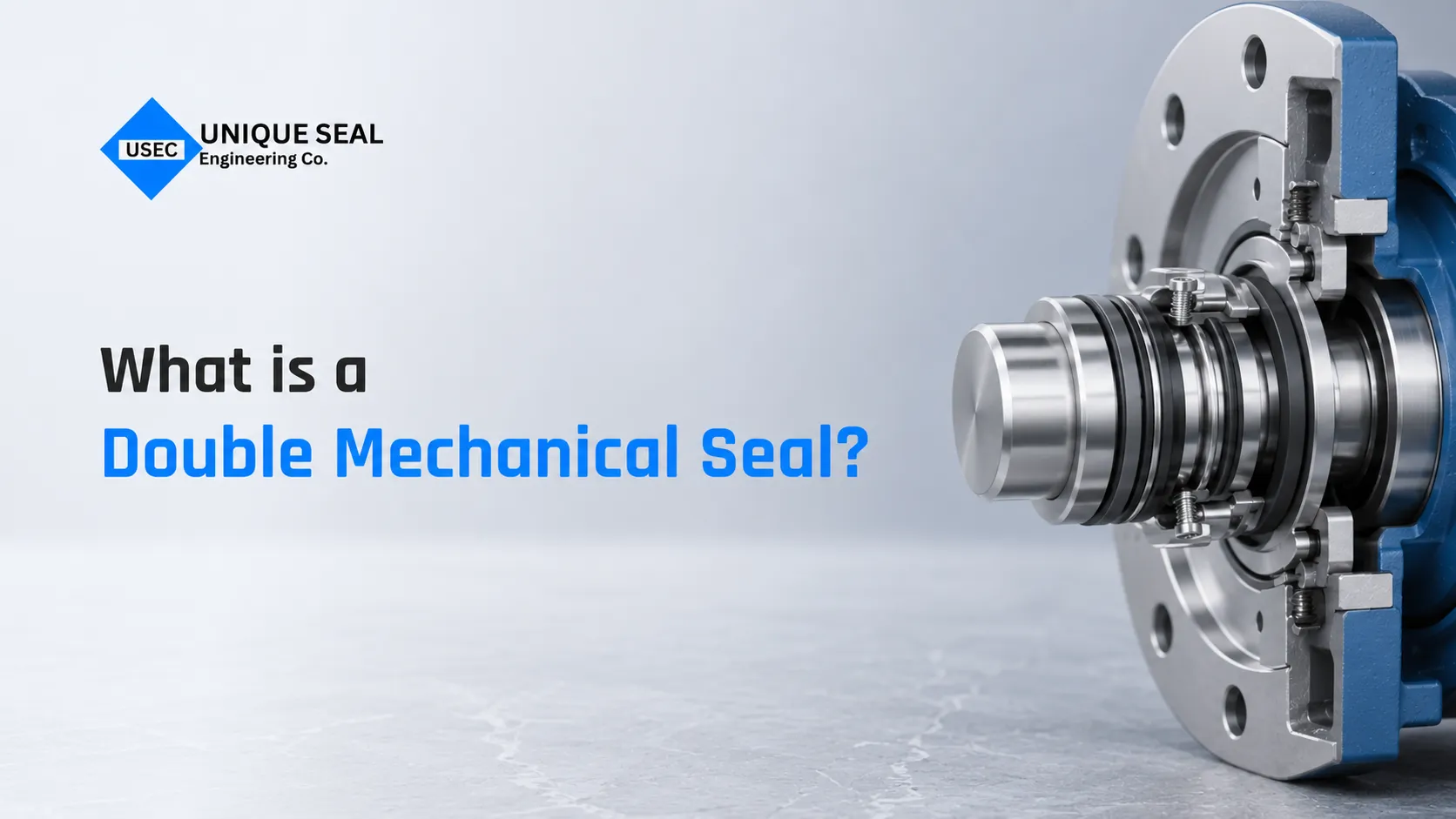
It is used in pumps to prevent fluid from leaking along the rotating shaft. A double mechanical seal has two sealing faces with a space between them, usually filled with a barrier or buffer fluid. This gives the pump an extra layer of protection against leakage.
Simply put, it works like two seals working together to keep the pumped fluid contained. It is commonly used when pumps handle hazardous, corrosive, toxic or difficult to seal fluids where leakage can cause safety or equipment issues.
Components of a double mechanical seal
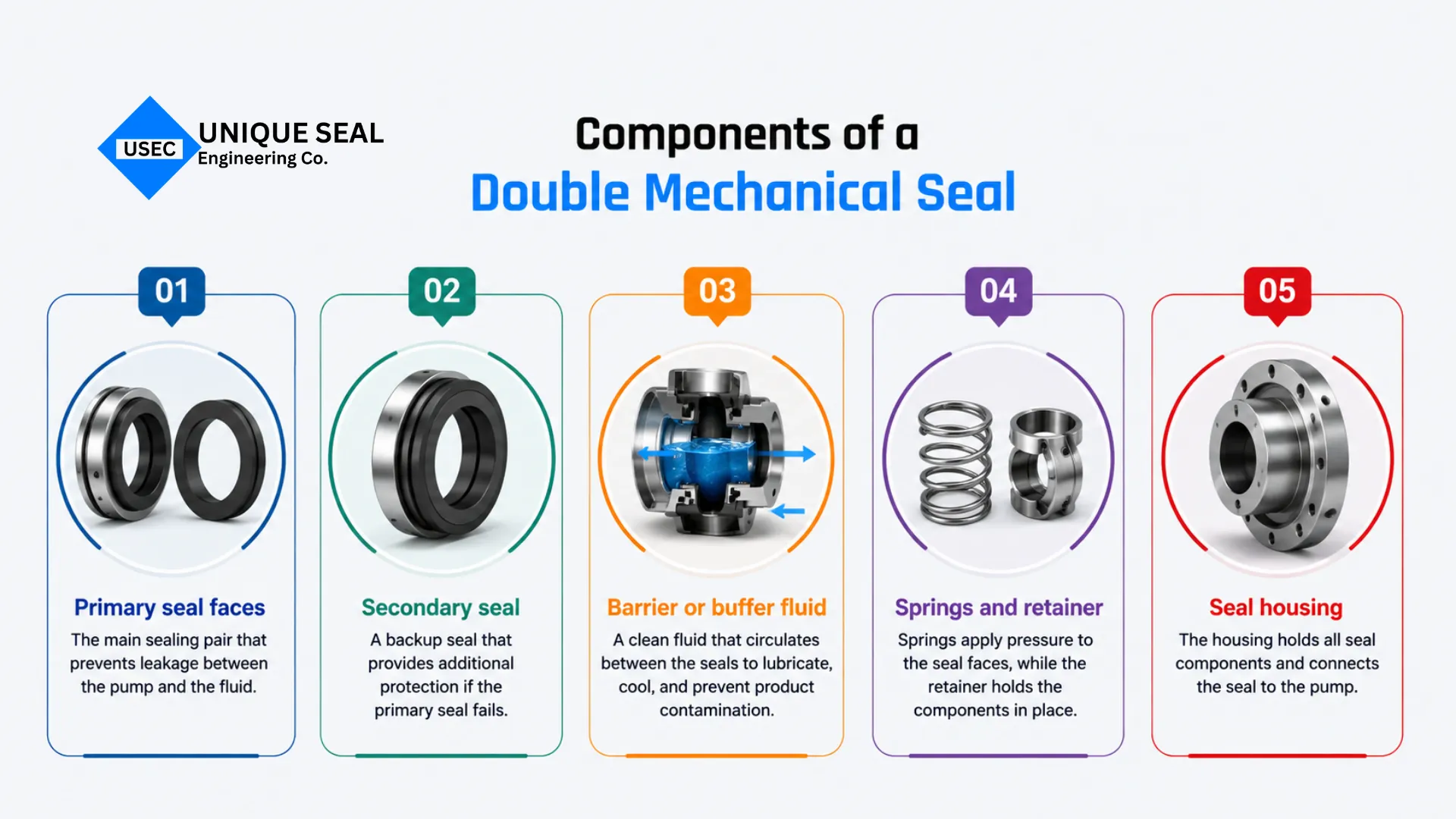
A double mechanical seal consists of several parts that work together to prevent leakage and keep the pump running smoothly. Each component has a specific role in maintaining the seal and handling the pressure between the pump fluid and the barrier or buffer fluid.
Primary seal faces
These are the main contact points that stop fluid from passing through the pump shaft. They handle pressure and friction while maintaining a tight seal during operation.
Secondary seal
The secondary seal closes the gap around the shaft and other moving parts to prevent fluid from escaping. It also helps maintain proper sealing when the pump operates under pressure or changing conditions.
Barrier or buffer fluid
A fluid is kept between the two seals to lubricate the sealing faces and carry away the heat produced during operation. For pumps handling hazardous or high pressure fluids, it also helps keep the pumped liquid separated from the outside environment.
Springs and retainer
Springs keep the seal faces pressed together as the shaft rotates, while the retainer holds the sealing parts securely in place. Together, they help the seal maintain proper contact and operate reliably under changing pump conditions.
Seal housing
The housing keeps the sealing components correctly positioned inside the pump and provides support during operation. A properly fitted housing helps maintain the seal arrangement and reduces the chances of leakage or component movement.
How a double mechanical seal works
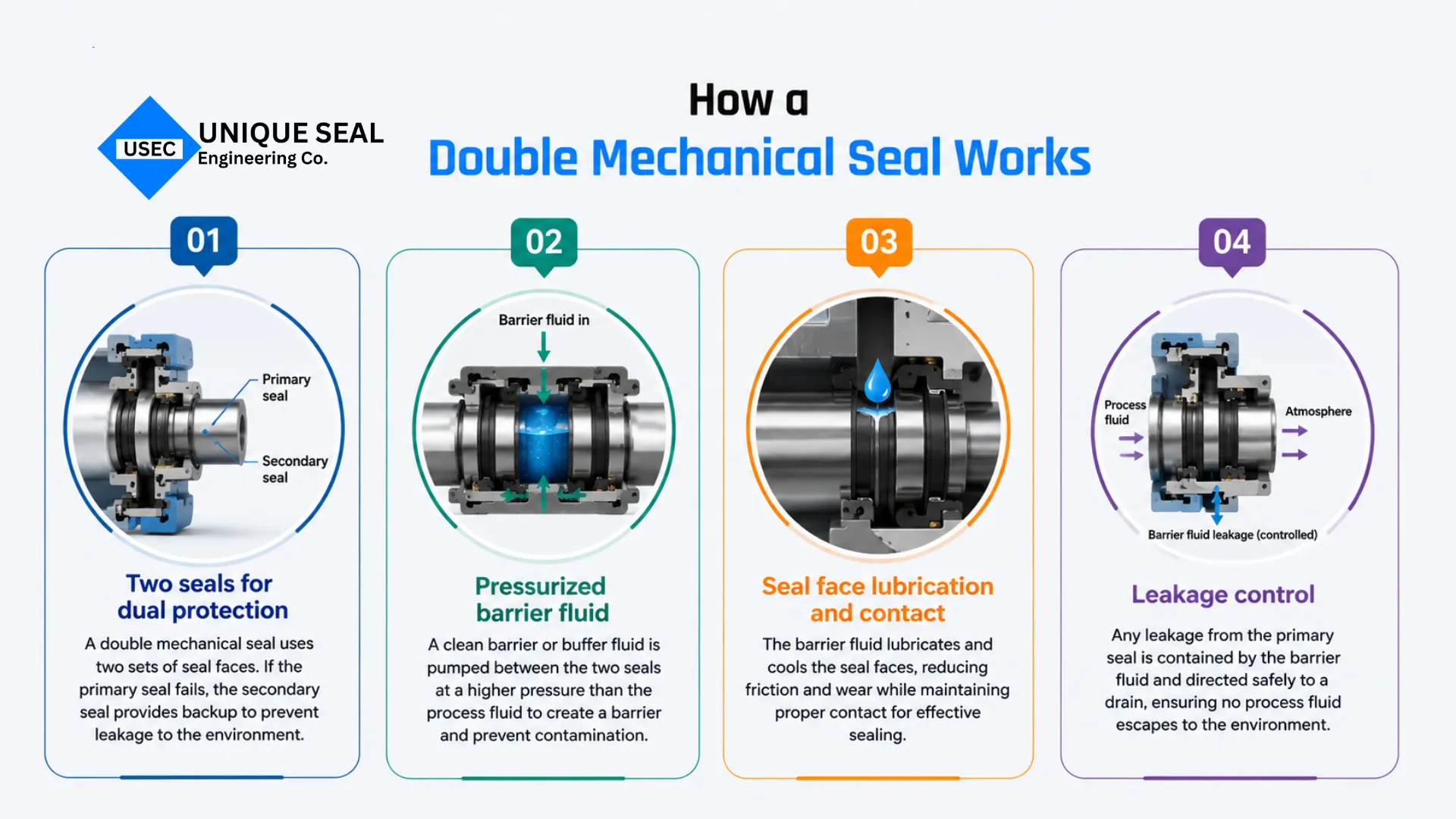
A double mechanical seal uses two sealing points and a pressurized fluid system to control leakage during pump operation. Let’s see how these parts work together to keep the fluid contained and support smooth, reliable pump performance.
Two seals for dual protection
Two sealing sets work together to create an extra barrier between the pumped fluid and the outside environment. This double sealing arrangement provides better leakage control, especially in demanding pump applications.
Pressurized barrier fluid
The space between the two seals is filled with pressurized fluid, which helps maintain proper sealing during pump operation. It also lubricates the seal faces and carries away heat, helping the seal work smoothly.
Seal face lubrication and contact
A thin fluid film forms between the seal faces as the pump operates, reducing direct friction between the surfaces. Proper contact and lubrication help minimize wear and support consistent sealing performance.
Leakage control
If any fluid passes the first seal, the second seal provides another point of containment. This helps keep the leakage within the sealing system instead of allowing it to reach the surrounding area.
Types of double mechanical seals
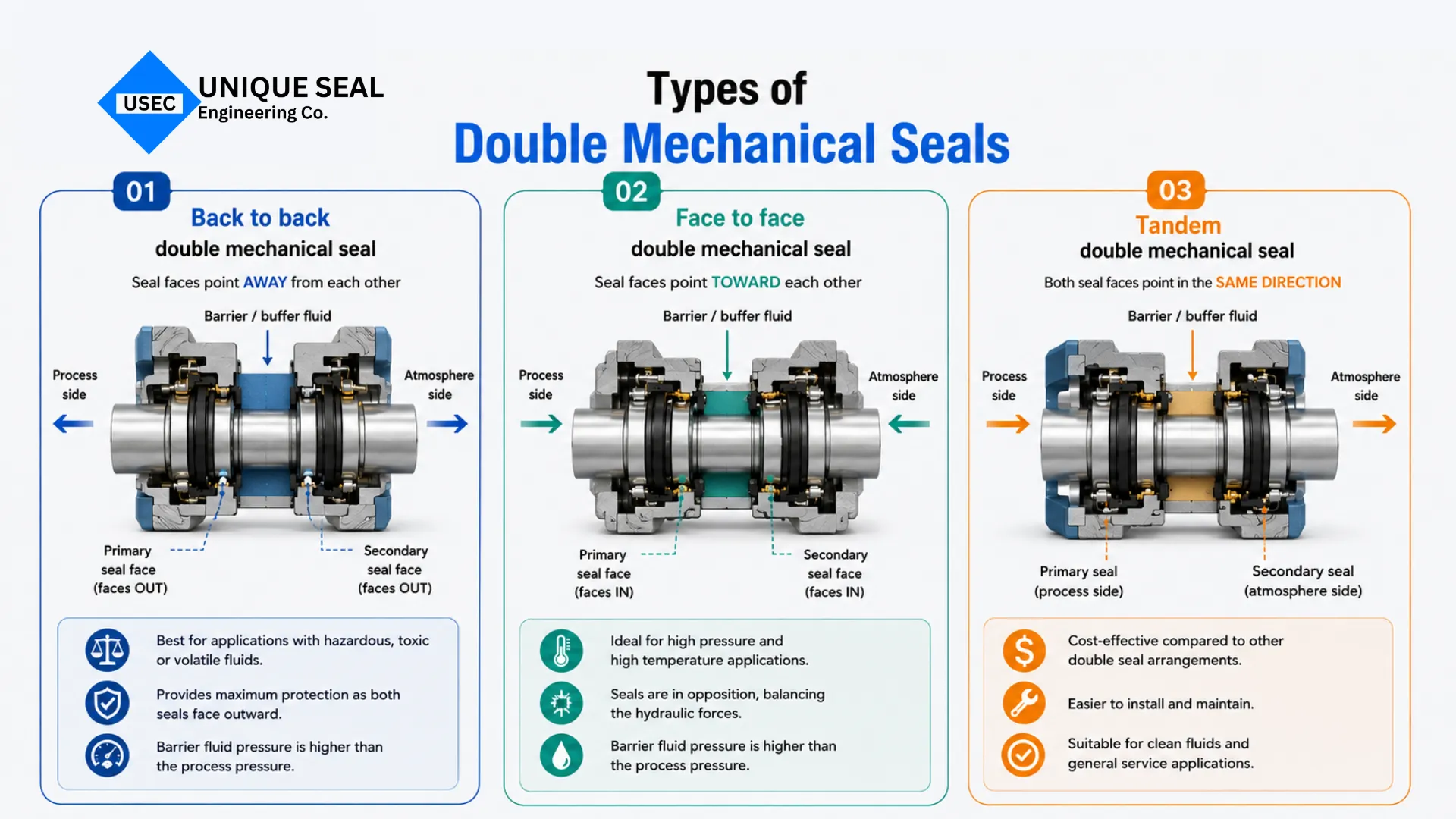
Double mechanical seals are available in different arrangements, each suited to specific pump conditions and sealing needs. The right type depends on factors such as pressure, fluid properties, temperature and the operating environment of the pump.
Back to back double mechanical seal
In this setup, the two seal faces sit opposite each other with barrier fluid between them. This arrangement works well for pumps handling high pressure or difficult fluids because the barrier fluid supports the sealing and helps reduce leakage.
Face to face double mechanical seal
In this arrangement, the two seal faces are placed toward each other, with a barrier or buffer fluid between them. It is often used where space is limited and reliable sealing is needed for demanding pump applications.
Tandem double mechanical seal
Two seals are placed in the same direction, one behind the other, with a buffer fluid between them. This setup provides an extra layer of protection and is suitable for pumps handling fluids where leakage needs to be carefully controlled.
Double mechanical seal vs single mechanical seal
|
Feature |
Single Mechanical Seal |
Double Mechanical Seal |
|
Number of seals |
Uses one seal |
Uses two seals for extra protection |
|
Leakage protection |
Provides basic leakage control |
Provides better protection against leakage |
|
Suitable for |
Standard pump applications |
More demanding pump applications |
|
Fluid handling |
Works well with less harmful fluids |
Better suited for harmful, corrosive or difficult to seal fluids |
|
Cost |
Generally more economical |
Usually costs more due to additional components |
|
Maintenance
Engineering Reliability Support
Experiencing Frequent Mechanical Seal Failures?Recurrent seal leakage causes costly unplanned downtime, batch losses, and shaft fretting. Unique Seal Engineering Co. analyzes your exact operating parameters (shaft speed, fluid media, temperature, pressure) and provides custom face pairings and engineered seal recommendations. |
Simpler to inspect and maintain |
Needs more maintenance due to extra components. |
Applications of double mechanical seals
Different industries use double mechanical seals based on their fluid, pump conditions and sealing requirements. Below are some common applications where they help provide better leakage control and reliable pump operation.
Chemical industry: Used in pumps handling corrosive or reactive chemicals where leakage needs to be carefully controlled.
Oil and gas industry: Suitable for pumps handling high-pressure or flammable fluids where reliable sealing is important.
Pharmaceutical industry: Used where clean and controlled pumping is required to reduce the risk of product contamination.
Food and beverage industry: Commonly used where hygiene and reliable fluid containment are important.
Power industry: Used in demanding pump applications involving high temperatures, pressure, or continuous operation.
Pulp and paper industry: Suitable for pumps handling fluids containing solids, chemicals, or other challenging materials.
Agitators and reactors: Used on agitator and reactor shafts where preventing process fluid leakage is important.
Advantages and disadvantages of double mechanical seals
|
Feature |
Advantages |
Disadvantages |
|
Safety |
Provides better control over fluid leakage |
Needs monitoring of the barrier fluid |
|
Cost |
Can reduce leakage related costs |
Higher initial cost |
|
Maintenance |
Helps protect the sealing faces during operation |
More components require regular checks |
|
Design |
Works well with hot or dirty liquids. |
Takes up more space and needs external pipes. |
Maintenance tips for double mechanical seals
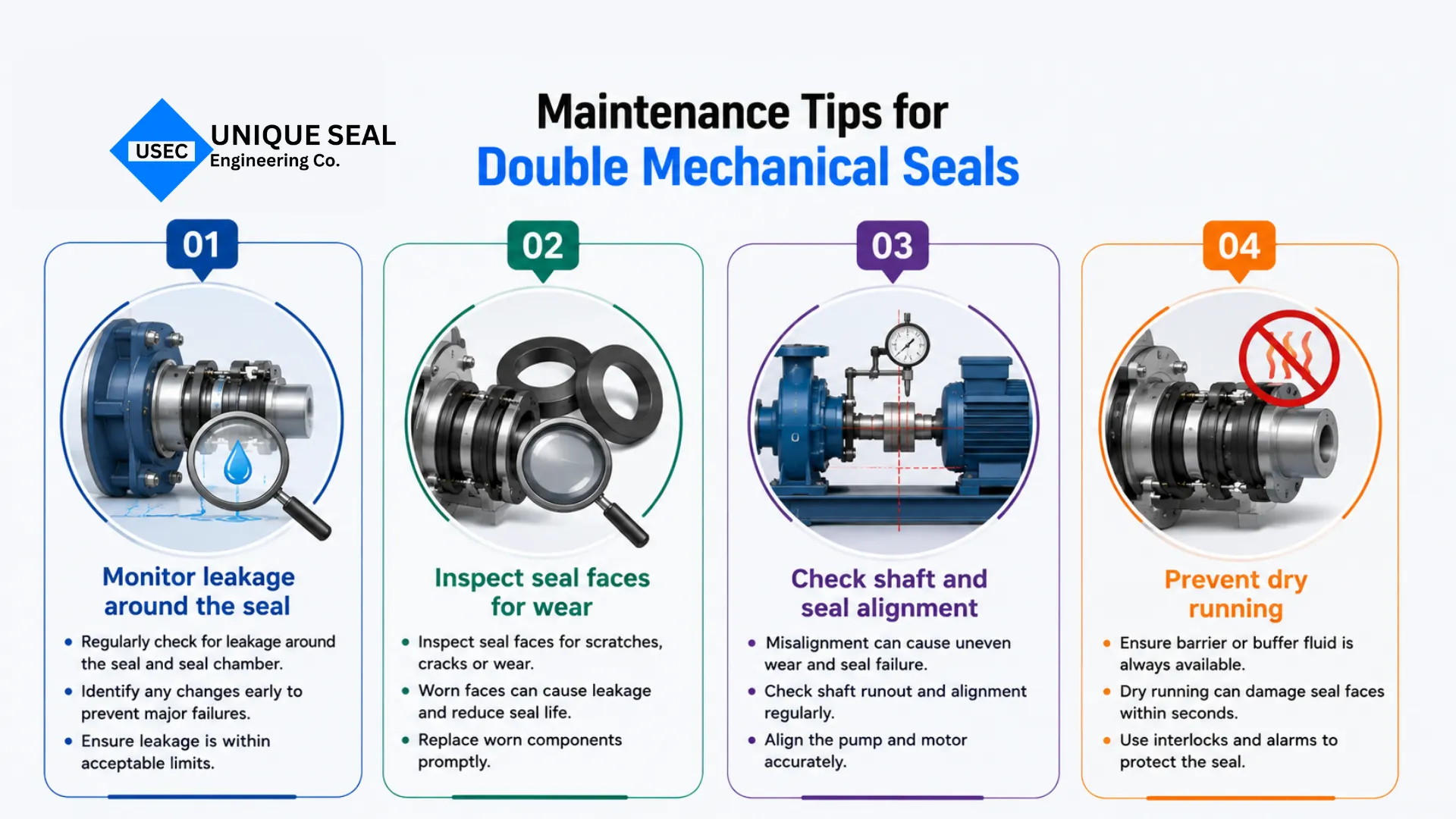
Proper maintenance helps keep a double mechanical seal working efficiently and reduces the chances of leakage or premature failure. Here are some simple maintenance tips that can help the seal last longer and remain reliable.
Monitor leakage around the seal
Look for any unusual fluid leakage around the seal while the pump is running. Finding leakage early can help prevent double mechanical seal failure and protect other pump components.
Inspect seal faces for wear
Check the seal faces for signs of wear, scratches, or damage during routine maintenance. Replace worn seal faces when necessary to maintain proper sealing and reduce the chances of leakage.
Check shaft and seal alignment
Make sure the shaft and seal are properly aligned. Misalignment can put extra pressure on the sealing faces, causing uneven wear and increasing the risk of leakage.
Prevent dry running
Make sure the pump has enough fluid before starting it and keep the sealing area properly lubricated. This helps prevent excess heat and friction that can damage the seal faces and shorten their service life.
How to choose the right double mechanical seal for your pump
The right seal can make a big difference in pump performance, reliability, and service life. Before making a choice, it is important to understand what your pump and application actually require.
Consider the fluid being pumped
Start by checking the type, temperature and properties of the fluid your pump handles. For corrosive, abrasive or difficult to seal fluids, choose a double mechanical seal made from materials that can handle those conditions.
Check pump pressure and temperature
Make sure the selected seal can handle the operating pressure and temperature of your pump. Choose a seal that is suitable for these conditions to maintain proper sealing and reliable performance.
Select the right double seal arrangement
Choose the arrangement based on your pump’s operating conditions and sealing requirements. Back to back, face to face and tandem arrangements suit different applications, so select the one that best matches your pump setup.
Choose suitable seal materials
Select materials that are compatible with the fluid, temperature and operating conditions of your pump. The right material combination helps reduce wear, prevent leakage and extend the seal’s service life.
Unique Seal: Best double mechanical seal manufacturer in India
For engineers, maintenance teams, and pump users, knowing the basics of double mechanical seals makes it easier to understand which type suits their application. The right seal can help control leakage and support smooth pump operation.
When choosing a seal, consider the fluid, pump conditions, seal arrangement, and material. Proper selection and regular maintenance can help reduce leakage and extend the seal’s service life.

If you are looking for a reliable double mechanical seal manufacturer in India, Unique Seal offers sealing solutions designed for different pump and industrial applications. Our focus is on helping businesses find the right double mechanical seal based on their fluid type, operating conditions, and application requirements.
Get your free quote today and choose the right sealing solution for your needs.
Frequently asked questions about double mechanical seals
What are the main types of double mechanical seals?
The main types include back to back, face to face and tandem double mechanical seals. Each arrangement positions the seal faces differently and is selected according to the pump design, operating conditions and application requirements.
Where are double mechanical seals commonly used?
Double mechanical seals are commonly used in chemical, oil and gas, pharmaceutical, food and beverage, power and pulp and paper industries. They are also used with agitators and reactors where leakage control is important.
How does a double mechanical seal work?
A double mechanical seal uses two sealing points with a fluid-filled space between them. The arrangement helps control leakage, lubricate the seal faces, and maintain reliable sealing while the pump is operating.
What is the difference between a single and double mechanical seal?
A single mechanical seal has one sealing point, while a double mechanical seal uses two. Double seals provide an additional layer of protection and are often chosen for demanding applications where leakage control is important.
When should I use a double mechanical seal?
A double mechanical seal can be a good choice when handling difficult fluids, higher pressure applications or processes where leakage needs better control. The final choice depends on the pump and operating conditions.
What happens if a double mechanical seal fails?
A failed double mechanical seal can cause fluid leakage, reduced pump performance or damage to other components. Regular inspection and proper maintenance can help identify issues early and reduce the risk of unexpected pump downtime.
Need a High-Reliability Replacement Mechanical Seal?
Unique Seal Engineering Co. manufactures Cartridge, Metal Bellows, PTFE Bellows, and Multi-Spring Seals with 100% optical flat inspection under monochromatic light at our Mohan Nagar, Ghaziabad facility. Get fast OEM-grade delivery across India and worldwide.
